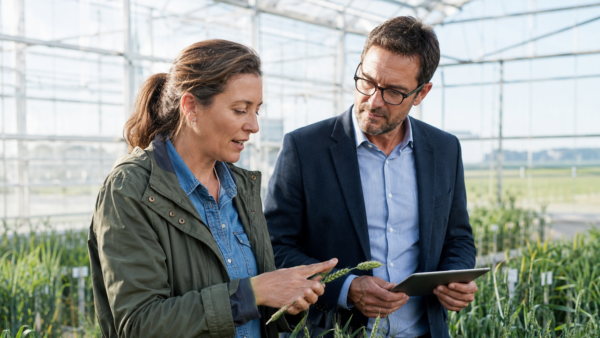
C.J. Noble outlines her vision for certified seed, regulatory modernization and the importance of demonstrating real economic value to farmers.
Agriculture has been my professional home for decades and joining CSGA feels like a natural next step – one that draws on everything I’ve learned along the way.
Over my career, I have worked with provincial agriculture associations, national livestock and crop organizations, and food companies across the value chain. What affects one part of that community inevitably affects the others, and bringing those parts together has defined my career.
That is what drew me to CSGA.
Certified seed sits at the centre of the issues occupying farmers, industry and government today: managing weather and disease risk, strengthening food security, improving export competitiveness and ensuring regulation remains efficient and credible.
It is an important time to be doing this work. Seed Regulatory Modernization (SRM) is moving toward its next stage. As currently anticipated, proposed regulatory changes could appear in Part I of the Canada Gazette in the winter of 2027, followed by a public comment period. CSGA has an important role within the process. Our job is to help ensure Canada continues to have a certification system that is trusted, transparent and practical for the people who use it.
My background has prepared me well for that task. I came to agriculture early in my career, as a political aide to the federal minister of agriculture and agri-food in Ottawa. My responsibilities included the Canadian Food Inspection Agency, which at the time had only been established for a couple years.
I later served as chief of staff to the minister responsible for rural economic development, where agriculture was again central to the work, viewed through a broader economic and community lens. Since then, I have held leadership and communications roles with organizations throughout the agriculture and food sector.
At CSGA, I work alongside board and staff members with a lifetime of knowledge about pedigreed seed and certification. Their expertise is the foundation of this organization. What I add is the perspective of someone who has sat on the government side of the table and spent decades helping agricultural organizations make their case there.
That experience will matter as the seed sector navigates change. Modernization should be measured by whether systems become more efficient and better connected and easier for those who use it. Our goal is to balance that efficiency with credible oversight, transparency, accountability and traceability.
For farmers, the value of this work ultimately has to be practical. CSGA will remain focused on providing the strongest certification system possible and using appropriate technology to make that system more efficient and accessible. Our provincial branches also play an important role in helping farmers understand what certified seed offers.
But farmers make decisions based on the realities of their businesses. The case for certified seed therefore must be an economic one. Certified seed provides verified varietal identity and quality, but those benefits must translate into value on the farm. Our responsibility is to operate a system that allows farmers to make that calculation with confidence.
There is also a larger conversation underway about public research capacity and the infrastructure supporting variety development. CSGA is a standard-setting and certification organization, but we also have a responsibility to contribute our expertise when government and industry discuss issues affecting the health of the seed system.
We can do that alongside partners in the seed sector and the broader agricultural community, including organizations such as the Canadian Federation of Agriculture. We may not lead every policy discussion, but we can help decision-makers understand what certified seed contributes and what may be at risk when research or infrastructure decisions are made.
The next generation also must have a voice in shaping it. Under President Shannon Bieman’s leadership, we want to bring more young people into the CSGA conversation — particularly when discussing technology and the future of certification.
My role is to help lead the sector through change without losing the trust on which certification depends. The challenges may be new, but the work is what I have always done: listen carefully, bring people together and build a system that continues to deliver for farmers while advancing the broader goals of Canadian agriculture. That is the opportunity ahead of us.