Researchers traced genes from a single Bolivian crop wild relative into 251 peanut lines and cultivars across 30 countries, revealing the long reach of genetic diversity, breeding and seed exchange
Sometimes an important contribution to plant breeding announces itself immediately. A resistance gene is identified, a breakthrough is published or a new variety reaches farmers with a clearly documented pedigree behind it. At other times, the most important part of the pedigree remains hidden for decades.
That was essentially what happened with a peanut breeding line in Brazil. IAC 69007 possessed unusually strong resistance to damaging foliar diseases, yet its recorded pedigree didn’t explain its exceptional traits. For David Bertioli and Soraya Leal-Bertioli, authors of a study published in the Proceedings of the National Academy of Sciences, that inconsistency became the starting point for a much larger investigation.
What began as a question about the ancestry of a Brazilian breeding line eventually led them back more than half a century, across several continents and to one particular wild peanut collected in Bolivia in 1959. Modern genomic analysis revealed that IAC 69007 contained genetic material from Arachis cardenasii, a wild relative of cultivated peanut, and the researchers then began following that genetic fingerprint through breeding records and pedigrees.
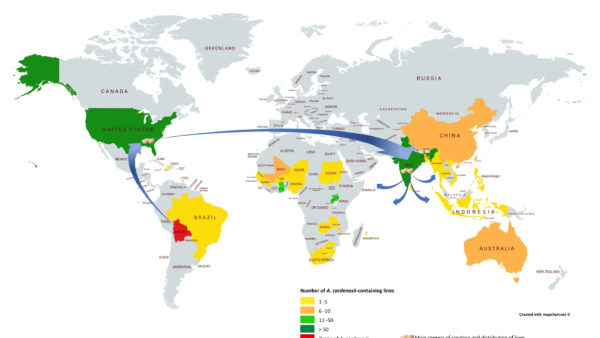
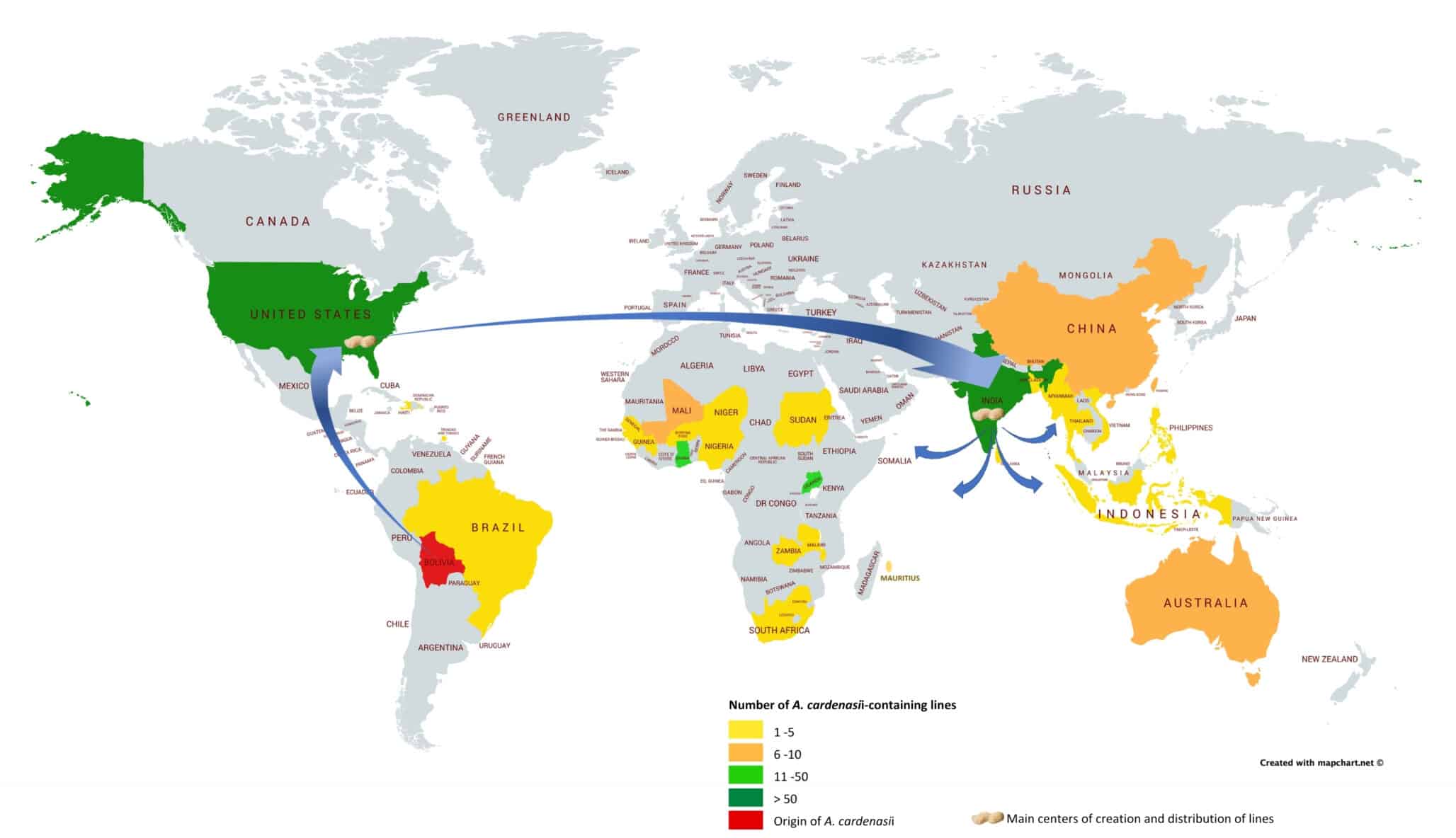
According to Bertioli, the intriguing part was not simply discovering wild genetics in one Brazilian line. As the team followed those genomic signatures further, it became apparent that they were looking at the legacy of a wild accession that had travelled through peanut breeding much more widely than anyone had realised. By the end of the investigation, the researchers had identified genetic contributions from that single accession, known as GKP 10017, in 251 peanut lines and cultivars used across 30 countries.
That finding transformed what might initially have looked like a specialised piece of peanut genetics into a much broader story about plant breeding, genetic resources and the long life of useful traits once they enter breeding programmes.

It Started with a Wild Peanut
GKP 10017 was collected in Bolivia in 1959, and there was little at the time to suggest that it would eventually become part of a global breeding success story. Wild relatives of crops are often interesting to breeders precisely because they have survived outside highly selected agricultural environments. Over generations they can accumulate resistance to diseases, pests and environmental stresses that may be weak or absent in modern cultivated germplasm.
Useful diversity, however, is not always easy to deploy. Cultivated peanut, Arachis hypogaea, is a tetraploid species, while most of its wild relatives are diploid. According to Leal-Bertioli, that biological difference is one of the reasons wild peanut diversity cannot simply be crossed routinely into an elite cultivar, because breeders first have to overcome substantial genetic barriers and then deal with unwanted characteristics that can accompany the useful genes.
That makes the work undertaken by breeders at North Carolina State University in the 1960s particularly significant. Through complex hybridisations, they succeeded in moving genetic material from GKP 10017 into cultivated peanut. The immediate result was not a finished variety, but something that may ultimately have proved more valuable: usable genetic material from which later breeders could continue working.
Bertioli sees that as an important part of the story. The researchers and breeders responsible for those early crosses could not have known where the material would eventually end up or how long its influence would last. Bertioli sees that willingness to share the material as a crucial part of what followed. “The researchers knew the hybrids had great potential; their sharing of those seeds turned that potential into an impact they could never have imagined.”
From North Carolina, seed containing the wild peanut genetics was shared with International Crops Research Institute for the Semi-Arid Tropics, ICRISAT, in India. From there, its descendants were distributed into additional breeding programmes, crossed again and entered new pedigrees. What had begun as difficult experimental material gradually became woven into the fabric of peanut breeding far beyond the programme where the original crosses had been made.
Following the Fingerprints
Decades later, genomics gave the researchers something the original breeders never had: the ability to see exactly where pieces of the wild genome had ended up. The team produced a reference genome for A. cardenasii and searched for distinctive sections of its DNA in cultivated peanut material. They then combined those genomic results with pedigrees, historical records and information about the movement of breeding material between institutions and countries.
For Leal-Bertioli, that combination was essential. Genomics could reveal that wild DNA was present, while the historical material helped explain how it had moved from one breeding programme to another. The investigation became a form of genetic detective work, with researchers using modern sequencing to reconstruct breeders’ decisions and trace the movement of breeding material decades earlier.
The exercise also exposed something familiar to anyone who has worked with breeding pedigrees for long enough. Pedigrees are not always complete, because material passes from programme to programme, lines are renamed, crosses accumulate and information that once seemed obvious can disappear. The genome, however, retains its own record and can reveal relationships that written pedigrees no longer capture.
The team ultimately identified GKP 10017 derived genetics in material associated with countries across the Americas, Africa, Asia and Oceania. In almost all cases, breeders apparently did not know that wild peanut genetics were present in the ancestry of the material they were using. As Leal-Bertioli puts it, “While the impact of the wild genetics kept growing, its records disappeared into the past.”
That finding has relevance well beyond peanut. Plant breeding is cumulative, and an accession collected by one person can enter a cross made by another breeder, become a line used by a third institution, cross a national border and eventually contribute to a variety released decades later. The breeder releasing that variety may be many steps removed from the person who collected the original wild plant.
This is one reason why genebanks and older genetic resources can become unexpectedly valuable to modern breeding. Their usefulness may only become apparent when breeding objectives, production environments or disease pressures change, sometimes many years after the material was first collected. GKP 10017 provides a particularly clear example of how that latent value can emerge over time.
From Wild Genetics to Farmers’ Fields
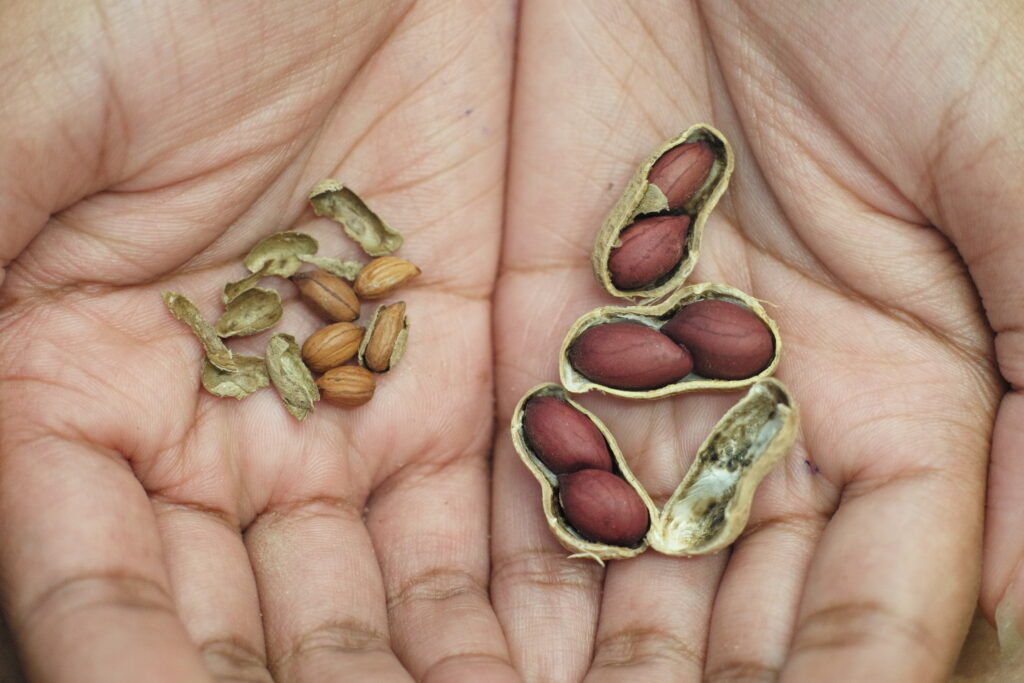
Finding the genetic fingerprints of a wild plant in hundreds of breeding lines would be scientifically interesting even if the material had produced no obvious agronomic advantage. In the case of A. cardenasii, however, the wild contribution was associated with resistance to important foliar diseases, particularly late leaf spot and rust. These diseases can severely damage peanut production and can require repeated fungicide applications where susceptible cultivars are grown.
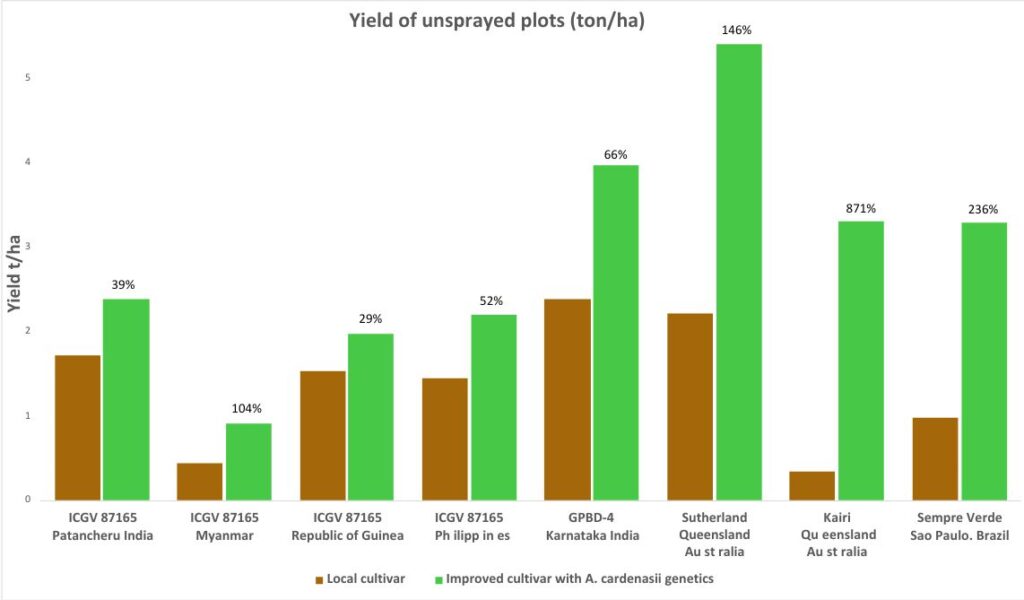
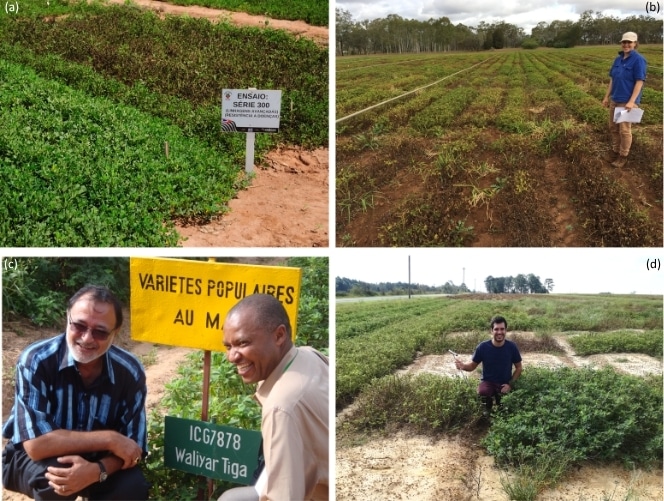
The Brazilian breeding material that helped trigger the investigation provides one example. IAC 69007 showed unusually high resistance and contributed to IAC Sempre Verde, a cultivar combining agronomic performance with strong foliar disease resistance. The same wild source also contributed to material used elsewhere, including the Indian cultivar GPBD 4, an important source of resistance to late leaf spot and rust that has subsequently been used in further crosses.
According to Bertioli, this is where the story moves beyond tracing ancestry. The real test of those inherited chromosome segments is what they contribute once they reach breeding programmes and, ultimately, farmers’ fields. The PNAS study brought together eight unsprayed field trials from six countries and found that cultivars containing A. cardenasii derived genetics yielded on average 193% of the locally preferred cultivated peanut comparisons used in those trials.
That figure is striking, although it needs to be read in context. The study does not suggest that the wild genes automatically double peanut yields, because the trials involved different environments, cultivars and disease pressures. Instead, the results illustrate how valuable effective genetic resistance can become where disease pressure is substantial and crops are not protected by fungicides.
Leal-Bertioli points to that distinction as an important one. Resistance is not simply a score recorded in a disease trial; its practical value appears when it allows a plant to remain productive under pressure. “The wild genetics gives the plants the resilience they need to produce under pressure,” she says.
It connects directly with the “Wild Does Not Mean Ready to Use” section.
In some African production systems, she adds, there is another benefit. Plants that retain more green leaves through to the end of the season can provide more valuable animal feed alongside the additional peanut yield.
For European breeders, the principle is highly relevant even if peanut itself is not a major European crop. The move towards lower input production systems is placing greater emphasis on durable genetic resistance, because more of the crop’s protection increasingly has to come from the plant itself. The crop may be different, but the breeding challenge is immediately recognisable.
Wild Does Not Mean Ready to Use
There is a temptation when discussing crop wild relatives to describe them simply as treasure houses of useful genes. That description is attractive, but incomplete, because identifying useful diversity is only the beginning of the breeding process. Leal-Bertioli stresses that the harder task is getting the diversity into material that breeders can actually use.
Wild relatives bring many undesirable characteristics together with the trait of interest. Biological barriers can complicate crossing, while large pieces of wild chromosomes may initially be transferred when the breeder needs only a small region carrying resistance. Considerable additional crossing, selection and testing are almost always required before the resulting material begins to resemble something suitable for practical breeding.
In the case of GKP 10017, that work created something of lasting value: a genetic bridge between a difficult wild source and cultivated peanut. Once that bridge existed, subsequent generations of breeders could use the resulting material without having to repeat the original work from the beginning. In this sense, the value of the early crosses extended far beyond the individual experiments in which they were first produced.
That is why pre-breeding deserves more attention in discussions about genetic resources. Conserving diversity is essential, but conservation alone does not put useful alleles into breeding pipelines. The same challenge is being addressed in Europe through the Pro Wild project, which is working with crop wild relatives of wheat, sugar beet and oilseed rape, combining conservation, characterisation and pre-breeding with the aim of moving useful wild diversity closer to practical breeding.
The species are different, but the underlying question is remarkably similar. Which apparently obscure piece of diversity today might become crucial to plant breeding decades from now, and how much preparatory work will be needed before breeders can actually use it?
One Success Is Not Enough
There is another lesson in the success of GKP 10017. A very effective resistance source can become a victim of its own popularity if breeders repeatedly use the same source and resistance becomes genetically uniform across a large area of production. Pathogens continue evolving, so excessive dependence on one resistance source can eventually create another form of vulnerability.
Bertioli and his colleagues therefore do not regard the extraordinary reach of A. cardenasii as an argument for relying on it indefinitely. Its success instead highlights the need for additional diversity and explains why researchers continue searching other wild Arachis species for alternative sources of resistance. The discovery of one highly valuable accession should therefore encourage broader exploration, not reduce it.
For Bertioli, that is precisely why the search cannot stop with one successful accession. “Any one of them, when collected, preserved, studied and used in breeding programs, has the potential to make farming more productive and sustainable, or to overcome as yet unforeseen challenges in our ever changing world.”
Maintaining crop genetic diversity preserves options for future breeding. Today’s breeding programmes cannot know with certainty which pathogen, climatic stress or production constraint will make a particular piece of genetic diversity valuable in 20 or 50 years. GKP 10017 was one such option, preserved long enough for its value to become apparent and developed far enough for breeders around the world to use it.
Someone collected it in Bolivia in 1959; someone conserved it and someone else undertook difficult crosses with it. Breeding material was then exchanged between institutions and countries, while other breeders selected from its descendants and incorporated them into still more pedigrees. Eventually, genetics from that one accession became embedded in peanut material across much of the world, even though no individual step in that process could have created the outcome on its own.
Could It Happen Again?
For Bertioli and Leal-Bertioli, that history also raises a more uncomfortable question. The international environment governing genetic resources has changed profoundly since GKP 10017 began its journey through breeding programmes. The authors argue in their PNAS paper that collecting and exchanging crop genetic resources internationally has become considerably more difficult under the modern framework surrounding access, sovereignty and benefit sharing.
That wider debate is complex. Countries have legitimate interests in how their genetic resources are accessed and used, while breeders and researchers need workable routes to obtain diversity and collaborate across borders. The peanut study does not resolve those competing considerations, but it does provide an unusually concrete example of what international movement of genetic resources can eventually produce.
For the Bertoli’s, however, the lesson goes further. They argue that today’s biodiversity governance framework has made exactly the kind of collection, research and international exchange that underpinned the GKP 10017 story considerably more difficult. Bertioli believes this has created an unintended contradiction between the objectives of biodiversity policy and its effects in practice.
“The restrictive nature of modern biodiversity governance has ended up working against what it was supposed to achieve,” he says.
He argues that while governments ultimately determine whether natural habitats are protected, restrictions surrounding access can simultaneously make collecting, preserving, studying and exchanging wild genetic resources more difficult. In his view, that risks weakening one of the incentives for conserving biodiversity in the first place.
Perhaps that is the most useful reason to revisit the story of GKP 10017. A wild peanut collected more than six decades ago could hardly have looked like a resource destined to influence breeding on several continents, yet modern genomics has revealed exactly that. Its journey illustrates how plant breeding operates across timescales far longer than research projects, funding cycles or commercial planning horizons.
The accession that appears peripheral today may contain the resistance gene, stress tolerance trait or other useful variation that breeders will urgently need in a future nobody can predict. The challenge is therefore not simply to find diversity, but to conserve it, understand it and undertake the difficult work needed to make it usable. And when that future need emerges, breeders still have to be able to reach it.