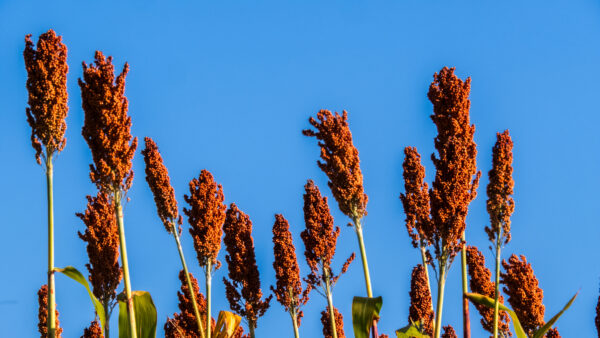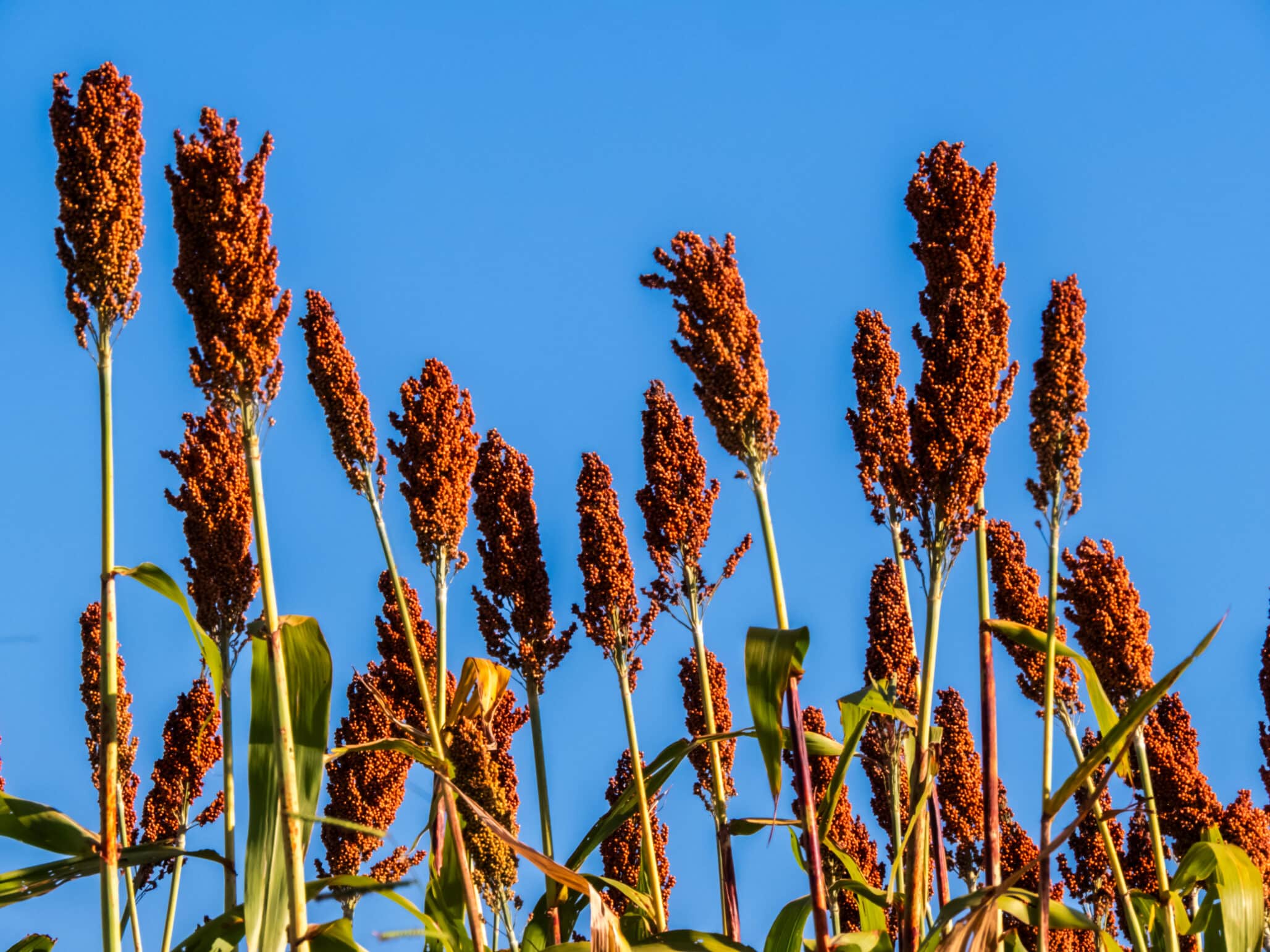
New research suggests sorghum could become an increasingly important alternative to maize in European livestock feed, with climate projections indicating higher yields and expanded growing areas as temperatures rise.
Sorghum could play a greater role in European agriculture as rising temperatures and increasing water scarcity challenge traditional maize production, according to new research from France’s National Research Institute for Agriculture, Food and Environment (INRAE).
The study found that climate change could create more favourable conditions for sorghum production across much of Europe, potentially expanding the area suitable for growing the crop and reducing reliance on maize for livestock feed.
Although sorghum is widely cultivated in warmer, drier regions, it currently accounts for just 0.1% of European cropland. Its tolerance to high temperatures and limited water availability makes it a potential alternative to maize, which requires substantial water and is widely used in European livestock production.
Researchers found that sorghum yields could increase from an average of 3 tonnes per hectare under current climatic conditions to between 3.4 and 3.8 tonnes per hectare under projected conditions between 2050 and 2100.
Climate Change Could Expand Sorghum Production
The study projected that climate change would have an overall positive effect on European sorghum yields, although the benefits would vary by region.
Northern Europe could experience increased yields as temperatures rise, while southern Europe could see modest declines as growing conditions become hotter and drier.
Researchers also identified a potential expansion in areas capable of supporting high and stable sorghum production. Under current climatic conditions, approximately 22% of European cropland falls into this category. By the end of the century, that share could increase to between 29% and 34%, depending on the climate scenario.
These findings suggest that sorghum could become a more viable crop across a larger portion of Europe, providing farmers with additional options as growing conditions change, according to a press release.
Potential to Replace Maize in Livestock Feed
Beyond its ability to withstand heat and drought, sorghum could help reduce the agricultural sector’s dependence on water-intensive maize production.
Researchers estimated that if sorghum were grown once every three years in suitable rotations, it could potentially replace approximately 90% of the maize currently used for livestock feed in Europe.
The findings are particularly relevant as European farmers face increasing pressure to manage water resources while maintaining crop productivity and livestock feed supplies.
Maize accounts for 38% of irrigated cropland in France, highlighting the potential importance of alternative crops that can perform under drier conditions.
Expanding sorghum production could reduce irrigation demand and allow water resources to be directed toward other crops, while potentially improving Europe’s livestock feed self-sufficiency.
Modelling Sorghum Yields Under Future Climate Conditions
To assess sorghum’s potential, researchers developed a machine-learning model that predicted grain sorghum yields using climate variables including temperature, precipitation and relative humidity.
The model was trained using historical sorghum yield data and combined with projected climatic conditions for the middle and end of the 21st century.
Researchers evaluated 20 climate scenarios generated from five climate models, allowing them to assess how sorghum production might respond to different levels of future climate change.
The analysis indicated that sorghum could become more productive across Europe overall, despite regional differences in projected yields.
A New Role for Sorghum in European Cropping Systems
The findings suggest that expanding sorghum cultivation could help European agriculture adapt to climate change while reducing pressure on water resources.
For countries such as France, incorporating more sorghum into cropping systems could offer opportunities to diversify livestock feed production and reduce dependence on irrigated maize.
However, the projected benefits depend on future climatic conditions, regional suitability and the adoption of sorghum within existing agricultural systems.
The research highlights sorghum’s potential as a climate-resilient crop that could support more diversified European agriculture as farmers adapt to higher temperatures, changing rainfall patterns and increasing water scarcity.