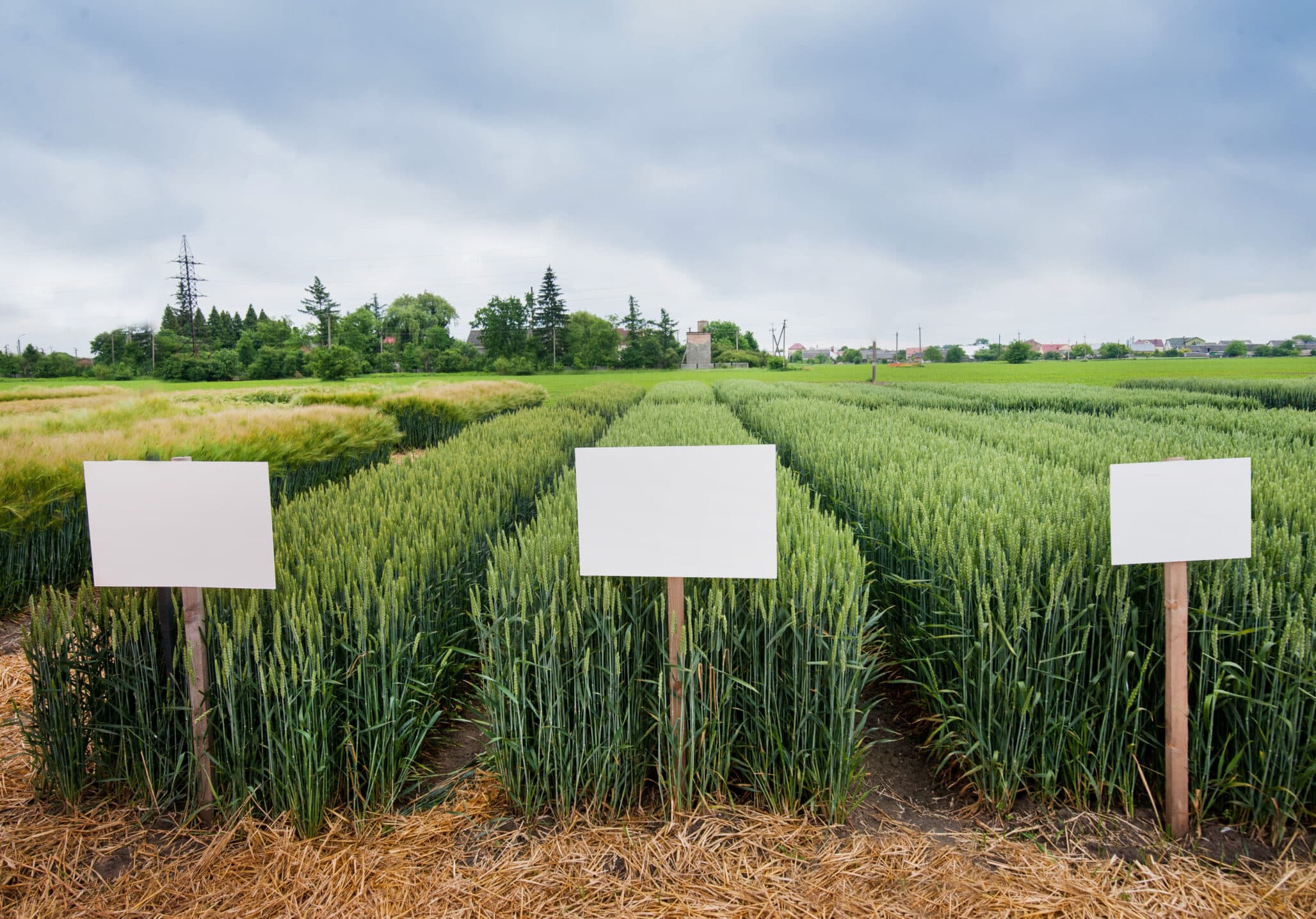
A few summers ago, I stood at the edge of a wheat trial that had looked perfect every year for a decade. Same site, same soil, same reputation for fairness amongst every line. That year, the heat arrived early and never let go. Lines we trusted folded while a handful of unremarkable lines quietly held their ground. The problem wasn’t the plants. The problem was that the climate we’d been breeding for had already left.
I have no doubt you’ve heard plant breeders boast that their new varieties are climate-resilient. But it takes seven to twelve years for a new cereal or vegetable variety to go from a single cross to a bag of seed. Tree crops take longer than that. What no one ever admits out loud is that every selection decision a breeding team makes today is a bet they’re placing on a climate that hasn’t yet arrived.
The EU’s climate service, Copernicus, named Europe Earth’s fastest-warming continent in 2025. That year, the continent was hit with the second most severe heatwave ever recorded. More than half the continent was in drought by May. Soon, roughly 70 per cent of its rivers were running well below normal and wildfires were burning through more territory than the total landmass of Cyprus. And that’s just one year.
Breeders have a name for what broke in my trial field: genotype-by-environment interaction, or G×E. Put simply, performance depends on context. A wheat line that shines in a wet year in northern France can collapse in a dry year further south. For decades, breeders managed this by testing across networks of sites and multiple years with great success. No more.
Treating a trial location as a fixed label — Site X, Year Y – is no longer enough. The better programs now include envirotyping. How hot was a site? How dry? When did the rain come? Every trial must have its own weather diary because, while AI and genomic prediction may be genuinely useful tools, they aren’t fortune-tellers. They excel at recognising patterns they’ve already seen. They’re far weaker when it comes to making predictions based on a stress they’ve never encountered.
In Article 45 of the EU’s New Genomic Techniques (NGT) regulation, Brussels has signalled it wants to reward stress tolerance and yield stability. But when someone claims their variety is climate-resilient, do they mean it’s tolerant to the climate of tomorrow or to the one it was tested against a decade ago? Answering honestly requires engineered stress trials. It also requires that climate, trial and pedigree data be housed in one place, which is where breeding-data platforms like Genovix shine.
What this all boils down to is the next time someone tells you their variety is climate-resilient, ask them for proof that the climate it was tested against is one that’s likely to exist in the future.