The seed industry needs long-term thinking from Washington. Between uncertain funding, shifting regulations and decade-long breeding cycles, that’s proving complicated.
A lot crosses Janae Brady’s desk. As the American Seed Trade Association’s vice president of government affairs, many of the questions she’s dealing with right now don’t have easy answers. Where should government invest? Can Washington provide the certainty plant breeders need? What happens when the science alone isn’t enough to win a policy argument? We asked Brady to help us make sense of where some of these issues are heading, and what they could mean for seed.
Seed World: There are several consequential policy decisions in play right now, from the Farm Bill and research funding to changes within USDA. Taken together, what do they tell you about the direction of federal policy toward agricultural innovation?
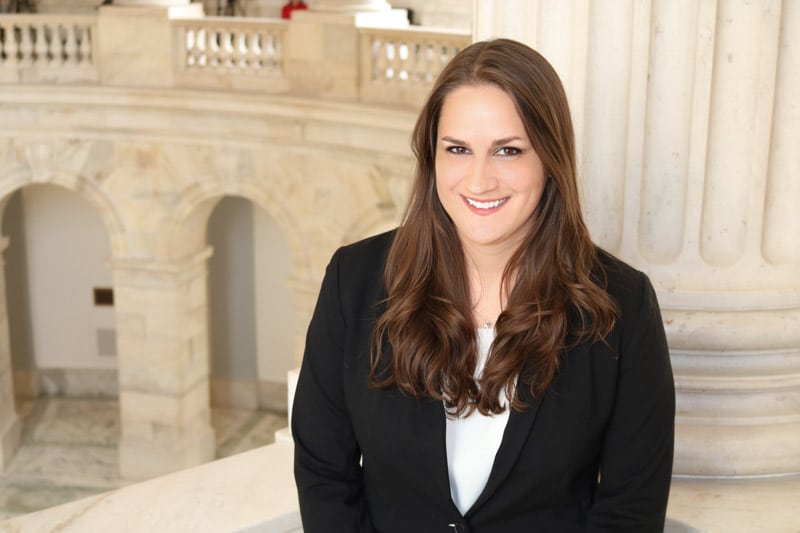
Janae Brady: The first is that the commitment to agricultural innovation is still there. The Farm Bill drafts moving through Congress this year include meaningful research investments. USDA recently made a $180 million commitment to support sequencing efforts for the National Plant Germplasm System, which has long been a priority of ASTA. There is long-standing bipartisan support for agricultural research.
Additionally, the system that delivers innovation is being tested in real time. We’re working through a Farm Bill process that has taken far longer than the traditional five-year rhythm – and for a sector that operates on breeding cycles of a decade or more, repeated short-term extensions create exactly the uncertainty that the Farm Bill was designed to prevent.
Taken together, they tell me the commitment to innovation is real, but the window to protect the system that delivers it is narrowing. That makes it more important than ever that the seed industry has a seat at the table as these decisions are made.
SW: Seed shows up across the Farm Bill, from research and conservation to risk management and trade. Where do you think seed’s role is least well understood in the way agricultural policy gets written?
JB: We say it often at ASTA: ‘First the Seed.’ I’d argue the place where seed’s role is least well understood is in how we think about research investment. In the way agricultural policy gets written, seed is often treated as just another input – a commodity that shows up at planting time. But seed is really the delivery mechanism for decades of innovation. Every improvement in yield, drought tolerance, disease resistance, and nutritional quality starts with plant breeding, and that work depends on sustained public research funding through the Farm Bill.
The Farm Bill is meant to provide certainty and predictability for those across the American agriculture value chain. It gives producers the tools they need to weather the unexpected. But it also lets us play the long game. Investment in agricultural research today pays dividends for decades, and there is no better example of that return than the seed industry.
SW: You mentioned USDA’s major commitment to the National Plant Germplasm System (NPGS). Where will that $180 million investment make the biggest difference to plant breeders?
JB: We are thrilled about USDA’s historic investment into the NPGS. ASTA views this initiative as an important first step in modernizing the NPGS, and increasing resources into these collections is an important part of supporting U.S. research and development and ensuring a robust pipeline of seed products for farmers long into the future.
This may sound counterintuitive, but we must be able to look back in order to move the seed industry into the future, and that means protecting and strengthening this invaluable resource. This funding allows USDA to generate genome sequence data on major portions of its collection, which is the most extensive and diverse library of plant material in the world. This is work that has been backlogged for years due to resource constraints, but with better data, USDA can make more strategic decisions on how to manage, regenerate, and distribute the seeds in these collections to the benefit of both farmers and the seed industry alike.
SW: Treated seed is increasingly being pulled into broader debates over pesticide policy. Where does the seed industry’s argument need to evolve rather than simply defend the regulatory framework it has today?
JB: Seed treatments are among the most important crop protection tools available to farmers today. The ability to apply a protective shield directly to the seed, at a low rate, exactly where it’s needed, during the critical early stages of plant growth – the value of that precision is hard to overstate. When you think about everything a treated seed protects – a successful crop for the producer, and years of R&D behind high-performing genetics – [seed treatments are] remarkable technology.
But to your question – yes, I think the case for treated seed has to evolve. For years, the industry has been more reactive: treated seed is safe, it’s regulated, it’s precise. That’s all true, but it’s not enough anymore. The debate has moved, and policymakers and the public are asking broader questions about pesticide use overall. So, the next chapter of our advocacy has to do a few things differently.
First, we have to meet people where they are – with data, but also with transparency. The industry needs to be proactive about sharing the science behind treatment rates, exposure pathways, and stewardship practices, rather than only responding when a policy threat emerges.
And second, we need to share the role that treated seed plays as part of the sustainability solution. Precision application at low rates is exactly the kind of targeted tool that reduces overall crop protection inputs – that’s a story that resonates far beyond our traditional audience.