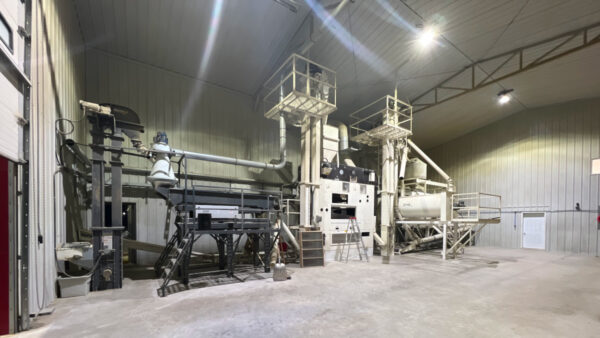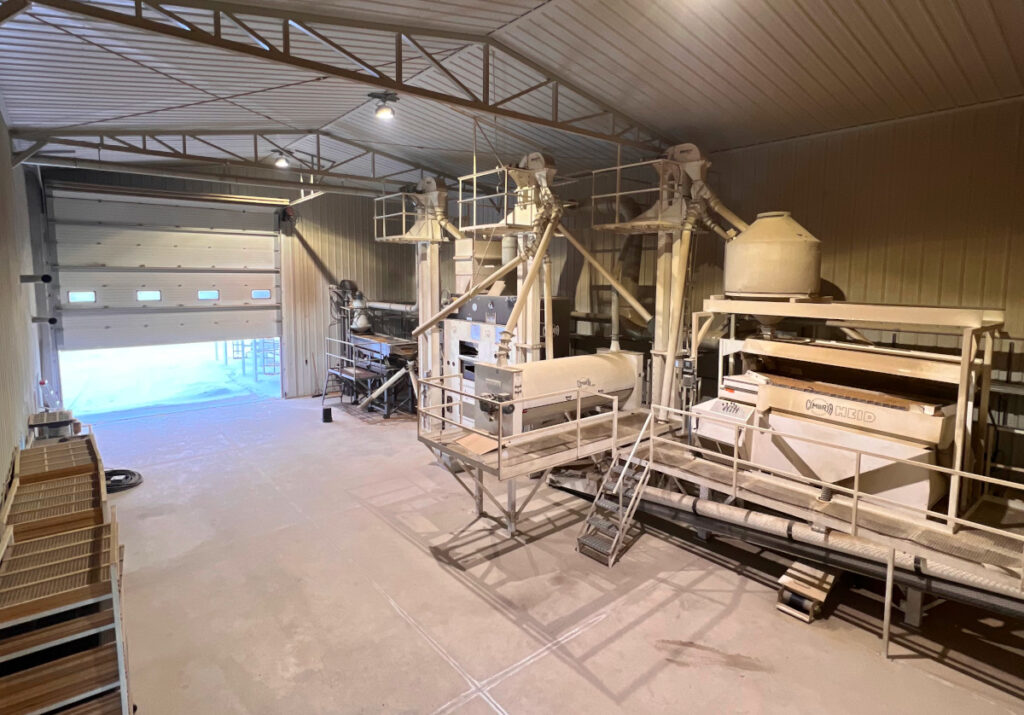

Sometimes you don’t really appreciate how versatile your seed cleaning equipment is until somebody brings you a problem that forces you to think differently.
That’s what happened when Greg Coulter from Nexeed called about an organic farmer near Outlook, Sask., who had some einkorn he needed cleaned.
Einkorn is an ancient grain, and this particular lot presented some serious challenges. The farmer was having difficulty finding someone who could separate the unwanted material from it.
We’d recently expanded our plant with a warehouse and a 1,000-kilogram bagging line. We’d originally been looking at processing ancient grains ourselves for overseas food markets, so the project interested me.
The farmer brought us around 5,000 bushels in four separate lots. There were oats, buckwheat and other unwanted materials mixed in, and because einkorn is such a light grain, getting those contaminants out wasn’t straightforward.
It was probably the most challenging cleaning job I’ve ever taken on.
What made it interesting was that we couldn’t necessarily operate the plant the way we would for wheat or another conventional crop. We had to think about what each machine could do and how to use them together.
That’s where everything I’d learned about our Cimbria equipment, with support from Nexeed, started paying off.
One of the biggest discoveries involved our gravity table. It has four discharge points, and I realized we could use those to separate the grain more efficiently.
The two heavier fractions were already free of oats and buckwheat, so I could direct those straight into the clean bin. The secondary clean fraction could then go through the colour sorter for further separation.
That was a big improvement. Instead of sending everything through the colour sorter and creating a bottleneck, we could concentrate its work on the grain that actually needed it.
The experience gave me a whole new appreciation for the flexibility built into the Cimbria equipment.
When we first acquired this plant, I was mostly concerned about learning the proper settings. Now I understand that getting the best results isn’t always about following the same process every time.
It’s about knowing what each machine can do, understanding how they work together and being willing to approach a difficult cleaning problem differently.
That’s something I’ve learned through experience, with the support of the people at Nexeed who know this equipment.
And it’s made me a much more confident operator.