Seed testing helps growers carry the strongest possible lots from the combine into the next growing season.
For growers and seed professionals, this isn’t just preparation. It’s strategy.
Every season begins long before planting. It begins in conversations about risk tolerance, weather forecasts, input costs, and market signals. It begins in the evaluation of seed lots — because once a seed is in the ground, options narrow. What’s planted is what you live with.
That’s why this moment matters.
Seed is potential. But potential is not a guarantee. Germination percentages, vigour levels, seed-borne pathogens, mechanical damage — these aren’t abstract lab metrics. They translate directly into emergence uniformity, crop competitiveness, and ultimately yield stability. In a year where margins remain tight and climate variability is increasingly the norm, predictability is valuable.
Testing seed isn’t about checking a box. It’s about reducing unknowns.
The growers and crop professionals making these calls are, in many ways, the steady hands behind Canada’s food system. They absorb volatility so the rest of the supply chain can function. They make judgment calls with incomplete information and live with the consequences. What separates strong seasons from disappointing ones is often not dramatic — it’s disciplined.
Disciplined decisions start with data.
Pre-plant seed testing gives professionals something concrete to work from. It answers essential questions: Is this lot performing to spec? Is vigour aligned with early-season planting plans? Are there disease pressures that could compound under cool, wet conditions? Are adjustments needed in seeding rates? Should a lot be blended, treated, or held back?
These are not reactive decisions. They’re proactive ones.
And spring, with all its optimism, can sometimes blur that line. There’s a natural excitement as the season turns. Equipment is ready. Plans are mapped. But excitement shouldn’t override verification. In fact, confidence is strongest when it’s earned.
Knowing what’s in the bag changes how you plant.
When emergence is uneven, when stands are thin, when replanting becomes necessary, the cost isn’t just financial — it’s momentum. Every delay compresses an already tight growing window. Seed testing before planting protects that window. It protects time. And in agriculture, time is one of the most unforgiving variables.
There’s also a broader shift underway in the industry. Traceability expectations are rising. Buyers want assurance. Regulators are watching closely. Sustainability conversations are becoming operational realities. Seed quality sits at the foundation of all of it. Strong crops don’t start with good intentions — they start with verified inputs.
For smaller companies and independent growers especially, the margin for error can be thinner. That makes clarity even more powerful.
None of this diminishes the optimism of spring. If anything, it strengthens it. There’s something deeply satisfying about heading into planting season knowing you’ve done the homework. That the seed has been evaluated. That the decisions are informed. That the odds are as much in your favour as they can be.
The heroes of every growing season are the professionals who do the unseen work first — the ones who test, measure, question, and adjust before the first seed touches soil.
Spring may start in the field.
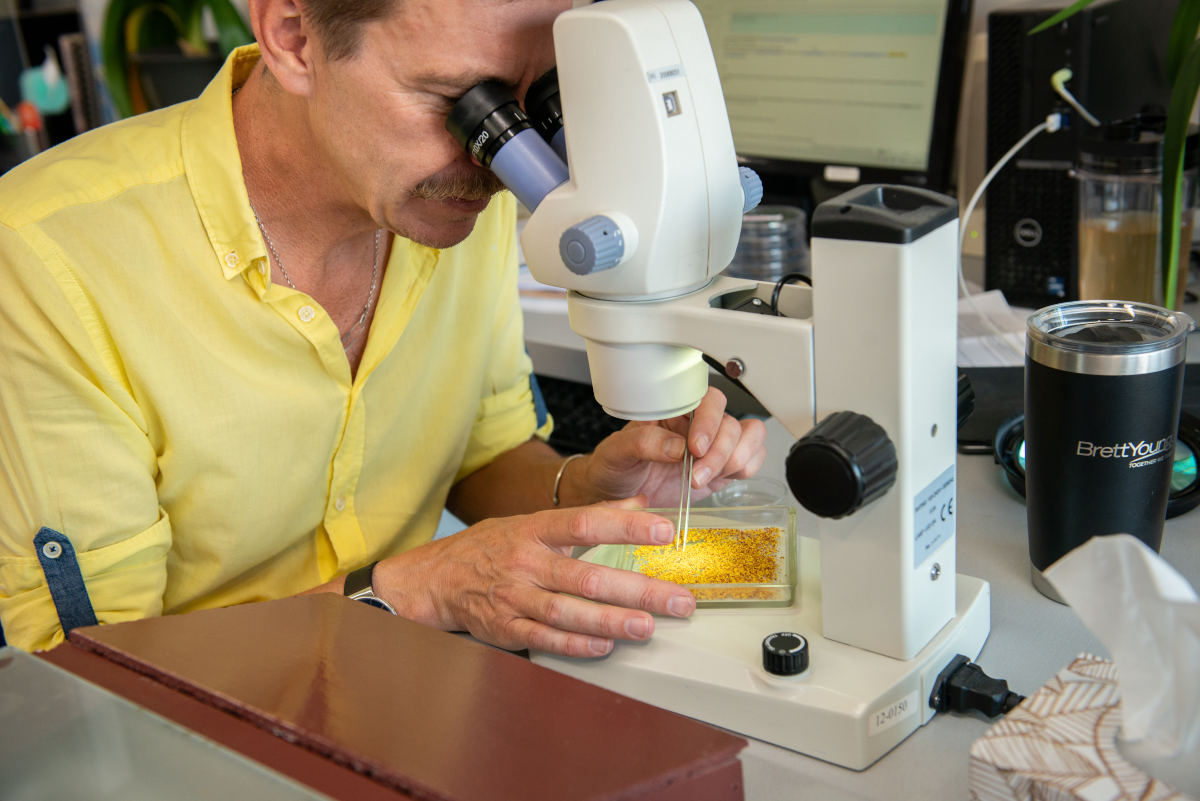
But strong seasons start in the lab.