From improved crop varieties to plant variety protection, NGO campaigns can delay innovations that could improve farmers’ incomes, nutrition and food security.
I must admit that I am becoming increasingly frustrated by something I have witnessed throughout my decades of professional life in the seed sector. Plant breeders spend years, sometimes decades, developing innovations that could help farmers produce more food, protect their crops or improve nutritional quality. These innovations undergo extensive testing and regulatory scrutiny, yet some NGOs dedicate considerable energy and resources to preventing them from reaching farmers. And when such campaigns succeed, they sometimes celebrate their victory, which makes me wonder whether we should be asking a rather uncomfortable question: a victory for whom?
After all, the people celebrating are hardly ever the smallholder farmers struggling with pest damage, poor harvests or inadequate nutrition. Those farmers may never even get the opportunity to decide whether an innovation would benefit them. At Seed World Europe, we have previously explored the longstanding conflicts between NGOs and the seed sector. But the consequences for farmers and consumers deserve more attention.
The Benefits are not Hypothetical
Let’s start with some evidence. A 2014 meta-analysis covering 147 studies of genetically modified crops found that adoption increased yields by an average of 22%, reduced chemical pesticide use by 37% and increased farmer profits by 68%. The benefits were generally greater in developing countries, where even relatively modest improvements in agricultural productivity can make a substantial difference to household incomes.
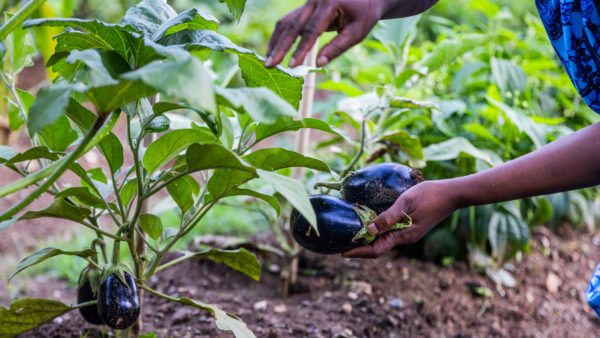
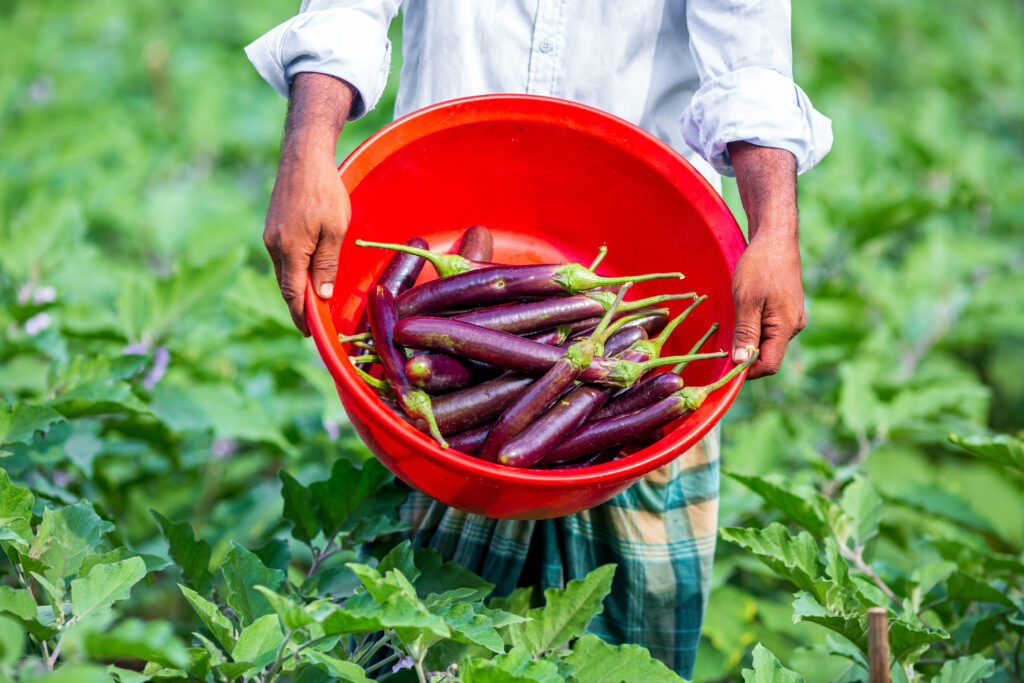
Another study examining Bt cotton adoption among Indian smallholders found that higher incomes improved household calorie consumption and dietary quality, reducing food insecurity among the cotton producing households studied. And consider Bt brinjal in Bangladesh, where an independent evaluation by the International Food Policy Research Institute found 42% higher net yields, a 39% reduction in the quantity of pesticides used, and a 47% reduction in pesticide application costs. These are substantial improvements for farmers operating on narrow margins.
Of course, results differ by crop, technology and farming conditions, and not every innovation will deliver comparable benefits. But these are measurable improvements experienced by farmers, not simply promises made by technology developers. As I pointed out in an earlier Seed World Europe article examining the many myths surrounding GMOs, the scientific evidence often tells a rather different story from the narratives surrounding these technologies.

When Blindness and Children’s Lives are at Stake
I find the situation in the Philippines particularly troubling, especially when we look at Golden Rice. To understand why this innovation matters, we first need to understand the problem it was developed to address. Vitamin A deficiency is one of the leading causes of preventable childhood blindness worldwide. In its early stages, it can cause night blindness, while more severe deficiency can lead to irreversible damage to the eyes and permanent loss of sight. It also weakens the immune system, increasing children’s vulnerability to potentially fatal infections.
The scale of this problem is deeply disturbing. The World Health Organization has long cited worldwide estimates that between 250,000 and 500,000 children become blind annually because of vitamin A deficiency, with approximately half dying within a year of losing their sight. These are historical global estimates, not a current annual count for Southeast Asia, but they illustrate that we are dealing with consequences far more serious than a simple nutritional shortcoming.
And the problem is certainly not confined to the past. In the Philippines, the 2023 National Nutrition Survey, reported in March 2026, found that 13.9% of preschool children were vitamin A deficient. That is roughly one in every seven young children in a country where rice is the main staple food. Not all vitamin A deficient children will become blind, but the figure demonstrates that a significant number remain vulnerable to a deficiency that can damage eyesight and increase the risk of serious illness.
This is precisely why Golden Rice was developed. Conventional polished rice provides energy but little vitamin A, while Golden Rice contains beta carotene, which the human body converts into vitamin A. A human study published in 2009 demonstrated that this conversion takes place effectively, while the Philippine Rice Research Institute estimates that one cup of cooked Golden Rice can provide approximately 30% to 50% of a preschool child’s estimated average daily vitamin A requirement. Golden Rice was never intended to replace dietary diversification, supplementation or food fortification, but to complement those interventions through a food that millions of families already eat every day.
Golden Rice underwent extensive safety assessments and received food safety approvals in several countries. The Philippines authorised its use as food in 2019 and commercial propagation in 2021, after which it was cultivated and distributed on a pilot scale. Yet in April 2024, following litigation initiated by MASIPAG and other opponents of GM crops, the Philippine Court of Appeals revoked its commercial propagation permit, raising concerns about environmental safeguards and regulatory compliance. According to a USDA report dated 3 November 2026, the restrictions remain in effect while the Supreme Court reviews the case.
Greenpeace Southeast Asia, which supported the campaign, described the ruling as a “monumental win”. I find that celebration difficult to understand when considering the children who continue to suffer from vitamin A deficiency and face the risk of blindness or death. We have an innovation that delivers a demonstrated source of vitamin A, has undergone scientific safety assessments and has received regulatory approvals, yet its wider deployment has been stopped while the nutritional problem it was developed to address persists.
To me, the connection is painfully clear. Golden Rice offers an additional way to improve vitamin A intake through a food that millions of families already eat. Every additional year of delay is another year in which this innovation cannot contribute to preventing the suffering caused by that deficiency. I find it incomprehensible that such an outcome can be celebrated as a victory without serious consideration of the children who might have benefited.
The Philippines is hardly an isolated case. Other NGO campaigns have challenged the introduction of agricultural biotechnology, sometimes resulting in prolonged delays and considerable uncertainty for researchers, breeders and farmers.
| Country | NGO involvement and consequences |
| Philippines: Golden Rice and Bt eggplant | Litigation initiated by MASIPAG and other opponents resulted in the 2024 halt to activities involving these crops, despite earlier regulatory approvals. Greenpeace publicly welcomed the decision. |
| India: Bt brinjal | NGO opposition and public campaigns contributed to the government’s 2010 moratorium on Bt brinjal, despite a favourable recommendation from its scientific expert committee. |
| Ghana: GM cowpea | Food Sovereignty Ghana and other organisations pursued litigation concerning GM crop introduction. The case was dismissed in May 2024, following nine years of legal proceedings. Ghana subsequently commercialised insect resistant cowpea (Songotra-T), and farmers are now reporting benefits from growing the variety. |
| Kenya: GM maize and cassava | Litigation involving the Kenya Peasants League challenged the lifting of restrictions on GM crops. A March 2025 court injunction again delayed progress, and Kenya’s National Biosafety Authority reported in April 2026 that continuing court proceedings were hindering commercialisation of approved technologies. |
And NGO opposition is not confined to biotechnology. In June 2025, a coalition of African and European NGOs campaigned against provisions requiring several African countries to adopt UPOV 1991, arguing that stronger plant variety protection (PVP) could undermine traditional farming practices. But what about the benefits that effective PVP systems can bring? We have previously examined Canada’s experience with UPOV 1991 and the impact of UPOV membership in Vietnam in Seed World Europe. A 2024 Canadian study found that 52% of surveyed breeders considered the strengthened legislation an incentive for greater breeding investment, while a Vietnam impact assessment estimated more than US$2.3 billion in agricultural income gains associated with plant breeding following UPOV membership. Although PVP is not the sole explanation for these benefits, I find it remarkable how much attention is devoted to what farmers might lose from stronger protection, while comparatively little is said about the improved varieties, investment and opportunities they might never receive without it.
These cases differ in their legal circumstances, and I certainly do not suggest that every delay can be attributed exclusively to NGOs. In some countries, government decisions, regulatory shortcomings or political considerations have also contributed to the obstacles facing agricultural innovation. Nevertheless, the examples demonstrate how organised campaigns can influence whether technologies developed to address genuine agricultural problems ultimately reach the farmers who might benefit from them.
Who Takes Responsibility for the Consequences?
This is where I believe the debate needs to change. Countries have established rigorous procedures for assessing biotechnology products, and the FAO/WHO Codex Alimentarius Commission adopted internationally recognised principles for GM food safety assessments more than two decades ago. National regulators assess individual products, while cultivation approvals also address relevant environmental considerations. These procedures exist precisely to determine whether innovations can be introduced with an acceptable level of risk.
I fully support independent safety assessments and recognise the right of NGOs to challenge regulatory decisions where there is credible evidence of harm or serious shortcomings in the approval process. However, when an innovation has undergone scientific assessment, obtained the necessary approvals and demonstrated benefits, organisations campaigning to block its use should also be prepared to account for what farmers may lose. It is unreasonable to insist that technology developers substantiate every claim about safety and benefits while allowing those seeking to prevent deployment to overlook the consequences of their own campaigns.
Consider the vegetable farmer who continues losing crops to insect pests because a resistant variety remains unavailable, or the farming family that could have benefited from higher yields and greater income. Consider also children whose diets remain deficient in essential nutrients that an improved crop might help provide. These are not abstract considerations, particularly in countries where malnutrition and food insecurity remain serious threats to human health and survival.
Yet how often do we see an NGO campaign accompanied by a serious assessment of the agricultural and nutritional benefits that may be forfeited if that campaign succeeds? How many additional seasons of crop losses might farmers experience, what income opportunities might disappear, and what alternatives can deliver comparable benefits? I would genuinely welcome seeing such assessments, because I believe they should be an integral part of any campaign seeking to prevent farmers from accessing a scientifically assessed innovation.
I also find it difficult to accept the apparent imbalance in accountability. Researchers and breeders must demonstrate that their technologies meet regulatory requirements, while governments are expected to justify their decisions. Shouldn’t NGOs seeking to overturn those decisions also be expected to explain why the anticipated risks outweigh the benefits that farmers may be denied?
Winning a Court Case is not the Same as Feeding a Family
Let me be clear that NGOs play an important role in society, including raising legitimate environmental, social and food safety concerns. But that does not mean their campaigns should be exempt from scrutiny, particularly when their actions may prevent vulnerable populations from accessing innovations capable of improving livelihoods and nutrition. I find something fundamentally troubling about celebrating the blocking of an agricultural innovation without adequately considering the people who might have benefited from it.
I am not arguing that every genetically modified crop should be approved, or that every scientific assessment is beyond challenge. The human consequences of preventing access deserve the same serious examination as the risks of introducing a technology. That responsibility applies to governments as well as NGOs.
If restricting a scientifically assessed innovation foreseeably worsens food insecurity, I believe the organisations advocating that restriction have a responsibility to explain why the expected harms of allowing it, outweigh the benefits being forfeited. That applies to governments that disregard scientific evidence, but it certainly also applies to NGOs that actively campaign to keep innovations out of farmers’ hands. And although I cannot attribute a specific number of hunger related deaths to any particular campaign, the inability to calculate that number does not mean the possibility of serious human consequences can simply be ignored.
Sometimes I wonder what would happen if, alongside their press releases celebrating a successful campaign against a crop, NGOs were expected to publish an assessment of the agricultural and nutritional benefits potentially lost as a result. That might make for some rather uncomfortable reading, particularly when the people bearing the consequences are farmers and families who had little influence over the campaign in the first place.
Winning a court case is not the same as improving a farmer’s life, and keeping an innovation out of farmers’ fields should never be celebrated without asking what those farmers have lost. The ultimate question is not whether NGOs have the right to oppose innovation, because of course they do. The question is whether they are prepared to acknowledge and take responsibility for the foreseeable consequences when their campaigns succeed.
When an NGO celebrates stopping an agricultural innovation, I want to know who is speaking for the farmers and families who might have benefited from it. More importantly, I want to know who is prepared to take responsibility if denying them that opportunity contributes to continued hunger, malnutrition and preventable suffering.