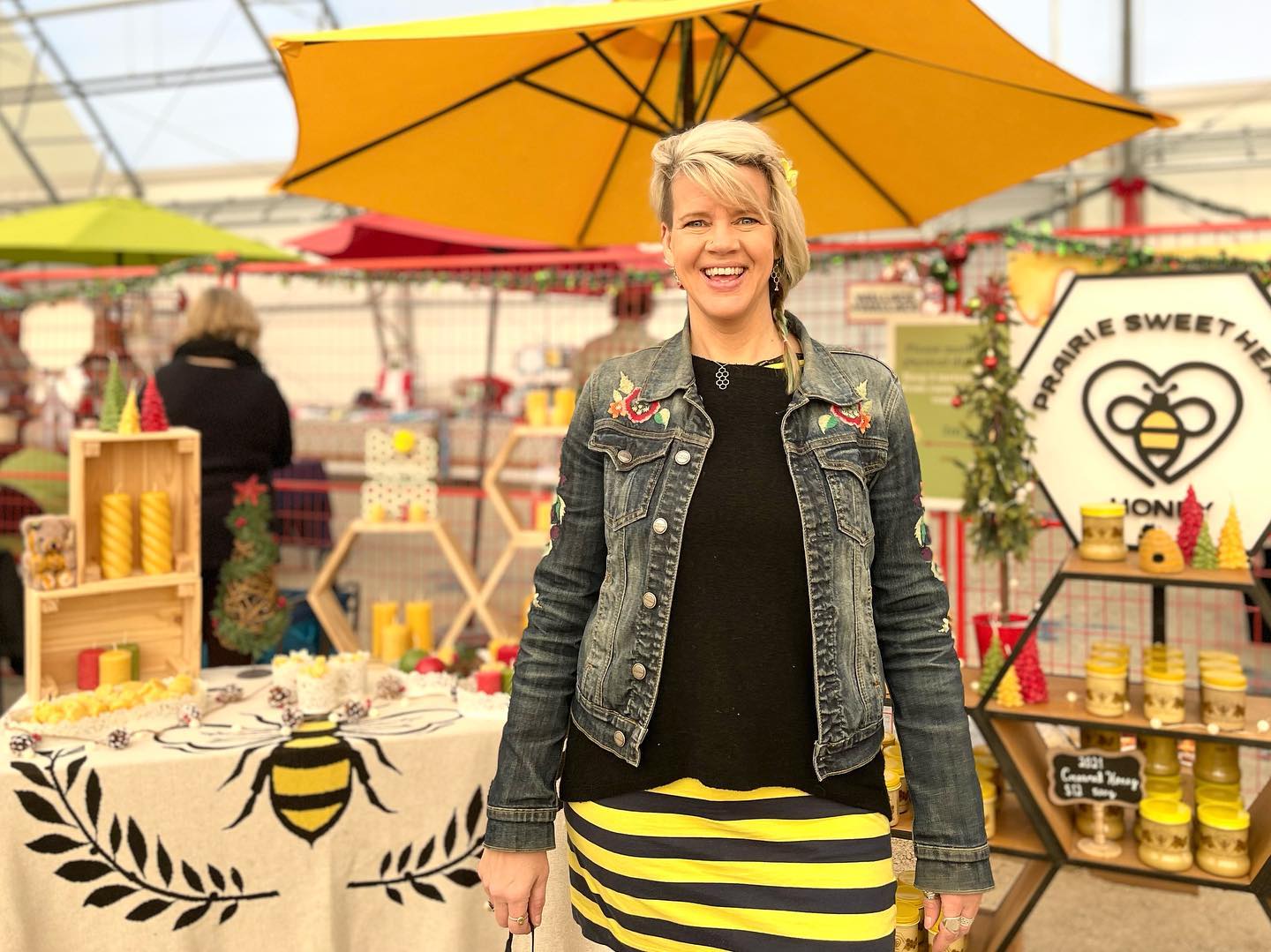
Prairie Sweetheart Honey founder Rebecca Krowelski says honeybee colonies have mastered skills many organizations still struggle with, from collaborative decision-making and adaptability to putting purpose ahead of ego.
Most people think of honeybees as pollinators. Rebecca Krowelski thinks of them as teachers.
The founder of Manitoba-based Prairie Sweetheart Honey has spent more than a decade managing colonies and studying their behaviour. Along the way, she has become convinced that honeybees offer more than ecological value. They may also provide a blueprint for navigating some of the biggest challenges facing human organizations, communities and leaders.
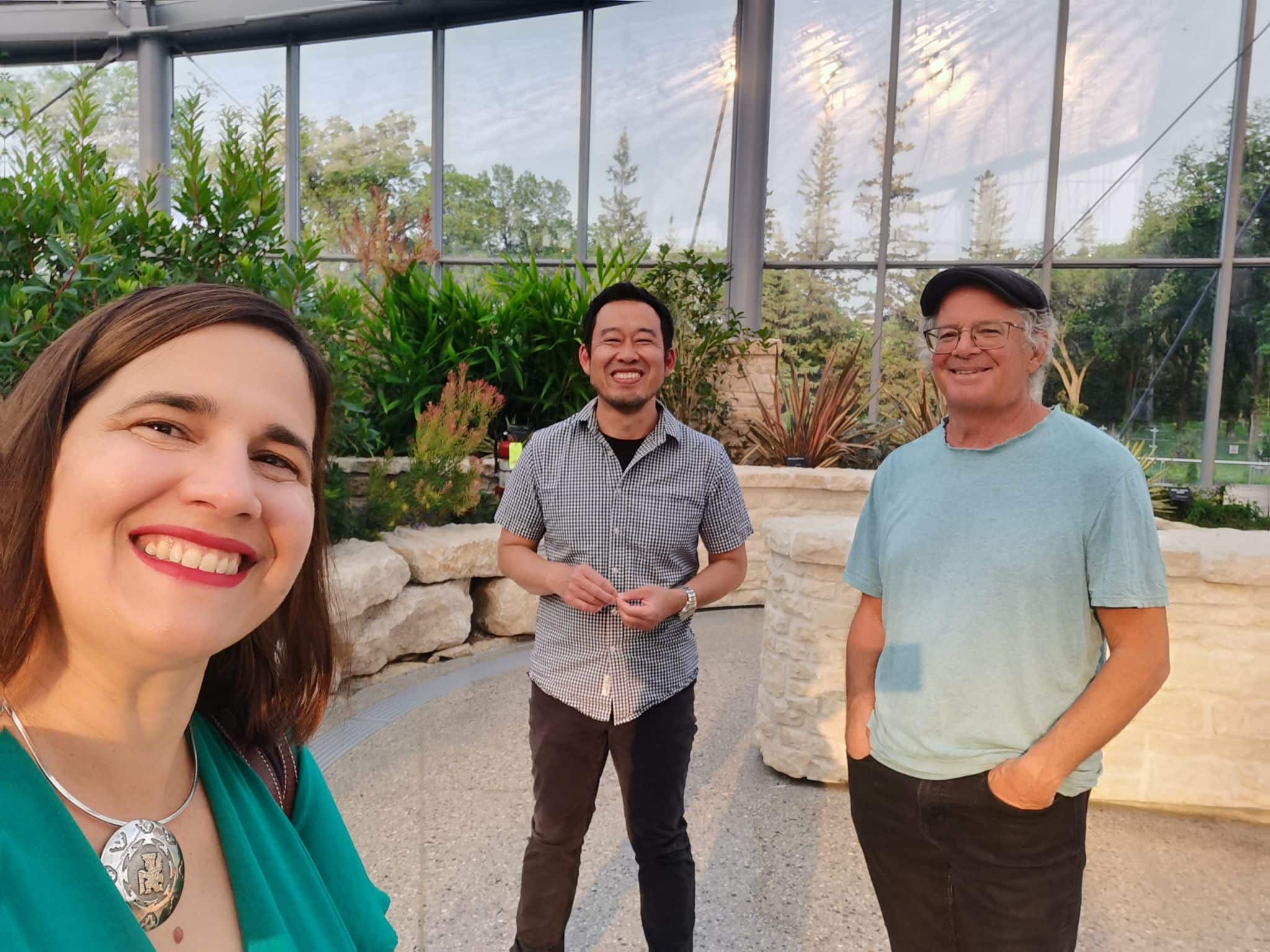
That belief formed the basis of her TEDxWinnipeg talk she gave last week at the University of Manitoba, where she explored how bee colonies make decisions, adapt to change, and care for one another without getting trapped by ego or hierarchy.
For Krowelski, the idea didn’t emerge overnight.
The TEDx journey began last fall when a mentor encouraged her to apply. At the time, she was already thinking about the next phase of her career. While continuing her full-time job, she has been building Prairie Sweetheart Honey and expanding her work as a speaker, presenting to classrooms, community groups, and seniors’ residences.
Her long-term goal isn’t simply to sell more honey. It’s to use honeybees as a lens through which people can better understand collaboration.
“Sharing what bees can teach us about working together is really my biggest passion,” she says.
Why bees resonate beyond agriculture
Pollinators are often discussed in economic terms. Roughly one-third of the food humans consume depends on pollination, making healthy bee populations critical to global agriculture.
But Krowelski believes focusing solely on that role misses something important.
“We depend on them for our survival,” she says. “But there’s also so much we can learn from how they work together.”
That message has proven especially effective with young audiences.
During school presentations, she begins by introducing students to the world inside a hive. By the time she starts talking about teamwork, cooperation, and community responsibility, the students are already captivated.
“Their hands are up the entire time,” she says. “They’ve fallen in love with honeybees first, and then they’re ready to hear the bigger message.”
That bigger message is surprisingly simple: thousands of individuals, all different, working toward a common purpose.
A single healthy colony can produce hundreds of pounds of honey in a season. No bee could accomplish that alone. The achievement belongs to the collective.
The adaptability advantage
What fascinates Krowelski most isn’t just the productivity of bees. It’s their flexibility.
In human workplaces, job descriptions are often fixed. In a hive, roles evolve constantly. Worker bees begin life performing one set of duties before transitioning into others as they age. More remarkably, colonies can reassign labour when circumstances change.
If more nurse bees are needed to care for developing brood, older bees can revert to nursing duties.
“Their anatomy literally changes back,” Krowelski says.
The lesson, she argues, is particularly relevant in an era defined by disruption. Organizations frequently talk about agility. Bees practice it. When conditions shift, they don’t become attached to titles or status. They adapt to serve the colony’s needs.
For business leaders facing economic uncertainty, technological disruption, and workforce transformation, that kind of flexibility may be more valuable than ever.
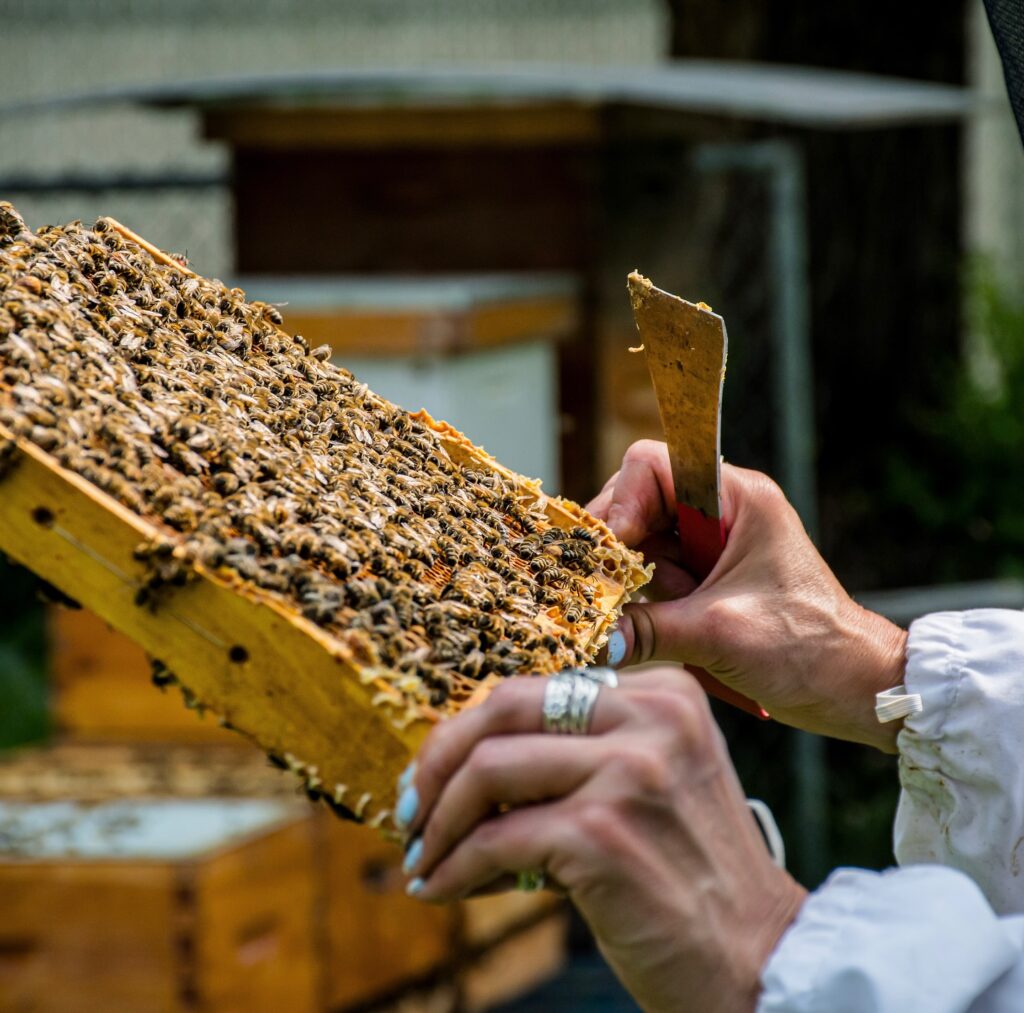
A decision-making system without winners and losers
Another aspect of bee behaviour that has captivated researchers for decades is how colonies make major decisions. When a colony needs a new home, scout bees search for potential nesting sites and return to advocate for their findings through the famous “waggle dance.”
The process resembles a competition. Different locations attract different supporters. Evidence accumulates. Consensus gradually emerges. Eventually, the colony reaches a quorum and moves.
What’s striking is what happens next. The scouts whose preferred sites weren’t selected don’t resist the outcome. The winning scout isn’t rewarded. The colony simply acts on the best available information.
For Krowelski, that process offers a powerful contrast to many modern institutions, where debates often become personal and identity becomes intertwined with ideas.
“We can learn to separate our ideas from who we are,” she says.
When people become less invested in being right, she argues, they become more capable of solving problems together.
Why the message feels timely
TEDxWinnipeg organizers challenged speakers to dig deeply into the ideas behind their talks. For Krowelski, that meant wrestling with a question she couldn’t ignore: why does this message matter right now?
Her answer reflects anxieties many people share. The lingering effects of the pandemic. Political polarization. Rapid advances in artificial intelligence. Deepfakes. Online misinformation. Growing uncertainty about whom and what to trust.
“There is this feeling of separation a lot of people have,” she says.
In that environment, the hive offers a different model. Not because bees are perfect, but because they succeed by focusing relentlessly on shared purpose.
The colony’s survival depends on collective action. Humans face a similar challenge.
Building your own colony
Krowelski’s belief in community isn’t merely theoretical. Several years ago, when her daughter faced a serious health crisis, she found herself overwhelmed by competing demands: hospital visits, work responsibilities, family obligations, and the management of thousands of bees. She couldn’t do it alone.
Family members stepped in. Friends offered support. Colleagues covered responsibilities. A fellow beekeeper purchased her entire honey inventory so she wouldn’t have to process and package it herself. The experience became a real-world version of the lessons she’d observed inside her hives for years.
“They supported me so I could focus on my daughter,” she says.
It’s a story she often returns to because it demonstrates what she believes is the central lesson of the hive: we are more resilient together than apart.
As organizations search for ways to build trust, strengthen culture, and navigate increasingly complex challenges, leaders often look to management theories or emerging technologies for answers.
Krowelski suggests they might also spend some time studying a colony of bees.
After all, honeybees have been solving collaboration problems for millions of years. Humans are still working on it.