Known for his humility and sharp scientific mind, he transformed wheat breeding in Alberta while creating a lab culture that felt like family.
Dean Spaner never introduced himself the way you might expect.
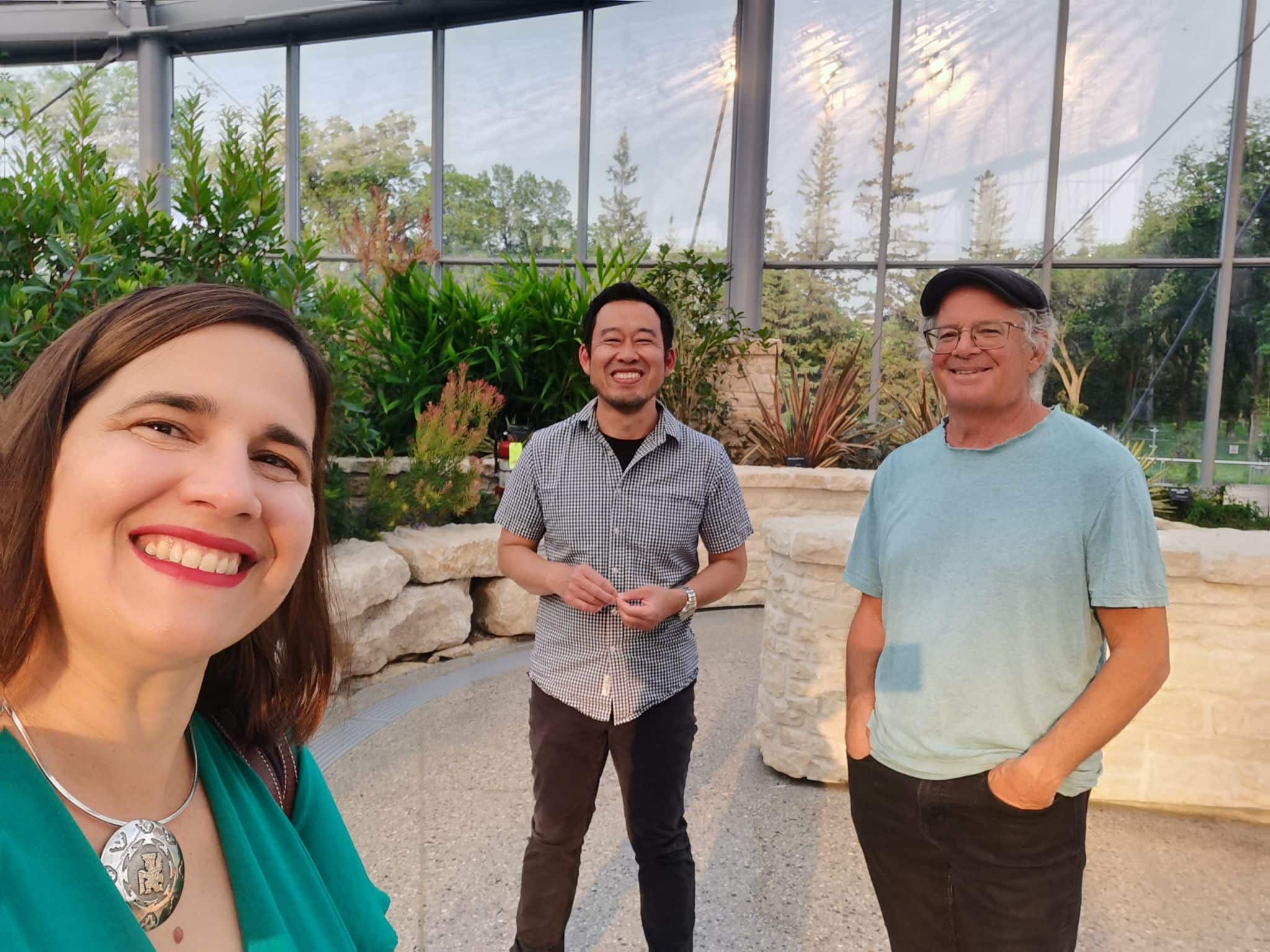
When Enid Perez-Lara, a student at the time and now industry engagement manager for Agronomix, first met him in 2011, she had carefully prepared for an interview with a university professor. Instead, the man who opened the door wore jeans and a T-shirt.
“I said, ‘Hi, Dr. Spaner,’” she recalls. “And he shook his head and said, ‘I’m Dean.’”
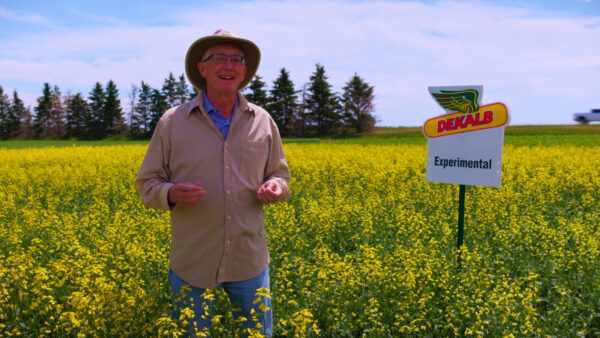
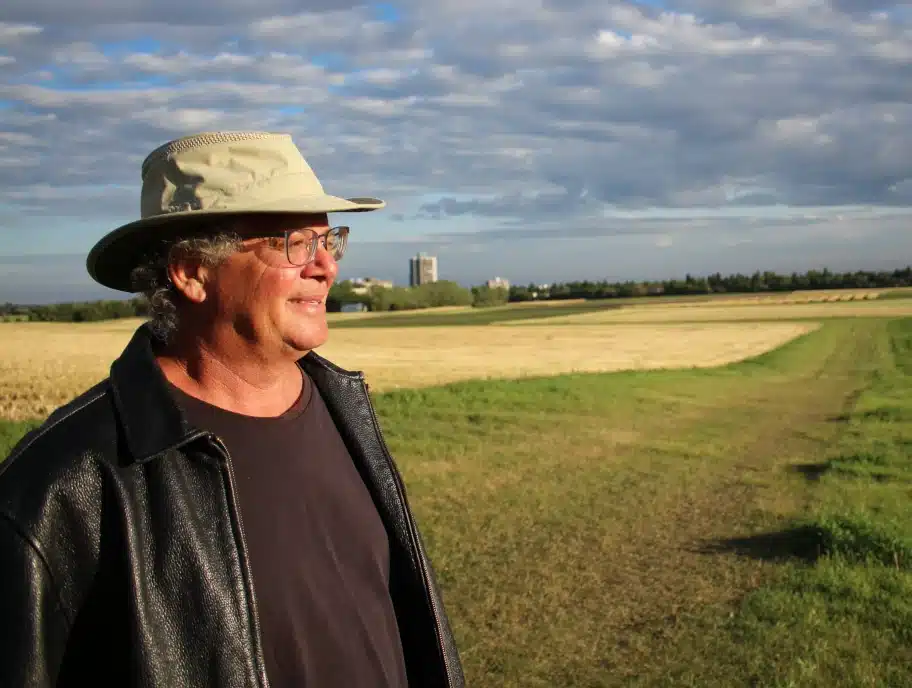
It was a small moment, but one that would come to define him: a globally respected plant breeder who saw himself simply as “a humble farmer.”
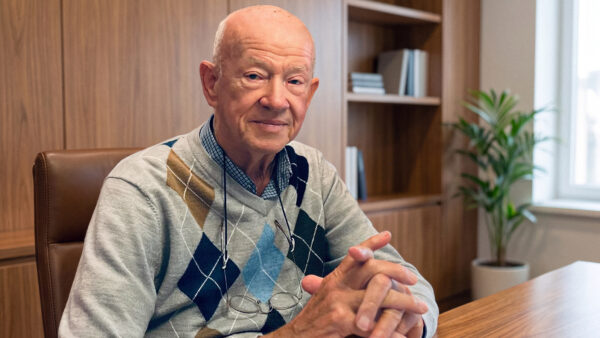
Spaner, who passed away April 9, leaves behind a legacy that reshaped Prairie wheat breeding at the University of Alberta — and, just as importantly, the people who carry that work forward.
From Global Roots to Prairie Impact
Spaner’s path into plant breeding was shaped early.
Growing up in Edmonton, he spent part of his childhood in Nigeria during the Biafran War, where he witnessed food insecurity firsthand — an experience that pushed him toward agriculture.
He went on to study crop science at the University of Guelph, followed by a master’s and PhD in corn breeding at McGill University, with research conducted in Trinidad and Tobago.
Before returning home, he worked in genomics, bred turnips in Newfoundland, and collaborated internationally.
By the time he took over the University of Alberta’s wheat breeding program around 2000, it was modest at best.
What followed was a transformation.
Over two decades, Spaner helped turn that program into a Prairie powerhouse — developing numerous wheat varieties, strengthening disease resistance testing systems, and building infrastructure that improved how wheat is evaluated across Western Canada.
He and his team ultimately released dozens of varieties, including at least 17 distinct cultivars across multiple classes, and contributed to varieties grown on tens of thousands of acres.
He also trained the next generation: more than 40 graduate students and post-docs, many of whom now work across Canada and internationally.
Building Something from Almost Nothing
When Spaner started, resources were thin.
“We didn’t even have a combine. We didn’t have a truck,” he told the Alberta Seed Guide in 2021 of those early years.
But through persistence — and an ability to secure funding and build partnerships — he steadily grew the program. Over time, it became one of the only academic wheat breeding programs in Alberta, focused on early maturity, disease resistance, and strong agronomics tailored to Prairie conditions.
His work also bridged public and private sectors, with collaborations across Agriculture and Agri-Food Canada, universities, and global partners like CIMMYT.
“He Made You Better”: A Mentor Across Disciplines
For many, Spaner’s greatest impact wasn’t just in the field — it was in the classroom and beyond.
Brian Beres, a research scientist with Agriculture and Agri-Food Canada in Lethbridge, first encountered Spaner at variety performance and registration committee meetings and later completed a PhD in agronomy under Spaner’s supervision.
“His breadth and depth of knowledge and experience across disciplines was second to none ,” says Beres. “And that even included statistics. He was just fantastic in that area.”
Even when not a formal supervisor, Spaner played a critical role — a trusted advisor who helped bridge theory and application.
“He trained so many graduate students, and it was a privilege to co-supervise several with him” Beres adds. “He had such an influence on countless individuals in Western Canada and abroad.”
That combination — plant breeding expertise grounded in rigorous data and statistics — made him uniquely effective, particularly for researchers navigating increasingly complex agronomic systems.
A Thinker Who Challenged the Status Quo
Sheri Strydhorst of Results Driven Agriculture Research (RDAR) echoes that sentiment. Spaner was part of her academic journey and remained a touchpoint throughout her career.
“He had that forward-looking personality — always challenging his students to make next-level connections and think more broadly,” she says.
More than that, he pushed people.
“He was one of those out-of-the-box thinkers who challenges people — and that’s what we all need.”
It’s a recurring theme: Spaner didn’t just support students and colleagues — he challenged them to think differently, to question assumptions, and to connect disciplines.
A Lab That Felt Like Family
For Perez-Lara, that challenge came with something equally important: belonging. She originally joined Spaner’s lab as a technician before becoming his PhD student after immigrating from Cuba.
“He gave me the chance to start over,” she says.
And he made sure she finished. Under his supervision, she completed her PhD on time, despite restarting from scratch in a new country. But what she remembers most is the environment he built.
“It was like a family,” she says. “The same people, year after year.”
Students came and went, but many stayed connected — returning for postdocs or collaborations, maintaining relationships long after leaving.
A Global Collaborator, a Prairie Focus
Spaner’s influence extended well beyond Alberta.
He worked with researchers across Canada and internationally, constantly seeking new germplasm and ideas to improve wheat performance. For Perez-Lara, that global outlook was transformative.
“His team was very diverse,” she says. “And the collaborations were very diverse.”
Coming from Cuba, that exposure reshaped her career — and even her life. After finishing her PhD, she moved to Europe, inspired in part by Spaner’s own habit of teaching abroad.
Spaner retired in 2023, leaving behind a program that had grown into one of the Prairies’ key hubs for wheat breeding. His work continues in the varieties now in farmers’ fields, and in the researchers, agronomists and breeders he trained along the way.
For those who knew him, that may be the more lasting legacy.
“He influenced so many people,” says Beres. “And that influence is still out there.”