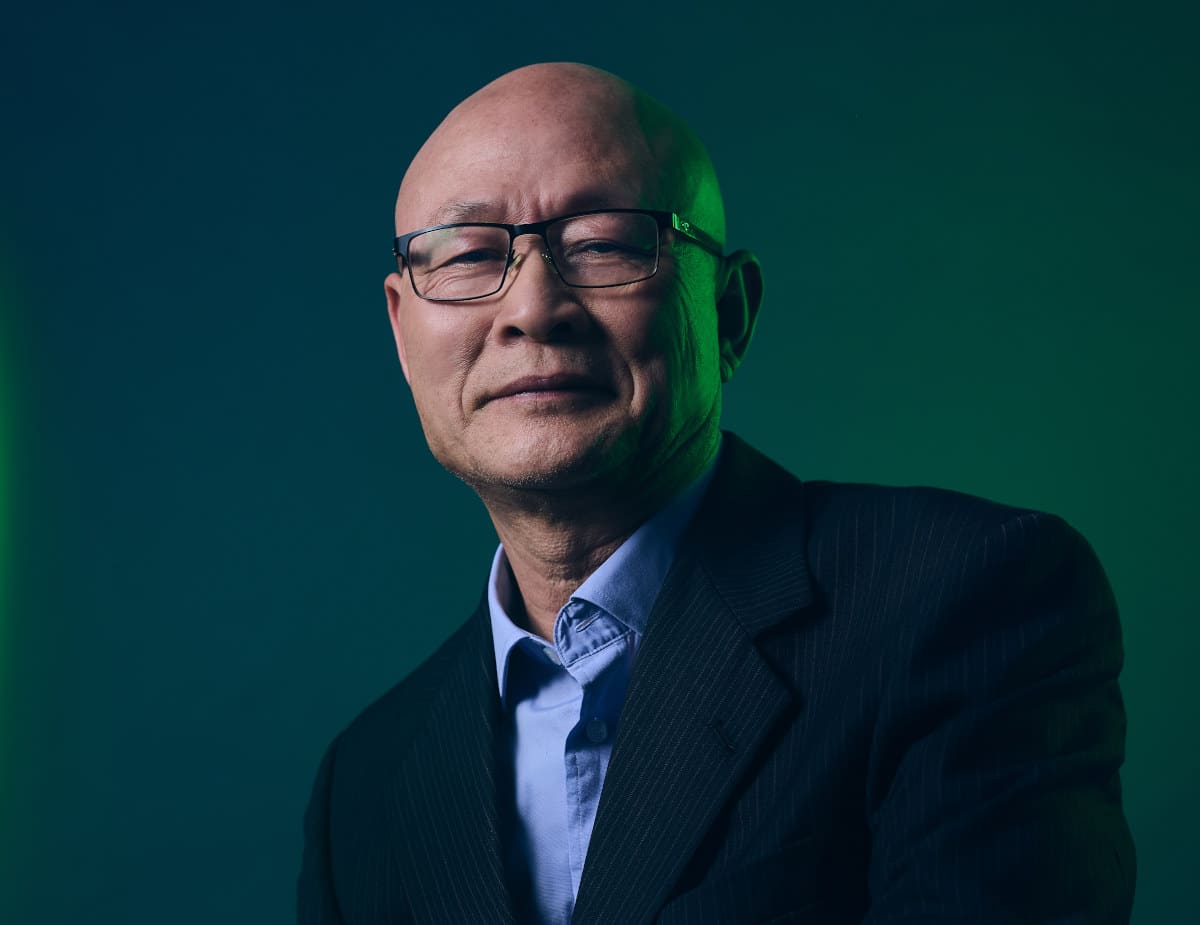
The 2026 Plant Breeding & Genetics Award recipient believes artificial intelligence will transform crop development—but says human expertise remains essential as breeders tackle climate volatility, genotype-by-environment complexity, and the future of food production.
Weikai Yan still believes in the human breeder.
That may sound almost contrarian in 2026, at a moment when artificial intelligence is rapidly reshaping everything from software engineering to drug discovery. But Yan — the Agriculture and Agri-Food Canada (AAFC) Ottawa scientist behind some of the country’s most successful oat cultivars and the 2026 recipient of the Plant Breeding & Genetics Award sponsored by Seed World Canada and Seeds Canada — has spent four decades studying systems too complex for easy answers.
Agriculture, he says, is one of them.
“AI looks like it can do almost everything,” Yan says. “But plant breeders are still essential to ask the right questions.”
That tension between machine intelligence and human judgment sits at the centre of modern agriculture. Climate volatility is making crop breeding dramatically harder. Growers want higher yields, stronger disease resistance, better nutritional profiles, and more resilient crops capable of performing across increasingly unstable environments. At the same time, genomics, predictive analytics, phenomics, and AI are transforming how breeders work.
Yan has spent much of his career preparing for exactly this moment.
Over the past 25 years, he has become internationally recognized for his work on genotype-by-environment interaction, or G×E — the notoriously difficult challenge of understanding how genetics behave differently under changing environmental conditions. It’s one of the defining problems in plant breeding, and one that climate change is rapidly intensifying.
“The climate becomes more fluctuating and more erratic,” he says. “That means we are facing more G×E and lower heritability.”
In practical terms, breeders are trying to hit moving targets. For Yan, solving that problem required more than intuition. It required systems thinking.
Since joining AAFC’s Ottawa Research and Development Centre in 2002, Yan has helped develop analytical frameworks that changed how breeders evaluate crops across multiple environments. His GGE biplot methodology (a graphical tool for breeders, geneticists, and agronomists), now referenced in more than 8,800 scientific publications, has become a standard tool in plant breeding and agronomy around the world.
He also pioneered concepts like mega-environment analysis and Genotype × Yield × Trait (GYT) evaluation systems, helping breeders simultaneously optimize yield, quality, stability, and adaptability. Those ideas didn’t stay theoretical for long.
Since becoming AAFC’s oat breeder in 2006, Yan has released and licensed 37 registered oat cultivars. Twenty remain actively grown across Canada’s production regions. His varieties occupy roughly 80% of Ontario oat acreage and nearly two-thirds of eastern Canadian oat production.
Cultivars like AAC Reid, AAC Nicolas, AAC Excellence, AAC Wight, and AAC Basil became industry benchmarks because they delivered something increasingly difficult in modern agriculture: consistency.
“His leadership, scientific creativity, and practical focus have had an unparalleled impact on oat production across Eastern Canada and beyond,” says SeCan General Manager Jeff Reid.
The influence extends well beyond Eastern Canada.
General Mills oat breeder Paul Richter credits Yan’s work on mega-environment breeding with improving oat breeding programs “throughout North America,” particularly by helping breeders tailor varieties to specific growing regions while improving selection efficiency.
Some of Yan’s eastern Canadian lines, Richter notes, are now showing “wide adaptability” in Western Canada as well — an increasingly valuable trait as climate variability intensifies.
That adaptability may become one of agriculture’s most important competitive advantages.
For decades, plant breeding focused heavily on maximizing yield under relatively stable conditions. Today, breeders are increasingly being asked to optimize for uncertainty itself.
That’s where AI enters the picture.
Yan talks about artificial intelligence with a mix of excitement and realism. He sees enormous potential in genomic selection systems capable of predicting promising breeding lines earlier in development cycles. He believes phenomics (the use of sensors, drones, and imaging technologies to rapidly assess crops in the field) will fundamentally accelerate breeding decisions.
After major storms, for example, breeders traditionally walk fields manually to evaluate lodging damage and crop performance. Imaging systems can now analyze entire breeding nurseries almost instantly.
But unlike industries where AI can fully automate workflows, agriculture still resists purely digital solutions. Biological systems remain messy. Environmental interactions remain difficult to predict. And data models remain only as useful as the assumptions behind them.
That’s why Yan believes human expertise may become more valuable in the AI era.
“We used to say a well-posed question is half of the solution,” he says. “With AI, a well-posed question is 80% of the solution.”
It’s a deceptively simple observation, but one increasingly echoed across science and technology industries: as answers become easier to generate, the ability to frame meaningful questions becomes the real differentiator.
The Slow Reality of Ag Innovation
Today, his work sits at the intersection of agriculture, climate science, and AI-driven research. But Yan remains deeply pragmatic about what innovation requires. Plant breeding, he points out, operates on timelines unfamiliar to most modern technology sectors.
“You cannot expect someone to do a good breeding job without funding,” he says. “Plant breeders have to treat their work as a lifetime career.”
That long-view mindset increasingly clashes with an economy obsessed with short-term returns and rapid disruption cycles. But agriculture may be one of the clearest examples of why long-horizon innovation still matters.
Yan believes new technologies can help reduce costs and improve efficiency. Better analytics may reduce unnecessary testing locations. More targeted breeding strategies can shrink population sizes while accelerating genetic gain. AI can streamline analysis and improve prediction accuracy. Still, he knows that technology alone won’t solve agriculture’s future challenges.
At 68, Yan still talks like someone thinking decades ahead. Some of the cultivars his team released remain market leaders more than 10 years later. Others currently moving through the breeding pipeline, he says, show dramatic improvements over today’s standards.
The work continues because agriculture never really stops evolving.
Neither, it turns out, do the people trying to reinvent it.
—This article comes on the heels of last week’s announcement that CDC Meadow has won Seed of the Year for 2026. Stay tuned next week as we begin to announce the winners of the 2026 Canadian Plant Breeding Innovation Scholarships.