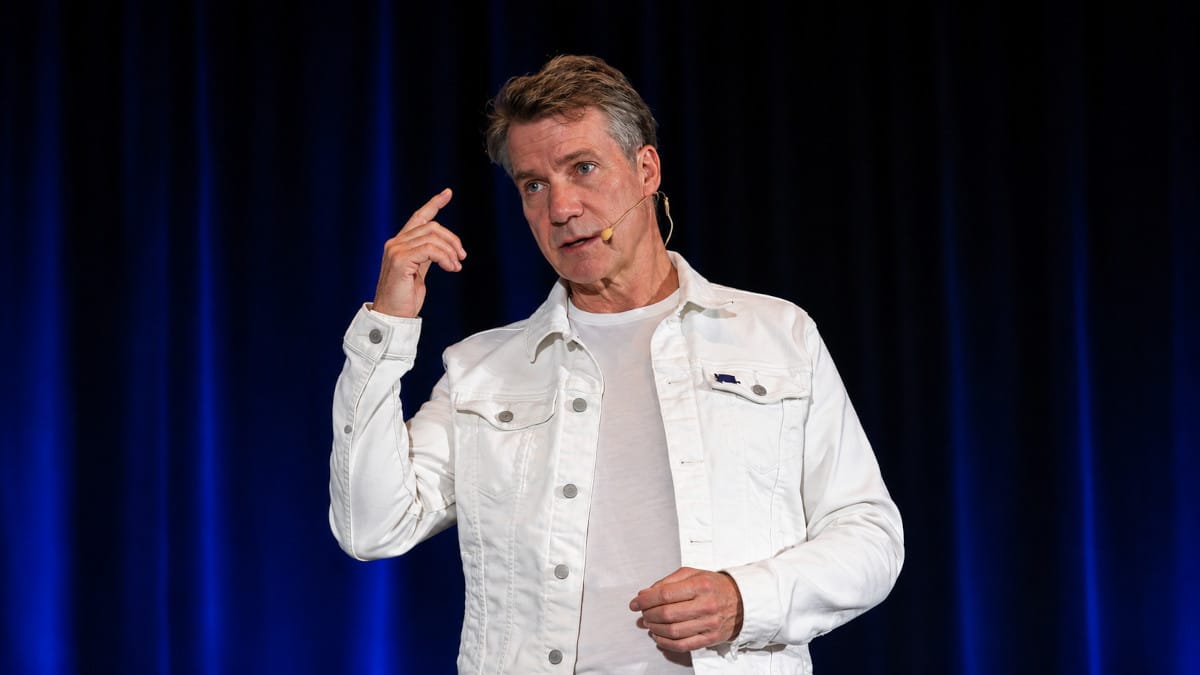
Filmmaker Mike Downie explores why the Canadian seed industry’s greatest achievements deserve a place in the country’s cultural consciousness.
There are people who change the world and make headlines doing it. Then there are people who change the world one tiny seed at a time.
For Canadian documentary filmmaker Mike Downie, Ron DePauw belongs firmly in the latter category.
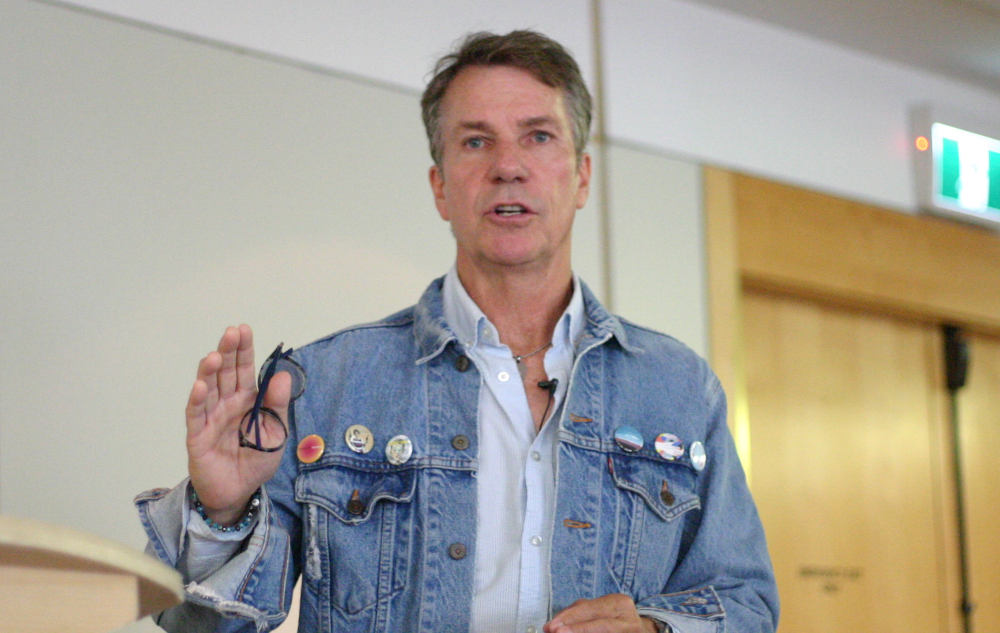
Speaking at SeCan’s 50th anniversary celebrations in Winnipeg this week, Downie delivered an emotional tribute to the power of Canadian storytelling, drawing on the lives of Terry Fox, legendary jockey Ron Turcotte, his late brother Gord (lead singer for The Tragically Hip), and a Saskatchewan-born wheat breeder whose work has helped transform Prairie agriculture.
It was an unlikely intersection of Canadian popular culture and agricultural science, but one that carried a powerful message for the seed sector: you don’t have to be a household name to change the course of Canadian history.
And perhaps it’s time Canadians knew more about the people who have.
“We have to stand tall. We have to find our voice, and we need to trumpet our great citizens to the world,” Downie said.
“Stories open our eyes, and then our minds, and then our hearts to the people and to the world around us.”
The Billion-Dollar Man
Downie admitted that he had received something of a crash course in Canadian wheat breeding in preparation for his appearances at SeCan’s anniversary celebrations.
The Toronto-based filmmaker joked about how much he had learned in just a few weeks, including the challenges Prairie farmers face in balancing yield and protein content while managing unpredictable weather and disease pressure.
What fascinated him, however, was the human story behind the science.
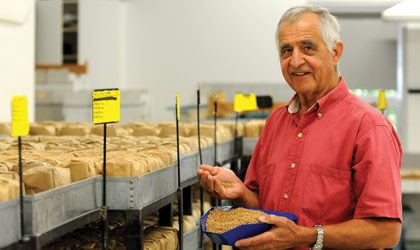
DePauw, who spent 41 years with Agriculture and Agri-Food Canada before becoming SeCan’s science advisor, helped develop wheat varieties that fundamentally changed the economics of growing wheat in Western Canada. Among them was AC Barrie, a variety that delivered higher yields without sacrificing protein content. At its peak, Downie noted, it was grown on more than eight million acres.
Then came AAC Brandon, another extraordinarily successful variety developed through the efforts of DePauw and his fellow researchers.
The economic contribution of his breeding work has earned DePauw the nickname “The Billion-Dollar Man.” Yet when Downie first presented DePauw’s story at a SeCan celebration in Red Deer, the breeder came back to him with an important editorial note.
“The biggest one that Ron came back to me with was that I needed to do a better job of stressing the contribution made by other researchers to this success,” Downie said.
DePauw also reminded him not to forget farmers and the importance of the farmer levy introduced in 1994 in supporting the research that delivered superior wheat varieties to Western Canada.
For Downie, that humility was itself an important part of the story.
“Ron, you’re a humble guy, but you’re deeply driven, and you never needed to be famous. I believe you just wanted to help make life better and a little less risky for farmers who are feeding the world.”
Fifty Years of Canadian Ingenuity
In many ways, DePauw’s story is also SeCan’s story.
As the organization celebrates half a century in business, its legacy can be measured not only in the varieties it has brought to market, but in the relationships it has helped build between plant breeders, seed growers, researchers and farmers.
Downie highlighted how DePauw’s transition from government research to SeCan helped bring together public researchers, private breeders and seed companies to advance the next generation of Canadian crop genetics.
It’s a distinctly collaborative approach to innovation, and one that rarely receives the kind of public recognition afforded to achievements in sports, music or entertainment. Yet Downie suggested that Canadians have historically been too reluctant to celebrate their own accomplishments — something he believes needs to change, particularly at a time when Canada’s sovereignty, economic independence and national identity are being challenged.
“I think it’s woken us out of this sort of collective complacency as Canadians,” he said of recent political and economic tensions.
“Over the last number of years, there have been far too many times for me that I’ve taken this country and this way of life, and perhaps each other, for granted. But not so much anymore.”
For the Canadian seed industry, those words carry particular resonance. Behind every successful Canadian-bred variety are years of domestic scientific expertise, research investment, field testing and cooperation. The results contribute to the country’s agricultural competitiveness and its ability to feed people at home and abroad.
SeCan’s 50th anniversary offers an opportunity to make that contribution more visible.
Finding Extraordinary Stories in Ordinary Places
Downie knows something about turning seemingly ordinary Canadian experiences into stories that resonate with millions of people.
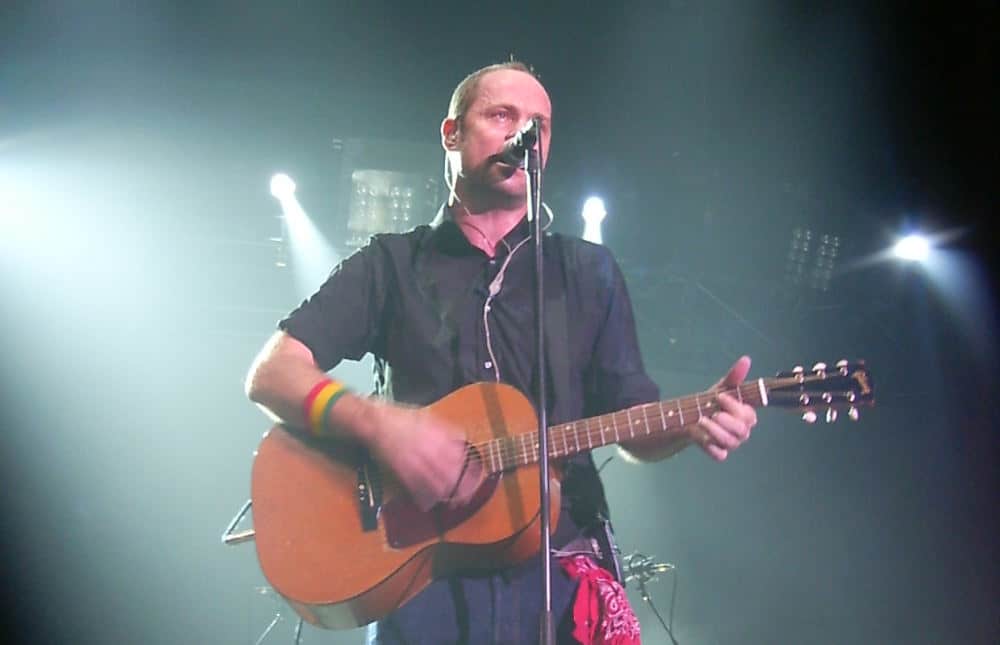
His brother Gord built much of his songwriting career around Canadian people, places and events that might otherwise have escaped the attention of popular culture.
Downie recalled hearing his brother perform 38 Years Old for him shortly after The Tragically Hip returned from recording in Memphis in 1989. Inspired by a prison escape near their childhood home, the song incorporated details from the Downie family’s everyday life.
The filmmaker was astonished that his brother had found something worth writing about so close to home.
“I couldn’t believe it. He was singing about our family, about our little town. I didn’t think that it really was worthy.”
Hearing the song brought back childhood memories he had all but forgotten.
“You have to tell your stories, or they disappear.”
Gord carried little notebooks with him throughout his career, recording observations, expressions and details from conversations with Canadians he encountered on the road. Many of those encounters became the raw material for the band’s music.
“Gord was really paying attention to what was on people’s minds,” Downie said.
There is a lesson in that for an industry whose most compelling stories often originate in research plots, seed processing plants, laboratories and conversations around kitchen tables.
A wheat breeder spending decades pursuing incremental genetic improvements might not seem like the obvious subject of a documentary. But consider the millions of acres planted to those varieties, the farm families whose livelihoods they have supported and the food ultimately produced from that grain.
Suddenly, the story becomes considerably bigger.
The Power of One
Throughout his presentation, Downie returned to the idea that individual human stories can help people comprehend achievements and experiences that otherwise seem too vast to fully appreciate.
He spoke about his work with Gord on Secret Path, which tells the story of Chanie Wenjack, a 12-year-old Anishinaabe boy who died in 1966 while attempting to return home after fleeing a residential school.
The project eventually led to the creation of the Gord Downie & Chanie Wenjack Fund, which is celebrating its 10th anniversary in 2026.
For Downie, the experience demonstrated how telling one person’s story can open people’s eyes to something much larger.
“Those numbers are so big; they bounce off the brain. They’re hard to process. That’s the power of a small story. That’s the power of one.”
It’s a principle that has applications well beyond documentary filmmaking.
The seed industry frequently communicates its value through statistics: acres planted, yield improvements, economic contributions and research dollars invested. Those numbers are important, but they don’t necessarily create an emotional connection with people outside agriculture.
The story of someone like DePauw offers a human entry point into understanding why Canadian plant breeding matters, what it takes to develop a successful variety and why the infrastructure supporting that work is worth preserving.
An Industry With Stories Worth Telling
Downie closed his presentation by reflecting on his brother’s final tour with The Tragically Hip in 2016, undertaken after his diagnosis with terminal brain cancer.
Gord chose to return to the stage with his four longtime bandmates, culminating in the band’s final concert in their hometown of Kingston, Ont.
On that night, Downie said, the man who had spent his career telling Canadian stories had himself become the story.
But he emphasized that the ability to inspire others isn’t exclusive to musicians, athletes or national icons.
“Canadian stories aren’t really about the famous or the heroic; they’re mostly about the people, the moments, and a quiet courage that often goes unnoticed,” he said.
“And you don’t need to be a documentary filmmaker or an iconic songwriter to find these stories. They’re right there beside you, at home, in your community, at work, and wherever you go in this country.”
Following Downie’s presentation, Seed World Group President Shawn Brook picked up on that message, describing the people gathered for SeCan’s anniversary celebration as an enormous untapped reservoir of stories.
“These stories that need to be told again and again and again, so that people understand what it is you do and why you do it,” Brook said.