Drones are giving researchers a faster, more precise way to monitor wheat crops and identify varieties that can better cope with climate change. In a new study led by the University of Barcelona and the Agrotecnio research centre, scientists combined drone imaging, ground sensors and artificial intelligence to assess which durum wheat varieties can deliver both strong yields and reliable performance under changing Mediterranean conditions.
Published in Plant Phenomics, the study highlights the growing importance of monitoring crops throughout the season rather than relying only on final harvest results. For breeders, the goal is no longer just to find wheat that produces high yields, but crops that can maintain those yields more consistently under stress from heat and limited water.
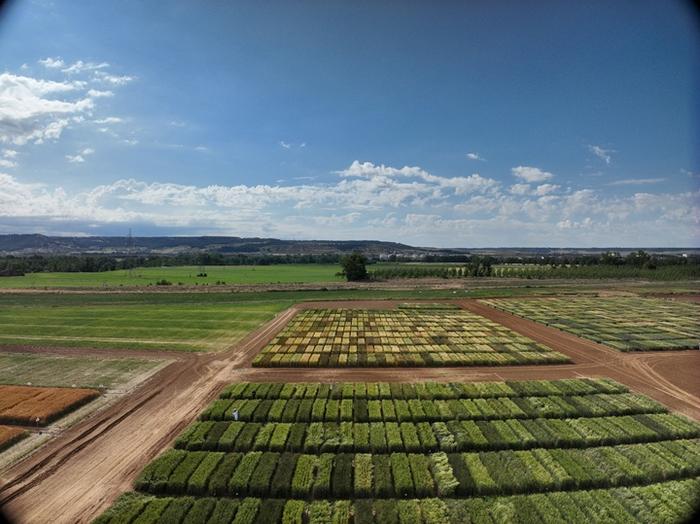
To test this, the researchers analysed 64 durum wheat varieties grown in both irrigated and rain-fed environments. Using drones equipped with RGB, multispectral and thermal cameras, along with ground-based sensors, the team tracked crop development across the full growing cycle. This allowed them to gather detailed information on plant growth, temperature response and canopy condition before harvest, reducing the time and cost usually required to evaluate performance in the field.
The drone and sensor data revealed that the most promising wheat crops were not those that stayed green longest, but those that established strong early vigour and matured slightly earlier. Varieties with weaker initial growth and prolonged greenness were less successful, showing that greener crops do not necessarily produce better or more stable yields, according to a press release.
By feeding these measurements into artificial intelligence models, the researchers were able to predict both yield potential and production stability with high accuracy. This gives plant breeders a powerful new tool for selecting wheat varieties that are better adapted to drought, heat and other climate-related pressures.
The findings suggest that drone-based crop monitoring could play a major role in future wheat breeding, helping researchers identify resilient varieties earlier and more efficiently. In a warming climate, this kind of technology may be essential for developing crops that can secure harvests without sacrificing productivity.