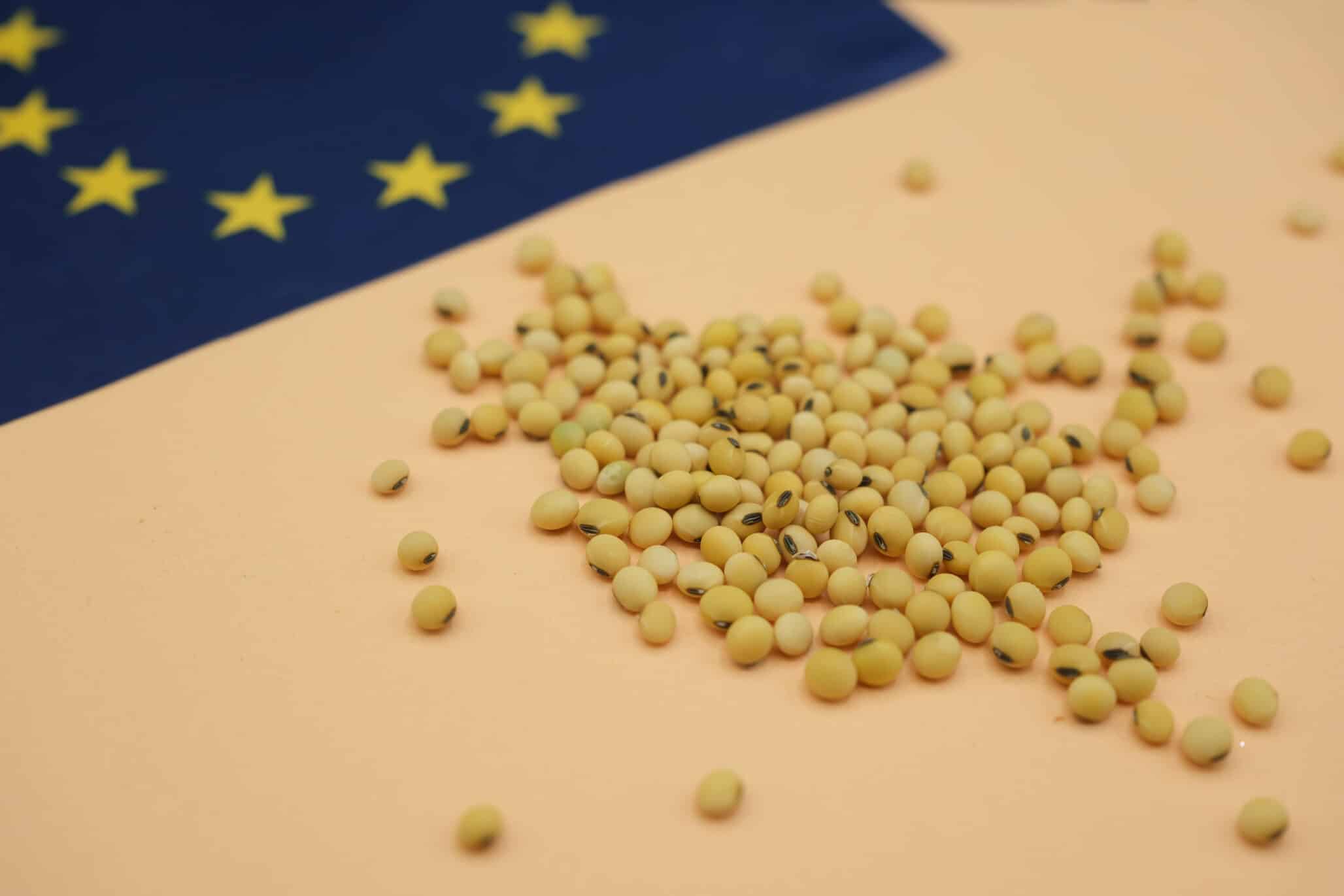
The sante-eNews Newsletter from 2 June 2026 announced another GMO decision. The title claims that the European “Commission authorises use of safe genetically modified crop as food and animal feed”. The reader was reassured that the decision was based on “a scientific assessment by the European Food Safety Authority, which concluded that the GM soybean is as safe as its non-GM counterpart.”
I did not get excited because, like Lucy pulling the football away at the last minute, I had been conditioned to expect what came next. “The Commission’s decision only allows this GM crop to be imported for use in food and animal feed, but not to be cultivated in the EU.”
Since 2001, this pantomime has been played out on a regular basis. Companies comply with all stringent EU regulatory requirements. EFSA declares that the GM seed is safe. Approval is then sent to the European Council where the inevitable statement is then copy-pasted into Commission press releases, as was the case in June:
“The authorisation is valid for 10 years, and any product produced from this GM crop will be subject to the EU’s labelling and traceability rules. The Commission had a legal obligation to decide on this authorisation after Member States did not reach a qualified majority either in favour or against this decision.”
As the European Commission will be sued for failure to comply with global trade obligations, we get the ridiculous situation where EU farmers can’t enjoy the sustainability and yield benefits of growing GM plants that are then imported into the EU. For 25 years, the madness of this poisoned process has been allowed to continue, tainting the European Union’s claim to regulatory legitimacy. Twenty-five years is long enough. The old generation of anti-GMO fearmongers have moved on and it is time for the European Commission to take responsibility for this broken legislation and revise the 2001 GMO Directive.
Harmonise the Regulatory Process
The recent passing of the New Genomic Techniques (NGT) regulation has finally aligned the European rules with the global seed research regulatory approach. The NGT regulation evaluates the product (the seed traits) rather than the process (how the seed was developed). The European GMO Directive only examines the research process without consideration of the product.
It may be argued that the two-tiered approach of the NGT regulation was a fair compromise between long-warring stakeholders. If it can be shown that a seed innovation has no modification with any foreign material — if the seed could have been bred naturally or through conventional breeding — then it falls under the NGT-1 classification and requires no stringent regulatory process or labelling. If, however, there is a genetic modification, then, as NGT-2, the seed falls under the requirements of the existing GMO Directive.
But can these two regulatory frameworks coexist, or will the European seed approval process fall back into the relentless gamesmanship that has marred Europe’s ability, for decades, to enable farmers to benefit from the best agricultural technologies?
The most important question has yet to be tested. How will the European Union determine if a seed innovation can be classified as an NGT-1 and avoid falling under the more restrictive GMO Directive?
The seed research institution will file a dossier with one Member State competent authority for an NGT-1 classification. The Member State will then submit the request to EFSA for scientific analysis and approval. The dossier will then proceed to the Council for a vote on whether the seed can be excluded from the GMO Directive.
In other words, little will likely change.
Old Conflicts in New Bottles
The NGO community was quiet during the final approval process of the NGT regulation. Only several die-hard activist MEPs submitted amendments and there was no real fight to integrate them into the final legislation. Did they give up or just move camp to the next battlefield? It appears these battles will be fought on an ad hoc basis with greater focus and intensity on the hot-button biotech issues.
Many of the gene-edited solutions will provide enormous benefits with no risks (eg, leading to reduced pesticide or fertiliser use, drought resistance or reduced spoilage). Rather than risk negative public reaction or regulator frustration, the anti-GMO NGOs would just stand to the side as the innovations would be “fast-tracked” to the farm. But where NGT innovations would challenge organic farming (eg, providing pesticide resistance or increasing yields), that would mark a line in the sand where the campaigns to block these seeds from the simpler regulatory system would intensify at the Member State level to block any qualified majority. In reality, I fear only the most clear-cut innovations will pass through the NGT-1 regulatory structure.
It is imperative then that the 2001 GMO Directive be revised to provide a more cohesive regulatory framework for seed innovations. The out-dated directive should not be used as some purgatory for approvals held up by ad hoc activist campaigns. The revision needs to harmonise the regulations on a product focus and abandon the failed process-oriented distraction. Only then can European farmers and consumers enjoy the same benefits as most of the rest of the world.
How many more times will researchers, regulators and industry try to kick the ball knowing that Lucy is still up to her old tricks?
David Zaruk is a professor based in Brussels writing on environmental-health risk policy within the EU Bubble.