Researchers identified a mechanism that helps germinating seeds balance sodium and potassium in salty soils.
Researchers at the Hebrew University of Jerusalem have identified a system that helps seeds germinate under salt stress, a finding that could support efforts to develop crops better suited to saline soils.
The team studied Arabidopsis thaliana, focusing on how germinating seeds retain potassium while preventing sodium from reaching toxic levels. Potassium is essential for normal cell function, but excess sodium can interfere with germination and early growth.
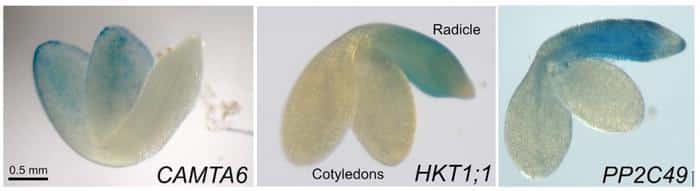
The researchers found that calcium activates a mechanism involving three proteins: CAMTA6, PP2C49 and HKT1;1. CAMTA6 responds to calcium signals and helps regulate other components of the system.
The genes are active in different parts of the embryo. Some are expressed in the embryonic leaves, or cotyledons, while others are active in the embryonic root, or radicle. This allows the seedling to manage salt stress differently across its developing tissues, according to a press release.
“Seed germination is an extremely vulnerable stage in a plant’s life, and salt can disrupt the mineral balance a young plant needs before it has even emerged from the soil,” Dr. Shkolnik said. “What we are beginning to uncover is the control system behind that response.”
Improved Germination Under Salt Stress
Researchers also tested sanguinarine, a natural compound derived from bloodroot that inhibits PP2C49.
Under moderate salt stress, sanguinarine increased seed germination from 76% to 92%. Under more severe conditions, germination rose from 3% to 37%. Treated seeds contained less sodium and more potassium.
However, the compound’s benefits were limited to germination and did not protect seedlings after emergence.
The researchers said the three proteins are likely part of a much larger salt-response network. Understanding that network could eventually help breeders identify genes that improve crop germination and establishment in salt-affected soils.