Ukraine’s GMO legislation entering into force in 2026 introduces new rules on registration, labelling, traceability, cultivation bans and future EU alignment.
Ukraine is preparing for a major reset of its GMO legislation. In September 2026, a new law on the state regulation of genetic engineering activities and the control of genetically modified organisms (GMO) and products on the market is scheduled to enter into force.
For the seed sector, the law is more than a technical update. It is part of a wider effort to modernise Ukraine’s regulatory framework, strengthen biosafety oversight and prepare the country for deeper alignment with the European Union.
The law, adopted in August 2023, defines the legal and organisational principles for regulating genetic engineering activities, ensuring environmental, genetic, food and biological safety, and controlling the placing of GMOs and GM products on the market.
It consists of 12 chapters, 43 articles and final and transitional provisions, covering everything from closed-system research to open-system testing, state registers, labelling, market placement, monitoring, transboundary movement, laboratory requirements, state control and penalties.
For Ukraine, the timing matters. The country remains a major agricultural producer and exporter, while at the same time moving through a demanding process of legal convergence with the EU.
In that context, GMO rules are not only about technology. They are also about trade, public trust, market access, enforcement capacity and the credibility of the regulatory system.
According to Siuzana Grygorenko, executive director of the Seed Association of Ukraine, the new law should be seen in that broader context. “Ukraine needs a modern, transparent and predictable framework for genetic engineering and GMO regulation,” she says. “This is important for biosafety, but also for legal certainty, investment, research and Ukraine’s continued integration with the European Union.”
A Framework for the Full GMO Chain

One of the most important features of the new law is its breadth. It does not focus only on whether a GMO may or may not be cultivated or placed on the market. Instead, it creates a wider regulatory structure for how genetic engineering activities are carried out, how GMOs are assessed and registered, how GM products are labelled and traced, and how compliance is controlled.
The law distinguishes between genetic engineering activities in closed systems and the handling of GMOs in open systems. Closed-system activities are subject to different requirements depending on the risk level. The law identifies four risk levels and provides for declarations or permits depending on the level of risk involved. Open-system activities, including research and testing, require specific conditions and applications for permits.
This is particularly relevant for research organisations, breeders and companies that may be involved in biotechnology, trait development, testing or product assessment. The law provides a more defined pathway, but it also creates new administrative and compliance obligations.
Grygorenko stresses that the law should be understood as a framework law rather than as a complete implementation manual. “It creates the architecture for regulation, from research and testing to registration, labelling and state control,” she says. “For the seed sector, the practical question will be how this framework is implemented through bylaws and administrative procedures.”
Registration, Registers and Market Placement
The law establishes several state registers governing GMO activities, including the State Register of Subjects of Genetic Engineering Activity, the State Register of Permits for Conducting Research and Testing of GMOs in an Open System, and the State Register of GMOs. It also outlines the GMO registration process, including application requirements and procedures for review, approval, suspension and cancellation.
For the seed sector, these registers could become central tools for legal certainty. They can clarify who is authorised to conduct certain activities, which permits have been granted, and which GMOs are officially registered. However, their usefulness will depend on how accessible, reliable and efficiently maintained they are in practice.
“Predictable registration and reliable state registers are essential,” says Grygorenko. “Companies and farmers need to know which products are authorised, under which conditions they may be used, and what obligations apply throughout the chain.”
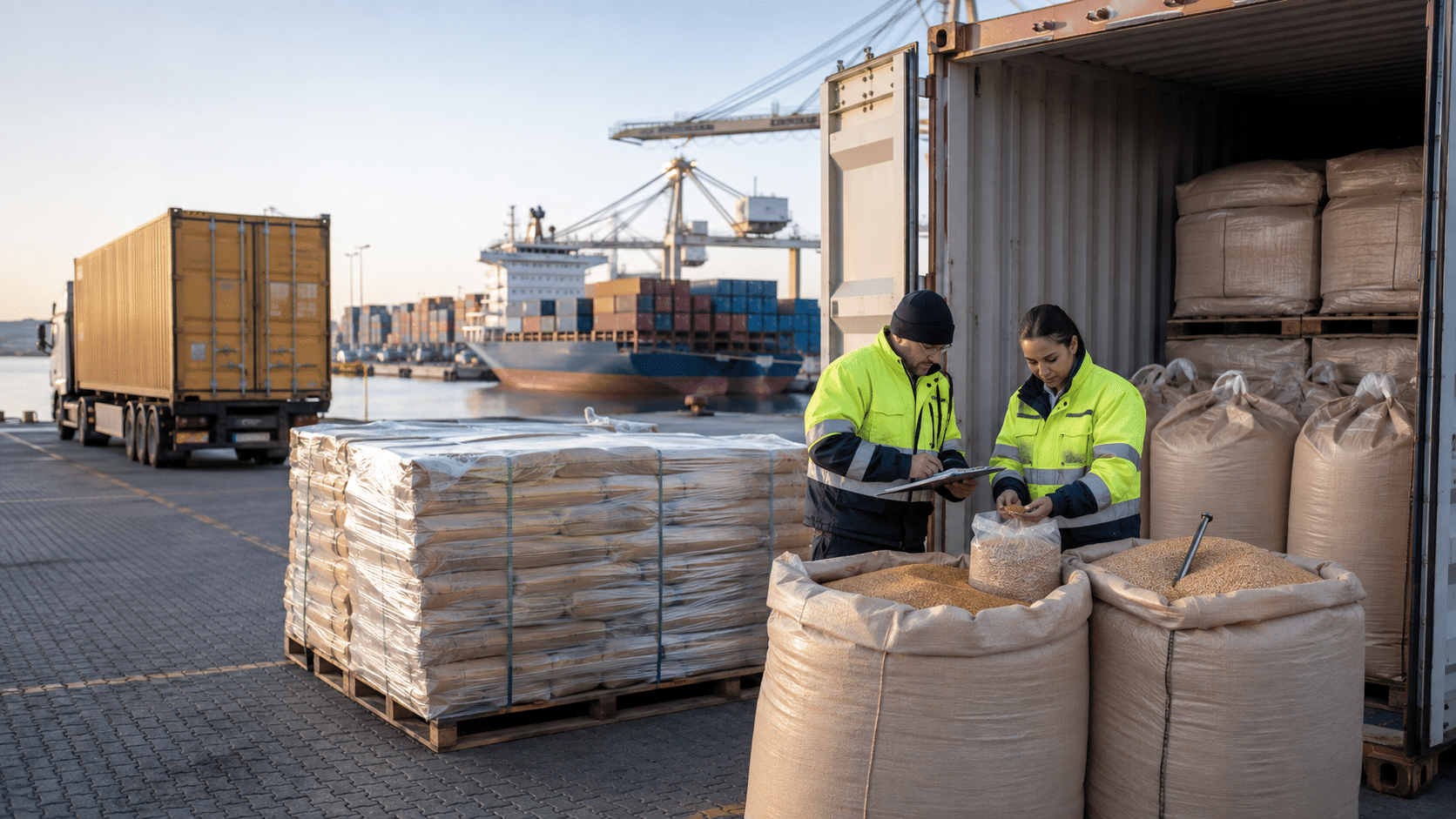
The law also regulates the placing of GMOs and GM products on the market. It includes provisions on declarations, notifications related to production or cultivation, post-registration monitoring, and the parallel use of GMOs, GM products and products that do not contain GMOs. These are important issues for supply chains where conventional, organic and GM-related products may need to be handled separately and transparently.
Labelling, Thresholds and Traceability
The new law also sets out labelling requirements for GMOs and GM products, including food, feed and products that are not food or feed. It regulates the use of “With GMO” and “GMO-free” labels and defines threshold values for accidental and technically unavoidable GMO residues. According to the overview of the law, these thresholds cannot be less than 0.1% and cannot exceed 0.9% for certain types of products.
This element is highly relevant for trade and market confidence. Labelling and traceability rules can help avoid confusion, support enforcement and give operators clearer responsibilities.
At the same time, they must be workable in real supply chains, particularly in a country with significant agricultural production, storage, transport and export flows.
For seed companies, farmers, traders and processors, the practical challenge will be to understand how the rules apply to different products and at different stages of the chain. Clear guidance will be needed on documentation, testing, thresholds, declarations and the handling of accidental presence.
According to Grygorenko, this is why implementation will matter as much as the legal text itself. “Labelling and traceability are not only consumer information tools,” she says. “They are also essential for market functioning. The rules must be clear enough for enforcement authorities, but also practical enough for companies, farmers and traders to apply.”
Crop-specific Restrictions
The transitional provisions are among the most sensitive parts of the law. The overview provided by SAU indicates that the law includes an indefinite ban on the cultivation of genetically modified maize in open systems. It also includes a five-year ban on the cultivation of genetically modified sugar beet and rapeseed in open systems, except for research in an open system with the relevant permit.
These crop-specific provisions deserve careful attention. Maize, sugar beet and rapeseed are all important crops in European agriculture, and they are also politically sensitive in GMO discussions. By including specific cultivation bans, Ukraine is not simply creating a general regulatory pathway. It is also setting clear boundaries for certain crops during the transition.
Grygorenko describes these crop-specific restrictions as an important part of the transition. “They show that Ukraine is introducing a regulatory framework but also applying political and practical safeguards for certain crops,” she says. “The details of implementation will be very important for the seed sector.”
For companies, breeders, farmers and regulators, several practical questions remain. How will these bans interact with research permits? What will be allowed for confined or controlled research? How will operators distinguish between cultivation, testing and other activities? What will happen after the five-year period for sugar beet and rapeseed? And how will these provisions be communicated to farmers and companies? These questions show why the transitional provisions will be central to how the law is understood and applied by the sector.
Preparing for EU Membership
One of the most significant provisions relates to Ukraine’s future EU membership. According to the overview, from the moment Ukraine acquires the status of an EU Member State, the registration of all GMOs not permitted in the EU will be cancelled. The relevant information in the State Register of GMOs will lose its status as official information, and applications for the state registration of GMOs under Ukrainian law will be returned without consideration.
This provision makes the law directly relevant to Ukraine’s EU integration process. It creates a bridge between Ukraine’s national system and the future application of EU rules.
For companies, this means that regulatory planning in Ukraine cannot be separated from the EU framework. Products that may be considered under Ukrainian rules before accession may face a different legal position once Ukraine becomes an EU member state.
“The EU membership provision is very important,” Grygorenko says. “It means that Ukraine is already preparing its regulatory system for future alignment with EU rules. For the seed sector, this creates a need to look not only at the Ukrainian law itself, but also at how it will connect with the EU framework over time.”
Such legal transitions are common in accession processes, but GMO regulation is a particularly sensitive area because it touches authorisation, cultivation, imports, labelling and public confidence. Candidate countries often need to manage a transition between national systems and future EU obligations. But in the GMO field, where authorisation, cultivation, import, labelling and public perception are all sensitive, the transition requires careful communication.
Enforcement and Institutional Capacity
The new law also addresses state control and liability. It provides for state control over compliance with biosafety requirements in closed systems, the handling of GMOs during open-system research and testing, and the placing of GMOs and GM products on the market. It also sets out response measures and fines for violations, including breaches of biosafety requirements, rules for open-system handling, and requirements for placing GMOs and GM products on the market.
This enforcement dimension is critical. A modern law can only function if authorities have the capacity, expertise and resources to implement it. That includes risk assessment, laboratory testing, inspection, border controls, registers, monitoring and communication with operators.
The law provides for the State Commission for GMO Risk Assessment and a Scientific and Methodological Center for Testing of GMOs. It also sets requirements for laboratories conducting GMO research and testing, including accreditation and obligations to provide information on testing methods and results. These institutional elements could become the backbone of the new system.
For Ukraine’s seed sector, the main question will be whether implementation is predictable and proportionate. Overly slow or unclear procedures could create uncertainty. At the same time, weak enforcement would undermine trust in the system.
Grygorenko says the success of the law will ultimately depend on how it works in practice. “Ukraine will need clear procedures, competent institutions, accredited laboratories and constructive dialogue with the seed sector and other stakeholders.”
What Should the Seed Sector Watch Next?
The new GMO law marks an important step in Ukraine’s regulatory development. But the law itself is only the starting point. The next phase will be shaped by bylaws, implementing procedures, institutional readiness and clear communication with stakeholders.
For seed companies and breeders, several questions will deserve close attention. Which bylaws have already been adopted, and which are still pending? How will applications and permits be handled in practice? What transitional rules apply to existing activities or products? How will the cultivation bans be interpreted? How will testing and labelling requirements be enforced? And how will Ukraine manage the link between its national framework and future EU membership?
The answers will matter not only for biotechnology. They will also matter for trust in the regulatory environment. Ukraine’s seed sector has shown resilience under extremely difficult circumstances since the Russian invasion of Ukraine. As the country continues its path toward European integration, regulatory clarity will be essential for investment, innovation and trade.
For Grygorenko, the law is part of a broader transformation. “This law is part of a broader transformation of Ukraine’s agricultural and regulatory system,” she says. “For the seed sector, the priority is to ensure that the rules are clear, science-based, enforceable and aligned with Ukraine’s future as part of the European market.”
The new GMO law therefore deserves attention across Europe. It is a national law, but it sits within a much larger story: Ukraine’s agricultural future, its relationship with the EU, and the way Europe manages innovation, biosafety and market confidence in the years ahead.