A newly identified peptide signal coordinates communication between the embryo and endosperm, and boosting it has already produced larger seeds in a crop proof of concept.
Researchers have uncovered a molecular communication system involved in seed development that could support future efforts to increase seed size in crops.
The study, led by the Cyril Zipfel group at The Sainsbury Laboratory in collaboration with the Plant Reproduction and Development Laboratory at the École Normale Supérieure in Lyon, France, identified an interaction between the PIPL7 peptide and the HAIKU2 receptor, also known as IKU2.
Published in Science, the research found that PIPL7 is produced by the embryo and recognized by IKU2 in the endosperm, the nutrient-rich tissue that supports the developing seed. This signalling helps coordinate embryo and endosperm development to ensure seeds form properly.
Research Began With an Unexpected Discovery
The Zipfel group typically studies receptors involved in plant responses to pathogens and environmental stress. Researchers were examining where specific peptide-receptor pairs were expressed when they noticed that one peptide was particularly active in the silique, the structure containing developing Arabidopsis seeds, according to a press release.
“We kind of stumbled into this project,” says Jack Rhodes, team leader in Zipfel’s group. “We usually work on peptides induced by plant pathogens or abiotic stress, and we often get asked about the spatial resolution of these processes. For example, does one cell type express a peptide while another expresses the receptor, or is the same cell expressing both ligand and receptor? We wanted to explore this further.”
Using single-cell and spatial expression analysis, the researchers found high expression of PATHOGEN-INDUCED PEPTIDE-LIKE 7, or PIPL7, in developing seeds.
Other peptides in the same family are recognized by the receptor RLK7. Its closest relative is IKU2, a receptor identified more than 20 years ago for its role in determining seed size. However, the peptide that activated IKU2 had remained unknown.
Collaboration Connected Peptide and Receptor
At the same time, Gwyneth Ingram’s laboratory in Lyon was studying IKU2 in the endosperm. Genetic analysis of iku2 mutants indicated that the receptor regulated endosperm polarity and development in response to an external peptide produced by the zygote or early embryo.
“The manuscript’s discussion stated something along the line: ‘In the future, we need to discover the ligand for IKU2’”, says Cyril Zipfel. “We thought we had been able to identify the ligand. That is how our collaboration began: we pulled forces and shared materials and results.”
The laboratories combined expertise in seed genetics, bioimaging, plant-microbe interactions and transient expression systems to test whether PIPL7 activated IKU2.
“One of the things I really enjoyed about this project was the synergy between the two labs,” Rhodes explains. “Their expertise lies in using genetics and bioimaging to study seed development, which is a lengthy and meticulous process. Meanwhile, we approached the problem from a plant-microbe perspective, using transient expression to quickly test receptor-ligand responses.”
The experiments confirmed that IKU2 recognizes PIPL7. Mutant plants lacking the peptide also displayed the same seed phenotype as plants with a mutated receptor, providing further evidence that PIPL7 is the signal detected by IKU2.
Signal Coordinates Seed Development
The findings showed that different seed tissues produce the two components of the signalling system. Embryo cells express the PIPL7 peptide, while IKU2 is expressed in endosperm cells.
This embryo-to-endosperm communication helps coordinate the development of the two tissues and supports proper seed formation.
Crop Studies Point to Larger Seeds
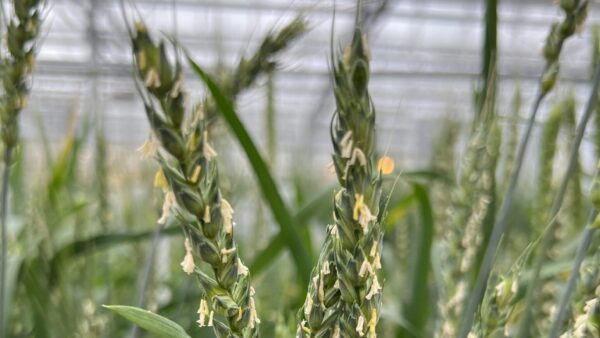
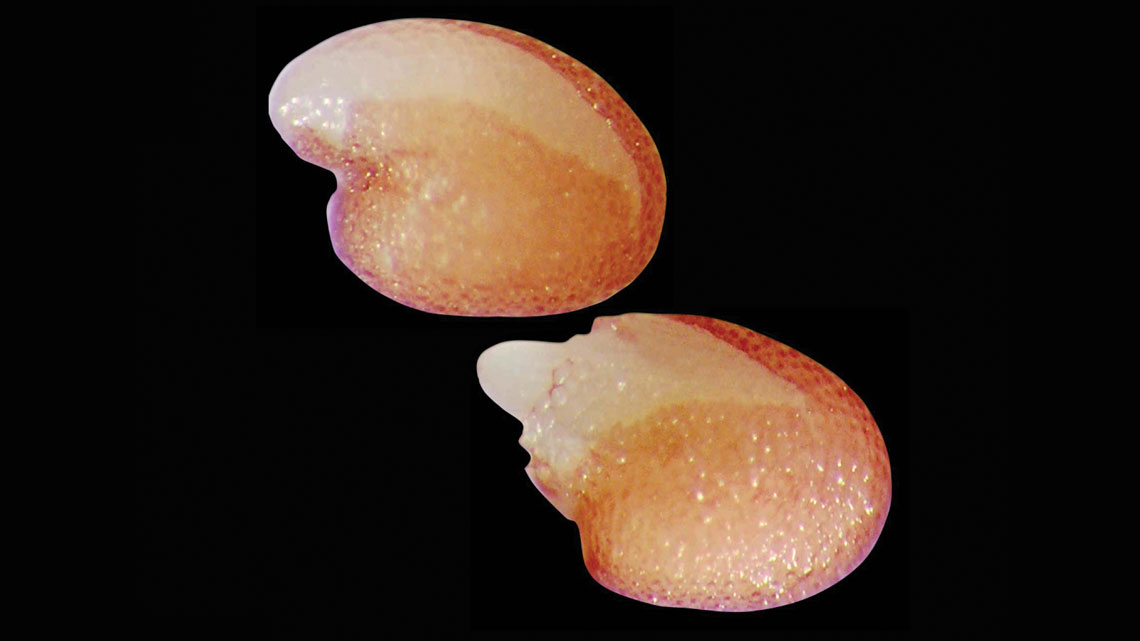
Although much of the research was conducted in Arabidopsis, early proof-of-concept work in a crop showed that increasing PIPL7 expression produced larger seeds.
The finding suggests the signalling pathway could eventually provide a target for engineering seed size in agricultural crops. The researchers and PBL Technology have filed a patent covering the discovery.