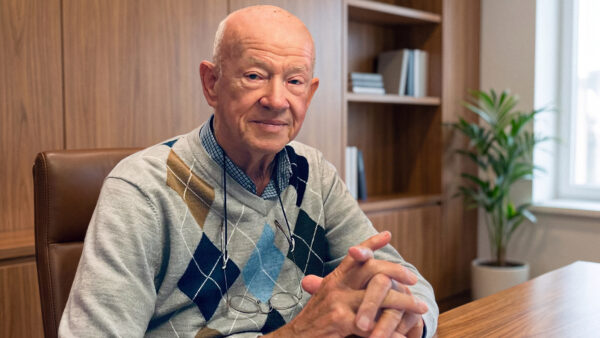
Jean-Philippe Riffat, President, EMEA-APAC, Vylor, on the experience of building something new, the opportunities ahead, and what he hopes to be able to say about Vylor five years from now.
Corteva’s newly independent spin-off, Vylor, inherits more than a century of seed expertise, established brands including Pioneer®, a leading global R&D footprint and a pipeline spanning conventional breeding, gene editing and opportunities beyond its traditional crop portfolio. The question now is: what will Vylor do with it?
For Jean-Philippe Riffat, President, EMEA-APAC, Vylor, the company’s independence brings opportunity but also a different kind of pressure. With the company focused entirely on seed and genetics, there is greater freedom to decide where to invest, where to partner and where to move faster. Seed and genetics no longer sit within a broader agricultural portfolio; they are the portfolio.
Seed World sat down with Riffat to talk about what it means to be handed that opportunity and the company he wants Vylor to become.
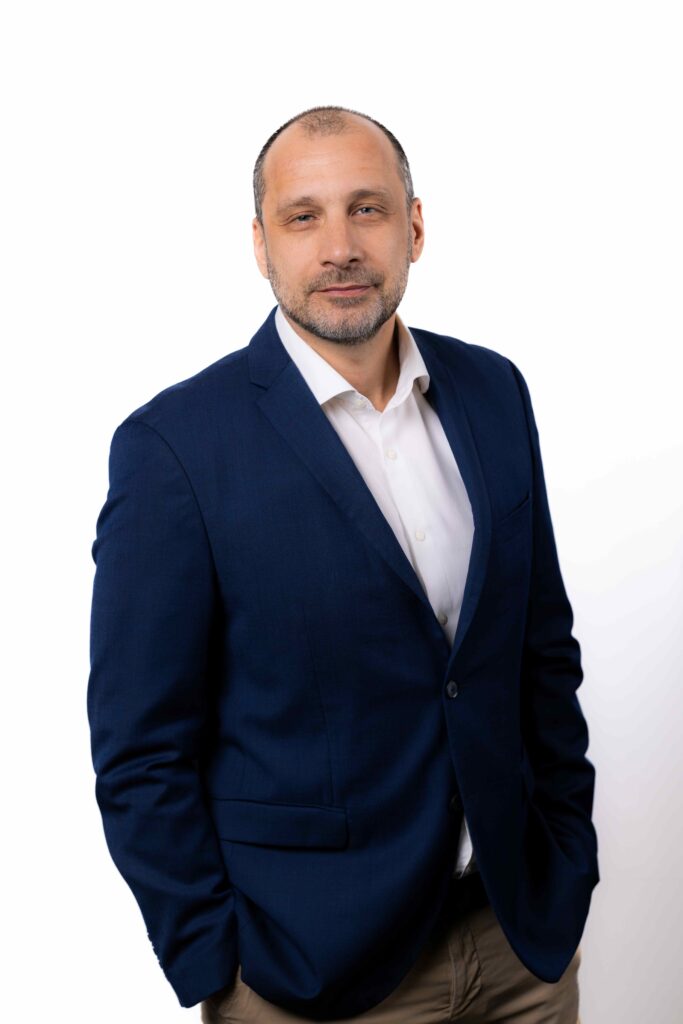
Seed World (SW): You’ve spent months building toward this launch. What has it actually felt like from the inside?
Jean-Philippe Riffat (JPR): I’ve been in this industry for more than 20 years, and seed has always felt like a very emotional part of our business. Being given the responsibility to launch Vylor across a large region like EMEA and APAC is very exciting. You get to do what you love, and people come to you and say, “This is a great project. Make it even greater.”
I feel the same energy in the team. We are working with a lot of people who have long seed experience, a lot of seed business acumen, as well as some who bring fresh perspective. Suddenly we are telling them: what you love, you’re going to have the opportunity to expand it even more and make it more visible to the rest of the world. You get to write that story.
Of course, it’s been a lot of work. The separation has involved some serious heavy lifting. But the team feels very positive. Even though the days are long, they feel lighter because the team gets the chance to work on something completely new.
SW: What was the hardest part of getting here?
JPR: There is an emotional part to separating from colleagues after spending years building an integrated company and offering farmers solutions across different parts of the value chain. Then there is the technical reality. When you are a large, integrated, global company, separating the systems, legal entities and everything behind them is genuinely challenging.
But the decision was probably the hardest part. Once it was made, the organisation moved very fast. We completed the separation in less than a year, which is unique at this scale. That says a lot about the commitment of the teams.
SW: You’ve said independence creates focus. As a leader, what does that change in the decisions you make?
JPR: It gives us the ability to compare investment to investment inside a single mission. Every dollar in R&D, every commercial hour and every capital dollar can be directed toward winning in seed and genetics. Some of this was possible before, but now it happens faster with a sharp focus, and with far less friction.
It also gives us the opportunity to move into different value pools and put more of the solution into the seed itself. That can expand the seed market through tools like gene editing and by taking our genetics platform into other crops.
SW: There is a lot of excitement around Vylor. Of course, the company now needs to prove itself. What’s at the top of your list to prove?
JPR: Ultimately, we have to deliver on our promises. We talk about innovation, technology and germplasm, but what matters is what that means for our partners and our farmer customers.
I want to spend time in the market and hear customers talk about their performance and stability despite the challenges of the environment. For partners, I want to hear, “I’m really happy to work with Vylor. It’s an easy company to work with, and they deliver on their promises.” That is when the strategy becomes real.
SW: Of all the ambition around Vylor, what are you personally most excited to lead?
JPR: The genetic gains. I want to see the performance that farmers need to run profitable businesses in conditions that are getting harder across the board. If we deliver on what we say with breeding and gene editing, I want to visit farms across this region and see more yield and more stability despite those conditions.
I’m also excited to see what comes of the partnerships and licensing opportunities we’re discussing. And I believe gene editing will be a very important tool because we can do much more with the seed than we used to be able to do. We can put disease resistance into the seed, for example, that can mean lower input costs for farmers. Delivering on our promises is what drives me.
SW: What’s different for the Vylor team? What does independence unlock in the way your teams will operate?
JPR: We have a ‘first-mover’ mentality that comes from the long seed heritage we have. We were the first to create hybrid corn, the first to have winter nurseries in different parts of the world, and the first company to have a drought-tolerant hybrid.
But even though we are building on more than 100 years of experience, when you launch a new company, people start to feel empowered. They start asking, “What does it take to make this even greater?” It’s not, “Let’s just run as usual.” It’s: “We’re going to have a new company. What’s going to be different? What differentiates us? What can we do now that we couldn’t do before?”
That’s energising, because people start to feel a sense of ownership. As one colleague put it to me: “I get to write my name on something new.”
SW: Five years from now, what evidence should the seed sector look at to judge whether Vylor has delivered on what you’re promising today?
JPR: Of course we want the value of the company to grow. But I also want us to be admired for doing what we said we would do. If we do what we say, I think we have a chance to move this industry into its next phase of growth.
I want people to look back and say, “They really did what they promised.” I want us to change the way farmers look at seed and, more broadly, how we look at genetics and how far we can push those boundaries.
Within five years, we will have the first gene-editing solution in Europe and be the seed leader for biofuel in Europe. A lot of firsts will happen in the next five years. If we can come back and say, “We did it,” and farmers, consumers and the planet benefited, that would be a great achievement.