Corteva’s seed and genetics spin-off, Vylor, enters the market with significant ambitions for genetics, from gene editing to new approaches to biofuel feedstocks. But bringing those innovations to farmers will depend on more than what happens inside breeding programmes and R&D facilities. Policy will help determine which technologies can reach the market, where they can move and how quickly they can scale.
That puts Teresa Babuscio in an important position as the new company takes shape. As Vylor’s Head of Government and Industry Affairs for EMEA and APAC, she will work across two highly diverse regions where regulatory decisions around plant breeding, trade and agricultural technology will have direct implications for Vylor’s growth.
Babuscio comes to Vylor from Corteva, so she brings continuity to many of the policy conversations already underway, particularly around new genomic techniques (NGTs) in Europe. She says the creation of a company focused specifically on genetics also sharpens the priorities for her team.
Seed World spoke with Babuscio about what sits at the top of that agenda, why Europe is at an important point for gene editing, and what needs to happen next for policy to translate into real opportunities for seed companies and farmers.
Seed World (SW): Vylor is positioning itself as a pure-play advanced seed and genetics company. From where you sit in government and industry affairs, what does that change about your priorities?
Teresa Babuscio (TB): We will be a genome and technology company. What I tell my team is that when you sit down with your coffee and open your laptop, the first question should be: what do I need to do for gene editing? Whether you are in Barcelona, Rome, Brussels, New Delhi or Hyderabad, that is where the most productive hours of the day should go.
Our role is to help ensure enabling policies so farmers can access transformative seed technologies, and so countries can trade those crops across borders. That matters for prosperity and food security as much as it matters for innovation.
SW: The EU has historically been conservative about new breeding technologies, which makes movement on NGTs significant. As you look ahead to future advocacy for seed technologies, how do you see the environment changing?
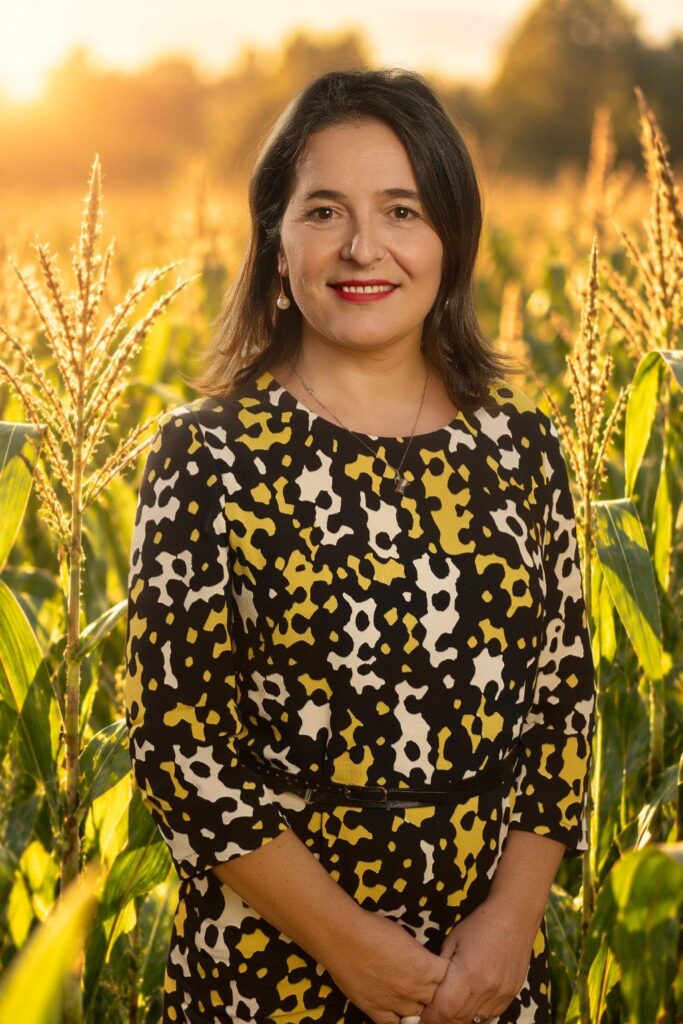
TB: Europe remains Europe. It is still a risk-averse society when technology is applied to food, and precaution is deeply rooted in the food-safety system. But in the last couple of years, I think Europe has become more pragmatic. Geopolitical pressure, climate change and the missed opportunities around GMOs have all contributed to that shift. I am optimistic: we have seen Europe move forward with a gene-editing policy that is science-based and designed to avoid unnecessary burden for seed companies and farmers.
For the relevant gene-edited products, Europe is moving closer to a product-based system rather than the process-based system that has traditionally characterised European food-safety regulation. The primary legislation is enabling and it also includes robust intellectual property rules. That is important because innovation needs both access and investment protection.
SW: The policy discussion around gene editing often focuses on whether farmers can grow the technology. How important is regulatory alignment between markets if those crops are also going to move through international trade?
TB: Critical. It is not only about providing farmers with transformative seeds. It is also about the capability of countries to trade with the rest of the world, and therefore to move gene-edited crops from areas of surplus into areas of deficit. That contributes to prosperity and food security.
SW: So where is the regulatory risk now?
TB: The secondary legislation. We have the primary framework, but now the practical rules have to be written and implemented. Our collective responsibility, not only Vylor’s but the larger sector’s, is to make sure the result does not become burdensome in practice. A good primary law can still be weakened by implementation. The next phase is making sure the practical rules preserve what the legislator intended.
SW: How involved does Vylor intend to be in that policy conversation?
TB: We are active in Euroseeds, CropLife Europe, Plants for the Future and national associations across Europe. We want the sector to lead. But within the sector, we are not going to be shy about trying to lead with what I would call a responsible vision toward innovation.
At the same time, I see this as a continuation, not a sudden jump. Many of the people coming into Vylor have been deeply involved in advocacy for years. The people who have accompanied the NGT work in Europe are staying with Vylor, and we intend to continue partnering with the industry and providing resources.
We have been talking extensively with policy-makers, regulators and civil society to bring reality to the ground rather than stigma or dogma that exists up in the air. At the same time, we have to acknowledge the emotions that come with policymaking when we are talking about technology applied to agriculture.
SW: Gene editing is one frontier. What other policy files do you expect to matter most?
TB: Biofuels and energy sovereignty. Vylor wants to contribute through high-performing seeds for intermediate or catch crops that can supply biofuel chains without taking land away from primary food production. There is also a protein dimension because the co-product of biofuel production can be protein-rich meal for animal feed. So the policy opportunity is not only energy. It can connect energy security, agricultural productivity and protein supply.
SW: One question I’ve heard repeatedly from the seed sector is whether Vylor will have the same depth of government affairs capability as does Corteva. What does the function look like as Vylor launches?
TB: Vylor has been very generous when it comes to government affairs resources. Of course, there is always room to add more, but I cannot complain about the resources the company is putting into the function to make sure there are no regrets tomorrow. I feel very supported by management, both with trust and resources, and by the team.
SW: A year from now, what would make you raise a glass of wine to toast success?
TB: The signal internally that we can file our first gene-editing product in Europe. If we can say we are ready to move our first gene-edited product through the European process toward farmers, that would be the moment to raise the glass.