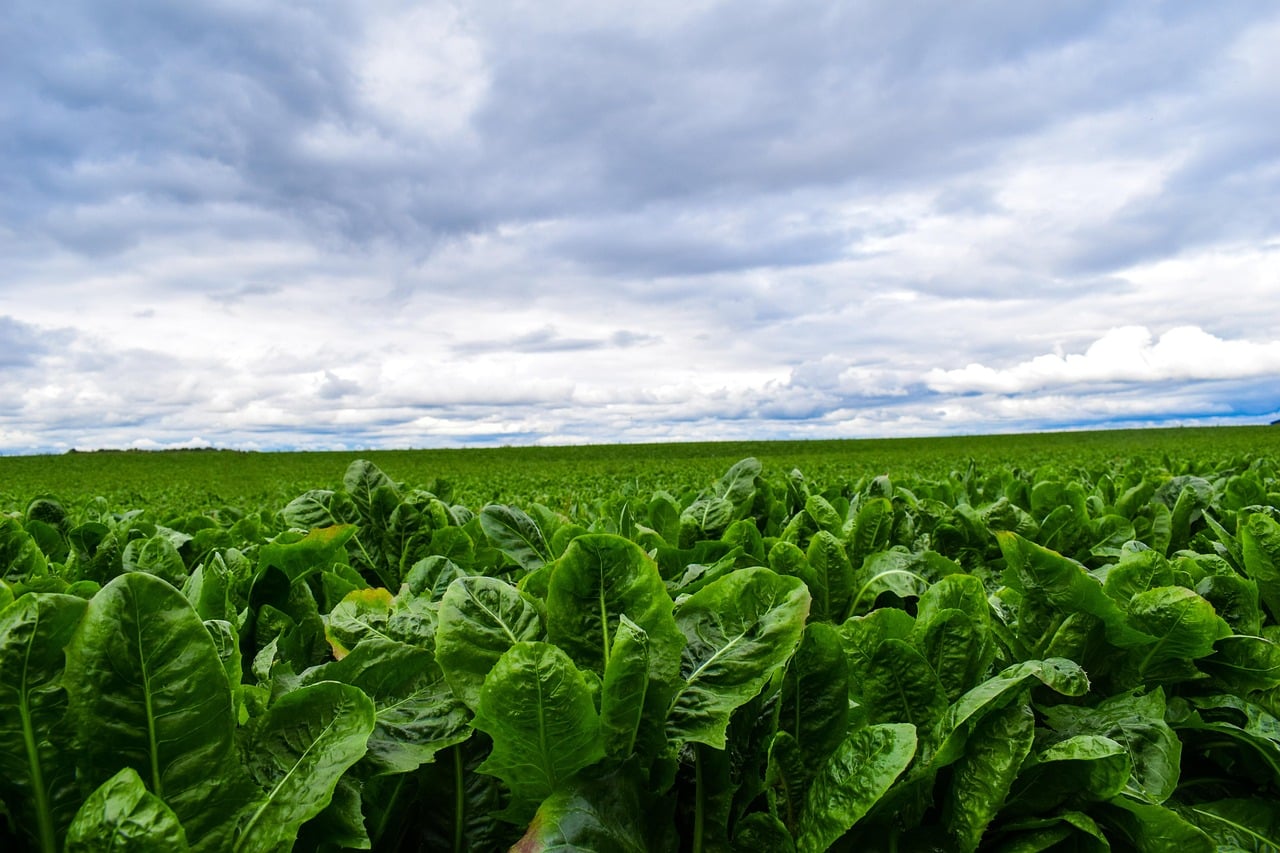
Research by Embrapa Hortaliças (DF), using climate projections from Inpe and IPCC models, indicates that planting lettuce outdoors in Brazil may become increasingly difficult in the coming decades. By the end of the century, nearly the entire country could face high or very high risk for lettuce cultivation due to rising temperatures, especially in summer when they may exceed 40°C—well above the crop’s optimal range.
“Understanding climate impacts on lettuce is essential to plan adaptation strategies and avoid losses,” says Carlos Eduardo Pacheco, environmental engineer at Embrapa.
Researchers are focusing on two main approaches: developing heat-tolerant lettuce varieties and creating resilient production systems. Examples include regenerative methods like no-till and organic cultivation, and climate-adapted systems such as protected environments and agroclimatic zoning, according to a press release.
Future Climate Scenarios
Using IPCC’s RCP 4.5 (optimistic) and RCP 8.5 (pessimistic) scenarios, projections show that by 2071–2100, up to 87.7% of Brazil’s territory could be at very high risk for open-field lettuce under the worst-case scenario. Even in the optimistic scenario, nearly 80% faces high risk. Lettuce seeds require temperatures below 22°C to germinate, making adaptation to extreme heat challenging.
To address this, Embrapa is prioritizing heat-tolerant cultivars like BRS Mediterranean, which matures faster, resists temperature stress, and produces larger, high-quality leaves. Producers like Rodrigo Baldassim from São Paulo report that this variety withstands heat better than traditional cultivars and delivers consistent commercial yield.
Next Steps
Embrapa plans to improve climate risk mapping using higher-resolution data and the latest IPCC models, expanding research to other sensitive vegetables such as tomatoes, potatoes, and carrots. Artificial intelligence will help automate mapping, allowing faster, more accurate projections to guide adaptation strategies and safeguard food production.