Researchers and ag-tech leaders will gather in Texas to discuss how artificial intelligence and controlled environment agriculture are accelerating the development of climate-smart crops.
The next revolution in agriculture may happen inside a warehouse glowing purple under LED lights.
That’s part of the conversation driving this year’s National Association for Plant Breeding (NAPB) meeting in College Station, Texas, from June 15-18. Researchers, breeders, and ag-tech leaders will gather to tackle one of the biggest questions facing food production: How do we grow more food, more sustainably, in a hotter, more resource-constrained world?
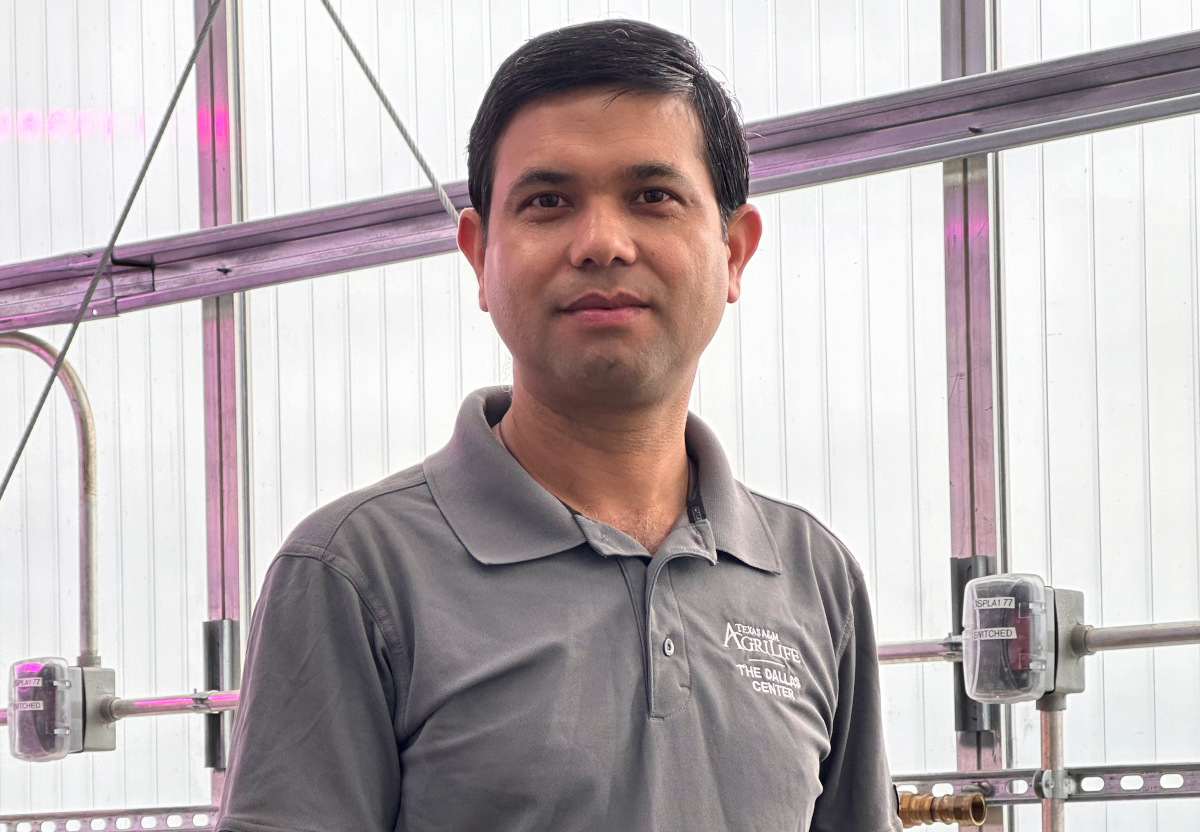
For Dr. Krishna Bhattarai of Texas A&M AgriLife Research, the answer starts with redesigning crops for entirely new environments.
“We’re trying to optimize crops specifically for controlled environment systems,” Bhattarai says. “The future isn’t just about growing plants better outdoors. It’s about breeding plants that are designed for indoor farms, greenhouses, and vertical production systems.”
Bhattarai is helping organize a pre-conference workshop at the meeting on June 14 aimed at graduate students and early-career scientists — a reflection of how quickly plant breeding itself is evolving. The workshop will focus on everything from genomics and biotechnology to AI and professional development, exposing young researchers to technologies many still don’t encounter in traditional breeding programs.
“In many university systems, students may not always have the opportunity to learn genomics or biotechnology in depth,” he says. “We want participants to leave with practical exposure and the ability to apply these tools in their future careers.”
That future is arriving fast.
Texas is increasingly positioning itself as a hub for controlled environment agriculture (CEA), including some of the world’s largest greenhouse operations. These facilities promise year-round production, shorter supply chains, and reduced water use — but they also introduce entirely new biological and economic challenges.
Plants bred for open fields don’t automatically thrive under LEDs and climate-controlled conditions.
That’s where breeders like Bhattarai come in.
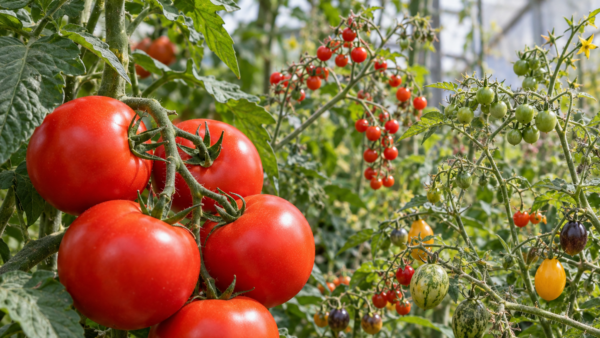
At Texas A&M, his team is developing lettuce, tomatoes, strawberries, and peppers specifically for indoor production systems. The work combines traditional breeding with genomics, disease resistance screening, and environmental optimization.
One major target: powdery mildew, a fungal disease that spreads aggressively in greenhouse environments.
“We’ve seen growers battling these diseases continuously in controlled systems,” Bhattarai says. “So, we’re identifying resistant genetic sources and using genomics approaches to develop cultivars that can better handle those pressures.”
Another challenge is energy.
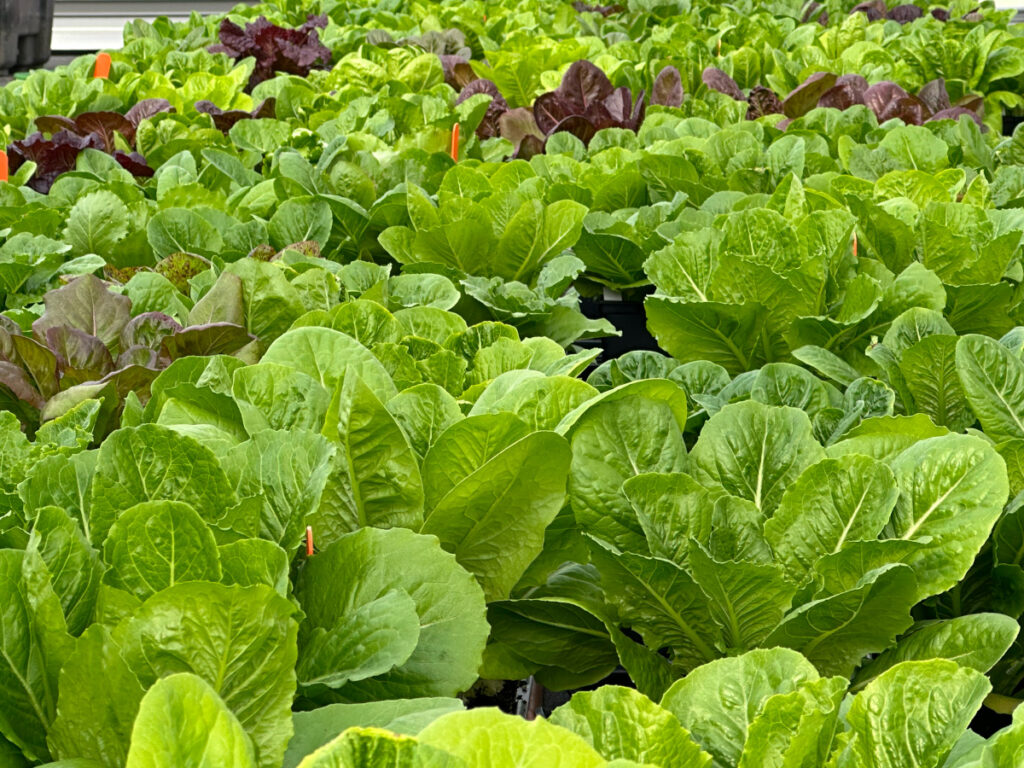
Indoor farming promises consistency but cooling giant facilities in Texas summers comes at a steep cost. Bhattarai’s program is working to develop crops capable of tolerating slightly higher temperatures — potentially saving growers significant operational expenses.
“If we can develop lettuce that withstands a few more degrees of heat, growers don’t have to cool their systems as aggressively,” he explains. “That translates directly into energy savings.”
The broader implication is something the agriculture industry is only beginning to grapple with: climate resilience may increasingly depend not just on infrastructure, but on breeding biology itself to work smarter with infrastructure.
And increasingly, AI is entering that equation too.
Artificial intelligence is expected to be one of the major themes at this year’s NAPB meeting as breeders look for ways to accelerate selection, analyze genomic data faster, and predict trait performance with greater precision.
But for all the technology entering agriculture, Bhattarai’s own story starts in a far more traditional setting: a small family farm in Nepal.
Growing up, he watched his father grow crops year-round, sparking an early fascination with agriculture. The turning point came later during a visit to a national wheat breeding program, where researchers were developing disease-resistant lines against the devastating Ug99 stem rust pathogen.
“It was incredible to see how breeding could directly impact food security,” he says. “That was the moment I realized plant breeding could change lives.”
His career since then has mirrored the globalization of agricultural science itself. He earned degrees focused on plant breeding and genetics in Nepal and tomato breeding at North Carolina State University, worked on ornamental crop disease resistance at the University of Florida, studied strawberry genomics at UC Davis, and later joined private industry before arriving at Texas A&M in 2023.
That cross-disciplinary path — spanning vegetables, ornamentals, fruit crops, genomics, and commercial breeding — increasingly represents the new reality for agricultural scientists.
Modern plant breeders can no longer rely just on themselves. They need geneticists, data analysts, climate strategists, and increasingly, systems engineers for the future food economy.
Which is exactly why meetings like NAPB matter now more than ever.
As agriculture faces mounting pressure from climate volatility, labor shortages, energy costs, and shifting consumer expectations, the next generation of breeders won’t simply be improving crops. They’ll be redesigning how food production itself works.
And in places like College Station this summer, they’re already getting started.
Register for the meeting at napbannualmeeting.org and consider becoming a member of the NAPB — get more info on membership at plantbreeding.org.