University of Idaho researchers are developing harvest-integrated sensors and predictive models to help breeders identify wheat, corn and sorghum plants that can better withstand stalk lodging.
The University of Idaho has received a $6 million grant from the National Science Foundation to develop data collection technologies and artificial intelligence models for breeding stronger, higher-yielding cereal crops.
The research will focus on reducing stalk lodging — the bending or breaking of plant stems before harvest. Lodging can leave crops vulnerable to pests and disease, prevent mechanical harvesting and reduce both production and crop quality.
Bayer Crop Science estimates that lodging causes annual losses of between 5% and 25% in cereal crops worldwide.
Making Plant Breeding More Predictive
The four-year award was provided through the NSF Established Program to Stimulate Competitive Research, known as EPSCoR.
The project brings together AI experts, engineers, plant biologists and geneticists from the University of Idaho, Clemson University and the University of Nebraska Medical Center. Their work will seek to improve the ability of breeders to predict which genetic combinations will produce stronger wheat, corn and sorghum plants, according to a press release.
“Two-thirds of the world’s calories come from wheat, corn and rice, all crops that suffer from stalk lodging,” said Daniel Robertson, associate professor of mechanical engineering and the project’s lead investigator. “Our goal is to make plant breeding predictive. Instead of crossing plants and hoping for the best, we want breeders to know which genetic combinations will produce crops that are both high yielding and resilient to high winds and other events.”
Addressing the Genome-to-Phenome Bottleneck
The project will address a major obstacle in crop breeding known as the genome-to-phenome bottleneck.
Laboratory testing allows plant breeders to identify millions of genetic markers in a crop’s DNA. Determining how those markers affect physical traits is more difficult because plants must be grown and measured under field conditions.
This imbalance between the volume of genetic information and the amount of available field data makes it difficult to determine which genes influence valuable characteristics such as stalk strength.
University of Idaho researchers are leading the development of harvest-integrated sensing technologies that will measure plants’ physical characteristics. The data will be used to train AI models on plant DNA sequences, helping researchers narrow the number of variables and identify genetic regions associated with lodging resistance.
“This is fundamentally an engineering problem as much as a genetics problem,” Robertson said. “Plant scientists have made tremendous advances in understanding crop genetics, but mechanics can tell us why plants fail.”
Gathering Data During Harvest
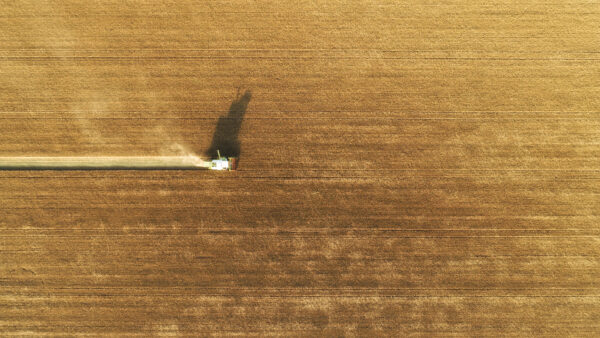
Robertson and a team of graduate students are modelling several sensor designs that could eventually be incorporated into commercial combines.
Collecting information during harvest could greatly expand the volume of physical plant data available to breeders while reducing the time and cost associated with manual field measurements.
Researchers could then connect those physical measurements with genomic information to determine which genetic signatures are associated with stronger stalks.
Combining Engineering, Genetics and AI
Each partner institution will contribute specialized expertise to the project.
Researchers at the University of Nebraska Medical Center will apply knowledge gained from analyzing the human genome to develop AI models that evaluate plant DNA and identify genetic signatures linked to stronger plants.
Scientists at Clemson University will study how genetics influence stalk strength, connecting crop performance with cellular and molecular processes.
The University of Idaho will also partner with North Idaho College to strengthen pathways for students transferring into engineering programs. A collaboration with Brigham Young University-Idaho will introduce more engineering students to graduate research opportunities in the state.
“This research will prepare the next generation of workforce-ready professionals at the intersection of agriculture, engineering and artificial intelligence,” Robertson said.
The NSF award begins in August and will support the research through 2030.