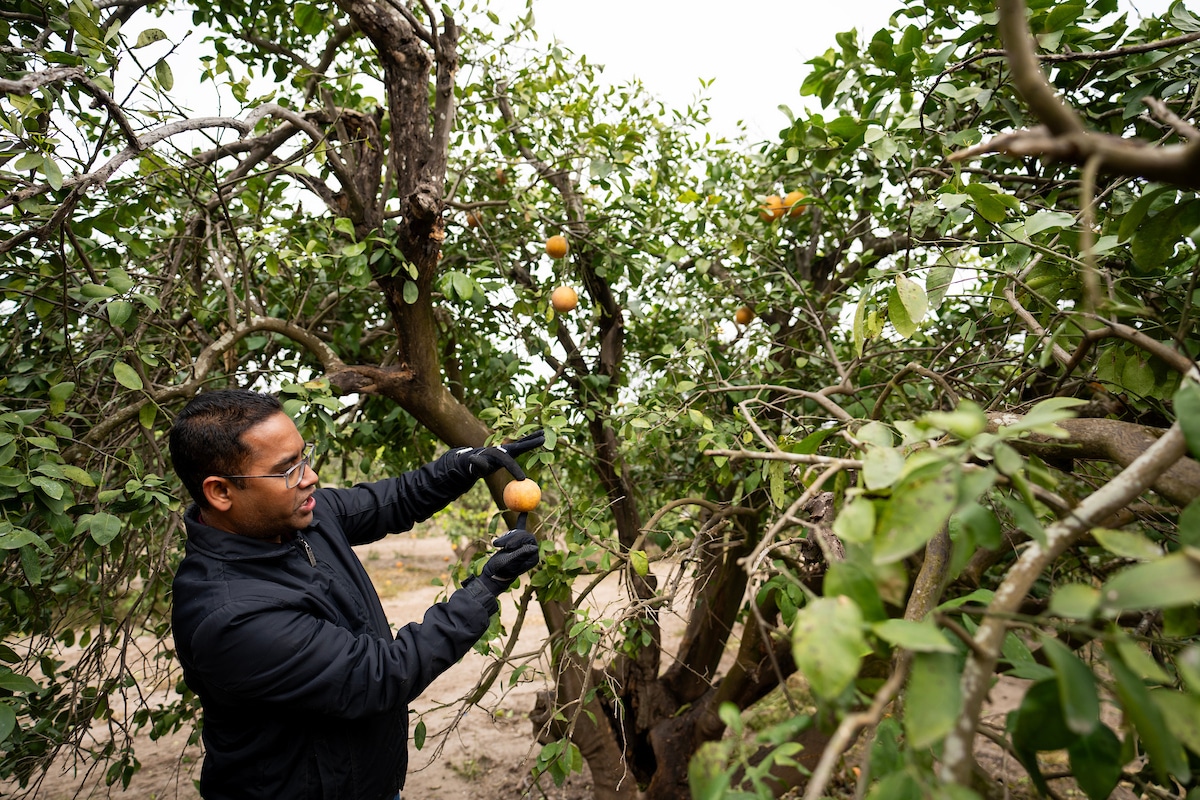
Researchers improved plant regeneration in potato, citrus, strawberry and poplar, addressing a major barrier to developing gene-edited crop varieties.
Editing a plant’s genes is only one step in developing an improved crop. Scientists must also regenerate a complete plant from a small number of edited cells — a process that can be slow, unreliable or impossible in some species.
Researchers at Texas A&M AgriLife Research, the University of Maryland and the U.S. Department of Agriculture have developed a system designed to accelerate regeneration across crops, including potato, citrus, strawberry and poplar. The findings were published in Nature Communications.
Activating Plants’ Natural Regeneration Genes
The system, called CRISPR-Combo, allows scientists to edit a target gene while activating the plant’s own morphogenic genes. These genes control how cells divide and develop into roots, shoots and eventually complete plants.
Rather than inserting additional copies of growth-promoting genes, CRISPR-Combo uses the same CRISPR tool responsible for the gene edit to increase the activity of morphogenic genes already present in the plant’s genome, according to a press release.
“Regeneration is one of the biggest roadblocks standing between a promising gene edit in the lab and a crop variety that’s actually useful to growers,” said Kranthi Mandadi, Ph.D., director of the Texas A&M AgriLife Research and Extension Center at Weslaco and professor in the Texas A&M Department of Plant Pathology and Microbiology. “This work shows that we can coax a plant’s own genes to regenerate faster and more reliably, and that approach holds real promise for perennial crops like citrus that have historically been very difficult to work with in the lab.”
Addressing a Crop-Breeding Bottleneck
Regeneration is particularly challenging in perennial and high-value crops. Citrus, poplar and many fruit and nut crops can take years to move through a single breeding cycle and have often resisted laboratory transformation and regeneration.
By activating a plant’s existing regeneration genes instead of relying on added hormones or extra genetic material, CRISPR-Combo could offer a more streamlined and scalable approach. The researchers said the system could also help identify morphogenic genes in other commercially important crops that respond poorly to conventional regeneration methods.
Potato Regeneration Improved
The researchers first screened potential morphogenic genes using a rapid, high-throughput “hairy root” system developed by AgriLife Research. The technique induces root growth on plant cuttings without requiring researchers to regenerate an entire plant.
Manikandan Ramasamy, Ph.D., an AgriLife Research associate research scientist at the Texas A&M AgriLife center at Weslaco, was the study’s primary author.
“In potatoes, we screened 17 candidate genes and identified four that boosted hairy root production,” Ramasamy said. “Three of those also improved shoot regeneration when tested, raising regeneration efficiency to 45%-70%, compared with about 30%-35% in controls.”
Citrus Regeneration Reaches 80%
The team also evaluated 10 candidate genes in citrus, a crop known to be difficult to transform and regenerate. Five genes significantly increased hairy root formation.
Under laboratory conditions, activating each of those genes increased shoot regeneration efficiency to at least 80%, compared with less than 60% in control plants.
Gene Combinations Shorten Regeneration Time
In wild strawberry and poplar, researchers activated two morphogenic genes simultaneously. In strawberry, certain gene combinations reduced the time required to produce a fully regenerated, gene-edited plant by more than a month compared with standard methods.
The results were even more pronounced in poplar. Shoots regenerated in less than a month without the external plant hormones normally required in tissue culture. Poplar lines with both genes activated also had the highest rates of edited cells and developed into taller plants with more biomass in the greenhouse, without obvious abnormalities.
Research Supports Faster Crop Development
The findings suggest CRISPR-Combo could help researchers move promising gene edits more efficiently from individual cells to complete plants. Faster, more reliable regeneration could be particularly valuable when developing crop varieties with improved productivity, resilience or disease resistance.
The research was supported primarily by the Foundation for Food and Agriculture Research Genotype-Independent Regeneration of Fertile Plants program. Additional funding came from the U.S. National Science Foundation, USDA’s National Institute of Food and Agriculture, the U.S. Department of Energy, the Texas A&M AgriLife Institute for Advancing Health Through Agriculture and AgriLife Research’s Insect Vector Disease program.