The next generation of seed treatment innovation is not only defined by its coating — but will increasingly depend on how well the finished seed performs as part of the entire farming infrastructure.
Over the past years, seed treatment technologies have become more sophisticated. New crop protection solutions, biologicals, and other beneficial components are creating opportunities to deliver more functionality directly to the seed, whereas more complex treatment recipes create practical challenges related to drying, dust, flowability, and plantability.
The role of seed finishing is evolving due to these considerations, as the physical characteristics of a finished seed are critical factors in the seed’s success, from treatment all the way through to planting. Traditionally, dry finishers are primarily used to reduce surface tackiness, accelerate drying, and improve seed flowability and, in turn, planting accuracy. But seed companies need to consider a broader set of requirements as they look to improve processing efficiency while meeting growing expectations around safety and stewardship.
One example of how these priorities intersect is dust. Dust-forming powders are commonly used to coat seeds, preventing them from sticking together. However, these powders generate a high level of airborne particles. Excess dust risks operator exposure, potentially causes environmental contamination, and reduces treatment efficacy by removing active ingredients from the seed’s surface. Controlling dust therefore becomes part of a broader objective: keeping the treatment where it is intended while supporting cleaner and more efficient seed handling.
Drying and flowability are similarly interconnected. As seed treatment recipes grow in complexity, residual surface moisture and tackiness affect how efficiently seeds move through commercial treatment and planting equipment. When seeds clump together, this affects planting and results in either too many or too few seeds occupying the same planting spot, further influencing crop growth and yield.
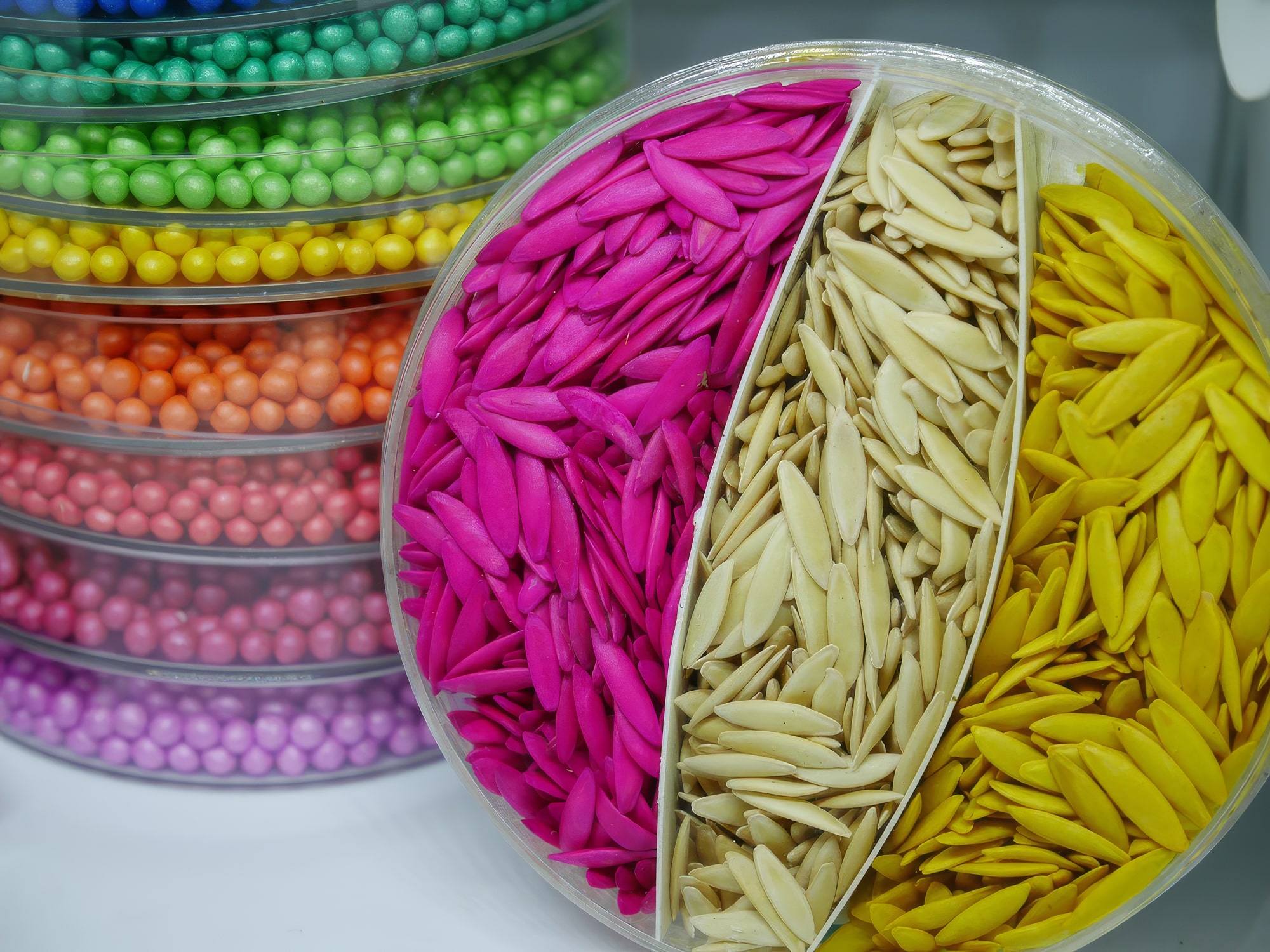
Syensqo developed Peridiam® DryFinish LD in response to these evolving requirements. The microplastic-free dry seed finisher combines low dust emissions with fast drying, improved flowability and plantability for consistent seed delivery, abrasion resistance, and enhanced seed appearance with a smooth, shiny surface. It is also compatible with a broad range of conventional and biological seed treatments.
Peridiam® seed-applied technologies reflect a broader evolution in how seed finishing can be approached. Rather than simply viewing it as a corrective step after treatment, finishing is considered to be part of the overall treatment design. Formulation components will need to take new functionalities into consideration, resulting in a finished seed that can also withstand the practical demands of commercial operations. This means looking at how coating and finishing technologies interact with the complete recipe and how the resulting treated seed will perform throughout processing, handling, and planting – an especially relevant factor due to the expansion of biological seed treatments and other new technologies.
As the industry works on integrating sophisticated technologies into seed care, finishing plays an increasingly important role in connecting those elements. By including dust control, drying, flowability, compatibility, and plantability in the complete treatment system, seed companies ensure that the applied innovations translate into effective performance, from seedlings to fully grown crops.