A fragile fertilizer system meets geopolitical shock, exposing deeper cracks in supply, pricing and farmer profitability that won’t disappear when conflict subsides.
Editor’s note: Interviews for this story were conducted prior to the current two-week ceasefire. Sources indicate market impacts and supply constraints are expected to persist beyond short-term de-escalation.
The fertilizer crisis gripping global agriculture did not begin with war. It was already building, quietly tightening across supply chains, buying habits and investment pipelines. What recent geopolitical disruption has done is expose just how fragile the system had become, and how quickly that fragility can ripple from global trade routes to on-farm decisions.
Melih Keyman, CEO and founder of Keytrade AG, has spent decades watching fertilizer move across borders, markets and seasons. From his vantage point, the current moment is less of sudden shock and more of a collision of long-developing pressures.
“The nitrogen markets were already tight before hostility started,” Keyman says. “This last-minute buying habit of our growers globally and the retailers as well has complicated the situation. Nothing in the summer, nothing in Q4, and then a rush right before application season. Now we are seeing the results of this behavior.”
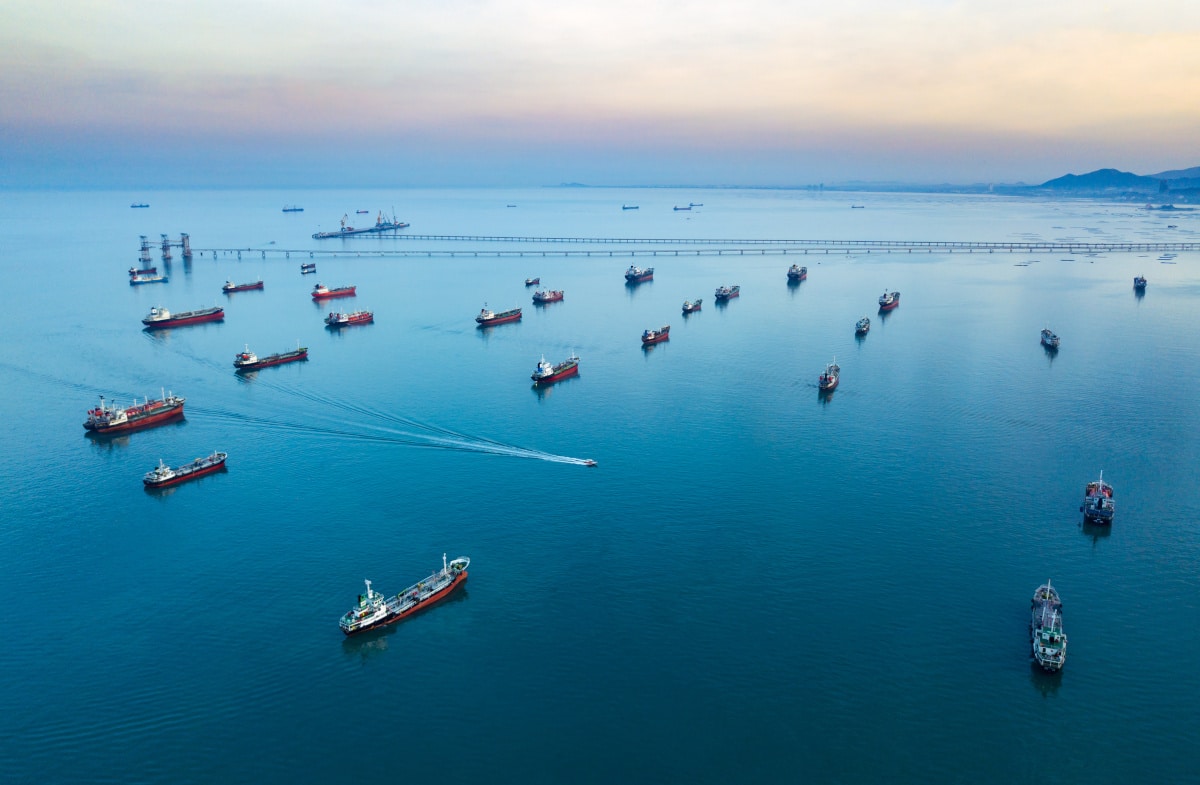
That behavior met disruption at the worst possible time. As tensions escalated across the Arabian Gulf, critical supply routes tightened just as demand peaked. While much of the world fixated on whether the Strait of Hormuz would reopen, Keyman says the damage was already done.
“This excitement that it may be open today or tomorrow, sure, it will be great news,” Keyman says. “But until that pileup of ships is cleared and we assess the damage to facilities, it’s going to take time. It takes 60 to 90 days of no hostilities and free passage just to normalize the flow of goods.”
Even then, normalization is relative. Facilities across the region have been hit, and fertilizer production is not easily or quickly restored.
“How soon can you fix an ammonia or urea plant that has been hit by bombs?” Keyman asks. “These are big pieces that you cannot buy off the shelf. They have to be produced, delivered and installed. The shortage, which was already there, will now be a long-term problem.”
A System Already Under Strain
Long before ships stalled and supply tightened, the fertilizer system was heading toward imbalance. Demand has continued to grow, but investment in new production has lagged behind.
“There’s a mismatch between consumption growth and new facilities,” Keyman says. “In the next few years, we would be in a chronic shortage of nitrogen if we do not come up with new investments. But these are two- to three-billion-dollar projects. It takes years to permit, financing is difficult and natural gas price visibility is not always there.”
While nitrogen gets the most attention, Keyman points to an even more immediate risk hiding in plain sight.
“The war is causing bigger havoc on the phosphate side,” he says. “Sulfur is the biggest problem, causing production outages globally. Phosphate reserves are concentrated in only a few places, so when something goes wrong, the consequences are much faster and more severe.”
Those consequences do not stay contained within fertilizer markets. They cascade.
“If China is not exporting phosphates over the summer, you can expect major yield losses in Brazil,” Keyman says. “That results in higher soybean prices and risks for global supply. This thing happens very quickly.”
The Cost of Waiting
If supply fragility is one side of the equation, purchasing behavior is the other. And according to Keyman, it is making a difficult situation worse.
“They are all doing a major mistake for waiting this long,” he says. “You have to have your supplies locked up, at least part of it, particularly in a fragile supply chain. Imagine 38% of urea comes out of the Arabian Gulf. Why would you risk such a big supply and wait until the last moment?”
The financial consequences are already visible.
“Last spring, the U.S. farmer paid about $200 per ton more than Brazil because of last-minute buying,” Keyman says. “This year, again, they waited too long. Urea in New Orleans was $390 in January and now it’s trading at $730. We thought there was a lesson, but history tells me we have short memories.”
That pattern — delayed purchasing followed by price spikes — is not just a logistical issue. It is now colliding with a deeper economic problem on the farm.
Margins Under Pressure
Pivot Bio CEO Chris Abbott sees the crisis through a different lens: farmer profitability. And from that vantage point, the situation is reaching unprecedented levels of strain.
“In a six-year period, you’ve had three shocks to the supply chain — COVID, Russia/Ukraine and now Iran,” Abbott says. “But unlike prior disruptions, we have not seen grain prices rise to offset this. The ratio of nitrogen price to grain price is as bad as it’s ever been. I mean literally, in history, it is as bad as it’s ever been.”
That imbalance is forcing difficult decisions across the farm.
“The largest input for farmers is crop nutrition,” Abbott says. “When that entire complex spikes, it’s painful. And now you have that happening at a time when margins are already compressed. That’s where the real friction shows up.”
Pivot Bio CCO Chris Turner says the financial pressure is showing up in ways the industry cannot ignore.
“We’re in a time right now where our customers financially on farm, it’s unrivaled in the last 25 to 30 years,” he says. “Every input is up year over year, and that compounds the situation. Farmers are facing significant headwinds in the grains market at the same time.”
Even If the War Ends Tomorrow
One of the most persistent misconceptions, Abbott says, is that the crisis will ease quickly once geopolitical tensions subside. The reality is more complicated.
“If this war ended tomorrow, you are not going to have urea go from $850 a ton back to $350 overnight,” Abbott says. “That’s just not going to happen. Markets don’t reset that fast, and behavior doesn’t either.”
Instead, the system risks repeating itself.
“What happens is the supply-demand balance in the spring becomes out of whack again,” he says. “Farmers and retailers are hesitant to buy early because of the emotional and financial toll. That pushes more demand into spring again, and you get higher prices again. It becomes a cycle.”
The result is a longer-term squeeze.
“This probably gets worse before it gets better,” Abbott says. “What we’re seeing now at the tail end of this season could extend into the entire next crop year. That means 100% of fertilizer volume is exposed to this price dynamic, not just a portion.”
Beyond Fertilizer
As pressure builds, the effects are already moving beyond fertilizer decisions and into broader farm management.
“I think everything is on the table,” Turner says. “Farmers are looking at absolutely every decision they make — crop rotation, input choices, seed selection. We’re already seeing acres fluctuate in certain regions.”
That shift matters not just for individual operations, but for the broader agricultural system.
“If the American farmer goes because they can’t make margin, so goes everything — fuel, supply chain, fiber, food, protein,” Abbott says. “If we don’t pay attention to farm economics and rural health, you will have a problem to the likes you have never seen before. People don’t realize how integrated this is into their daily lives.”
A Shift Toward Efficiency
If there is a path forward, Keyman says it lies in changing how the industry approaches inputs altogether.
“We are going to have to turn into providers of solutions instead of sellers of fertilizers, seeds or chemicals,” he says. “We have to improve efficiency. Technology — better seeds, better chemistry, specialty fertilizers — that is where the yield gains are coming from now.”
Abbott echoes that shift from a different angle, noting that not all responses to the crisis are rooted in supply.
“Technology should be cost deflationary,” Abbott says. “In most industries, when technology advances, costs go down. Agriculture has not always followed that pattern, and at some point, farmers cannot absorb continuous cost increases.”
Pivot Bio has moved to lower prices and offer multi-year supply commitments, positioning it as one example of how companies are trying to respond. But Abbott suggests the broader takeaway is not about one program — it is about mindset.
“If we say the farmer is our true north, then we have to act like it,” he says. “That means making decisions that actually help them through periods like this.”
A System That Won’t Snap Back Easily
For all the attention on shipping lanes and geopolitical headlines, the deeper story is harder to unwind. Supply constraints, investment hurdles, purchasing behavior and farmer economics are now tightly interwoven.
Keyman sees the risk clearly.
“The shortage was already there,” he says. “Now it has become something longer term. We have to hedge better, plan better and pay attention to where the real vulnerabilities are — especially in phosphates.”
And even if conditions improve, he offers a final caution.
“History tells me we have short memories,” Keyman says. “When things get better, we tend to forget and go back to the same behavior. But this time, the system may not forgive that so easily.”