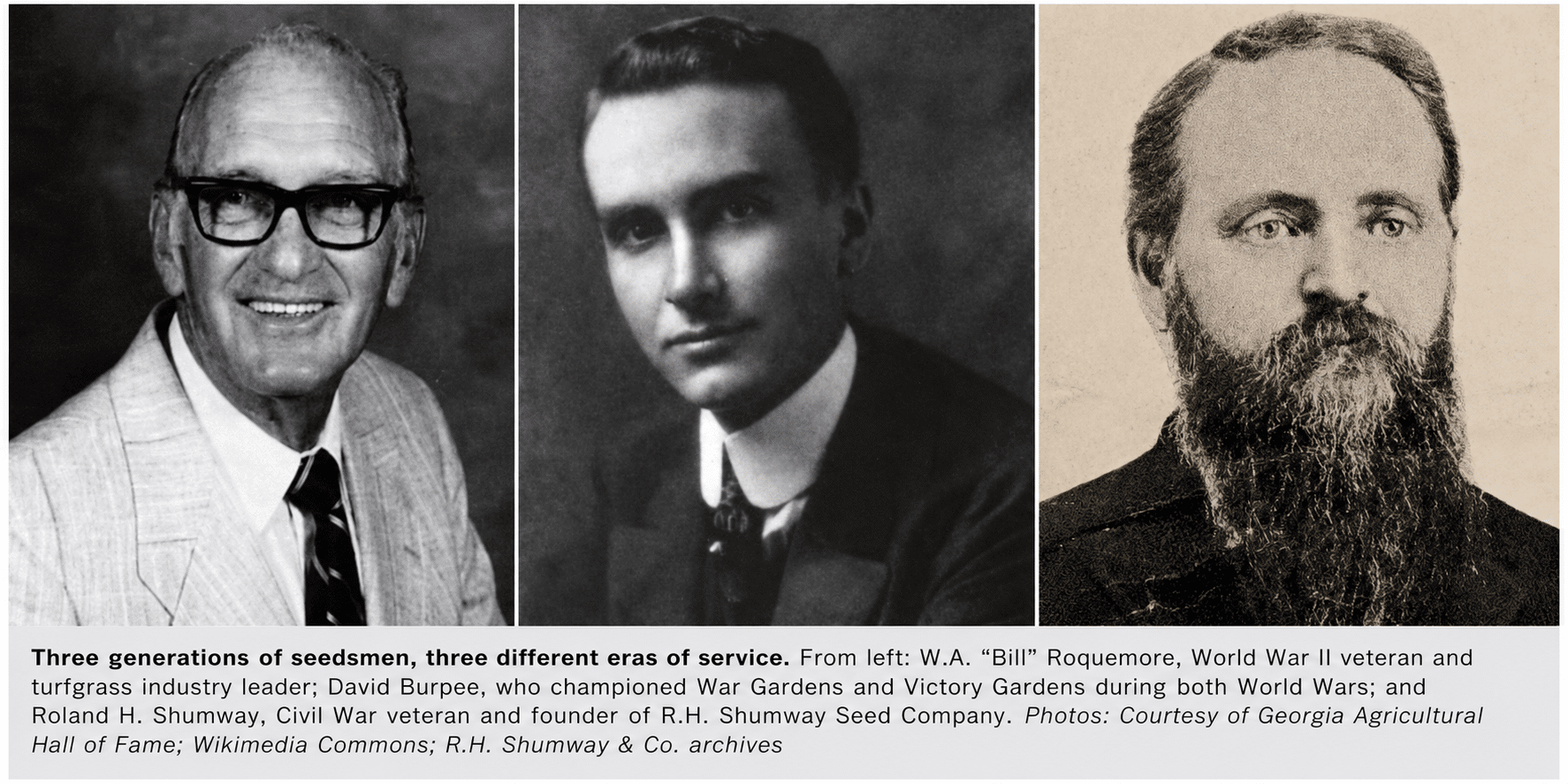
While Memorial Day traditionally honors Americans who died in military service, the holiday also offers a moment to reflect on the longstanding connection between military service, rural America and the seedsmen who served and helped shape the seed industry.
Memorial Day is dedicated to honoring Americans who died while serving in the U.S. military. But throughout American history, military service and agriculture have often been closely connected, especially in rural communities that helped build the seed industry.
Some veterans returned home and helped shape American agriculture through seed, innovation and stewardship.
A Civil War Veteran Helped Expand Seed Access Across America
One of the earliest examples was Roland H. Shumway. Born on an Illinois farm in 1842, Shumway enlisted in the Union Army during the Civil War at age 19. He later re-enlisted in the 50th Illinois Volunteer Infantry. Historical accounts suggest illness during the war contributed to lifelong hearing loss.
After returning home, Shumway founded the R.H. Shumway Seed Company in 1870.
What started as a small operation eventually became one of the largest seed companies in the world. By the 1920s, the company reportedly mailed more than 200,000 catalogs annually to farmers and gardeners across the country.
At a time when many rural Americans had limited access to reliable seed, mail-order catalogs helped connect growers to improved varieties and new opportunities.
Shumway became known as “The Pioneer Seedsman,” but his legacy extended beyond business growth. Historical accounts describe his belief that quality seed should remain affordable and accessible to ordinary people, including poorer growers trying to support their families.
He later donated land in Rockford, Illinois, for a public market intended to benefit local farmers and residents.
Victory Gardens Turned Seed Into Part of America’s Wartime Effort
Decades later, another iconic American seed name became tied to a different kind of wartime contribution.
David Burpee, leader of the famous Burpee seed company founded by his father, Washington Atlee Burpee, guided the company during both World War I and World War II.
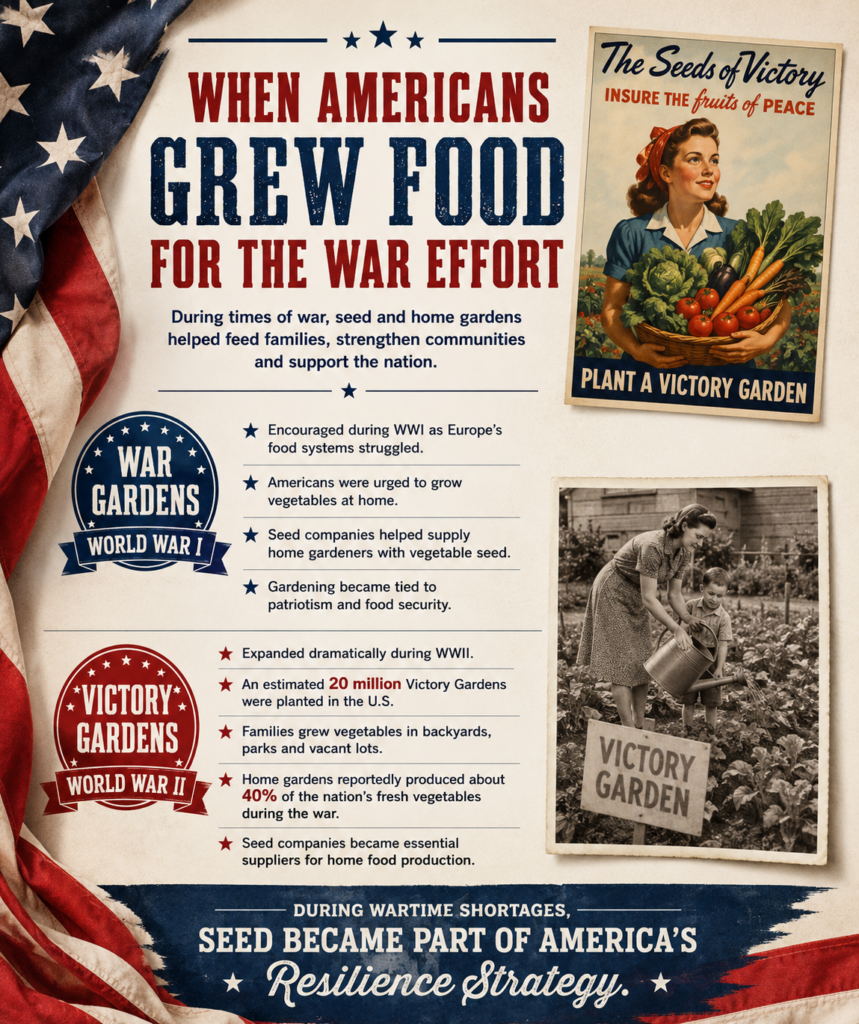
Burpee attended Culver Military Academy before briefly studying agriculture at Cornell University. During World War I, seed companies became part of a broader national push encouraging Americans to grow food at home through “War Gardens.”
That effort expanded during World War II with Victory Gardens appearing across the country.
As wartime pressure strained food systems globally, companies like Burpee promoted vegetable varieties suited for home food production. Gardening became more than a hobby. For many Americans, it became part of supporting the country during wartime shortages and uncertainty.
The effort helped reinforce the idea that seed and food production were tied directly to national resilience.
Decorated WWII Veteran Helped Modernize Turf and Forage Seed
The relationship between military service and agriculture continued into the post-war era through leaders like W.A. “Bill” Roquemore.
Roquemore served as a pilot during World War II and received the Distinguished Flying Cross before eventually helping shape the modern turfgrass and forage seed industry through Patten Seed Company. His work helped expand improved turf and forage genetics across the Southeastern United States during a period when agriculture and landscaping were rapidly evolving after the war.
Roquemore helped shape the modern turfgrass industry through Patten Seed Company and later earned induction into the Georgia Agricultural Hall of Fame. His story is yet another chapter of how military veterans helped influence American agriculture and the seed industry after returning home from service.
For Shumway, Burpee and Roquemore, service came in different forms. We remember them for more than their military service. Their agricultural legacies became their life’s work. But their stories reflect how deeply military service and rural America, agriculture and seed remain connected across generations.