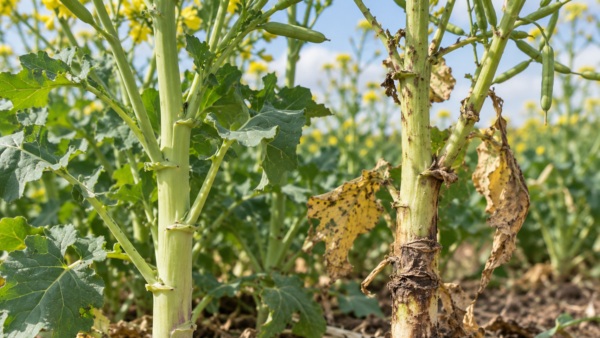
Analysis of 149 field studies across five continents finds that diverse cropping systems support more natural enemies of pests and can improve plant performance.
Increasing plant diversity strengthens populations of predators that help control agricultural pests, according to the largest global assessment of its kind.
The international meta-analysis combined data from 149 field studies conducted in 27 countries across five continents. Of these studies, 109 were carried out on cropland. The research team included more than 180 scientists, among them Dr. Ben Woodcock of the UK Centre for Ecology & Hydrology.
The study is the first global analysis to compare how plant diversity affects interactions between pests and their natural enemies across croplands, grasslands and forests, according to a press release.
Moving Beyond Single-Crop Systems
Conventional agriculture has traditionally relied on monocultures, but interest is growing in farming practices that introduce greater plant diversity and strengthen natural pest control.
These approaches include intercropping, in which different crop species are grown together; planting cover crops and wildflower margins; and integrating livestock and arable production.
More Predators and Better Plant Performance
Published in Science Advances, the study found that greater plant diversity increased both the abundance and species richness of natural enemies that prey on crop pests.
The analysis also found that:
- Both the abundance and species richness of natural pest predators increased.
- The abundance of predatory insects in organic farming systems was found to be eight times higher relative to pest species.
- Even where pesticides were used, the abundance of pest predators was 50% higher than plant-eating pests.
- In organic cropping systems plant performance increased by 17%, although for non-organic systems this was much lower at 0.5%.
Biodiversity Delivers Practical Farming Benefits
Woodcock said the findings provide important evidence that investing in biodiversity—including rewarding farmers for creating more diverse agricultural landscapes—can deliver practical benefits for food production while supporting nature recovery.
“Plant diversity is not just good for wildlife; it can actively support crop production by strengthening natural pest control,” he said. “This reduces farmers’ reliance on chemicals, leaving them less exposed to price spikes while also reducing air and water pollution.”
Study Details
The research was led by East China University of Science and Technology and involved more than 180 researchers worldwide.
Nian-Feng Wan et al. (2026), “Plant diversity modifies multi-trophic interactions in croplands, grasslands and forests,” Science Advances. The open-access paper is available under DOI 10.1126/sciadv.aeb8680.