A University of Illinois hybrid combines savory flavor, combine-ready performance and a new way to teach genetics.
The perfect bowl of popcorn is fluffy, crisp and loaded with butter, salt, cheese or caramel … right? Not if a new generation of better-tasting popcorn catches on, with more of the flavor already built into the kernel itself.
Anthony Studer, a crop scientist and professor in the College of Agricultural, Consumer and Environmental Sciences at the University of Illinois Urbana-Champaign, released Illini SuperPop in early 2026. The new popcorn has a distinct savory flavor, with no seasonings required.
While the flavor profile is impressive, the project began as an outreach idea for students to create orange and blue popcorn lines for the university.
“I can actually teach difficult science concepts with popcorn,” Studer says. “And I just thought that would be a fun thing.”
But the project grew from there.
“My students had the idea to try and make a better overall popcorn,” Studer says. “And I’m pretty easy to convince on any genetics project.”
A Faster Way to Find Flavor
With his genetics background, Studer maintains he’s not a breeder, despite his work in recent years.
“I know that gets more questionable if I keep releasing lines,” Studer laughs.
While there aren’t many popcorn breeding programs, his approach is a bit unique.
“We are testing as many unique genetic combinations as fast as possible. We do more early testing of material than any other program I’ve talked to,” Studer says.
They sacrifice some precision in the early stages to evaluate more genetic combinations quickly.
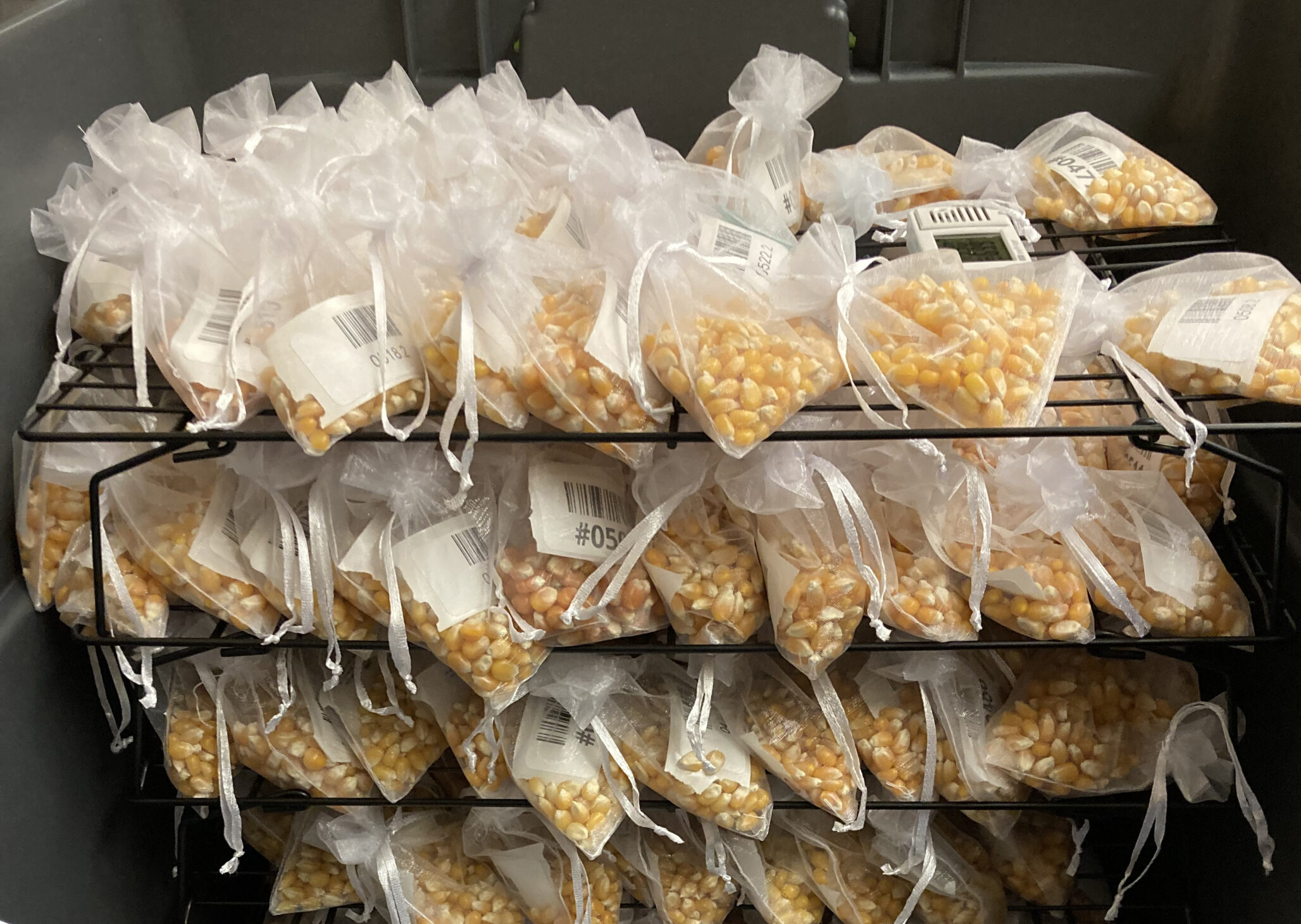
“We test pop a small sample of about 200 kernels from each ear, and we do a couple thousand of those a year,” Studer explains.
He says many companies typically test a much larger 250-gram sample, which takes time to bulk up.
As they find things they like, they look at flake shape, volume, expansion, unpopped kernels, densities and more, adding data all the time.
However, both flavor and texture are more subjective.
“We have struggled with some of the language to classify flavor. Ultimately, it will taste like popcorn,” Studer explains. “There are nutty tones. It has a savory-ness and corny-ness.”
Ultimately, the best way to evaluate each line was to grab a bowl and dig in.
“We eat a vast amount of popcorn,” Studer says.
The team uses air poppers so there is no added flavor from fats such as oil or butter.
Bringing Dent Corn Traits into the Popper
The program uses relatively new germplasm the University of Illinois had, and many crosses involve dent corn.
“We’re learning how to preserve popping quality with all the beneficial traits you can get from elite dent corn. We’re trying to perfect moving those traits over,” Studer says.
“When we were starting out, we just needed stuff to pop, so pop-ability was a major factor,” Studer says.
Stabilizing lines through traditional selfing takes six generations. Studer is studying genetic techniques that could make lines homozygous in one generation. But he isn’t sure if those approaches are a good fit for popcorn.
“Selfing every generation takes a lot longer, but we’re evaluating generations and I need those repeated measures year after year because I want a line that will produce the same popcorn, year after year, no matter what kind of weather they get,” Studer says.
Over time, the team selected against weak stalks and disease before shifting its focus to flavor, texture and flake traits once it had stable, high-performing lines. Texture was especially important.
“The starch can be a little like a packing peanut,” Studer explains. “It has to have the right amount of crunch and the right flake.”
When Kernel Shape Predicts the Pop
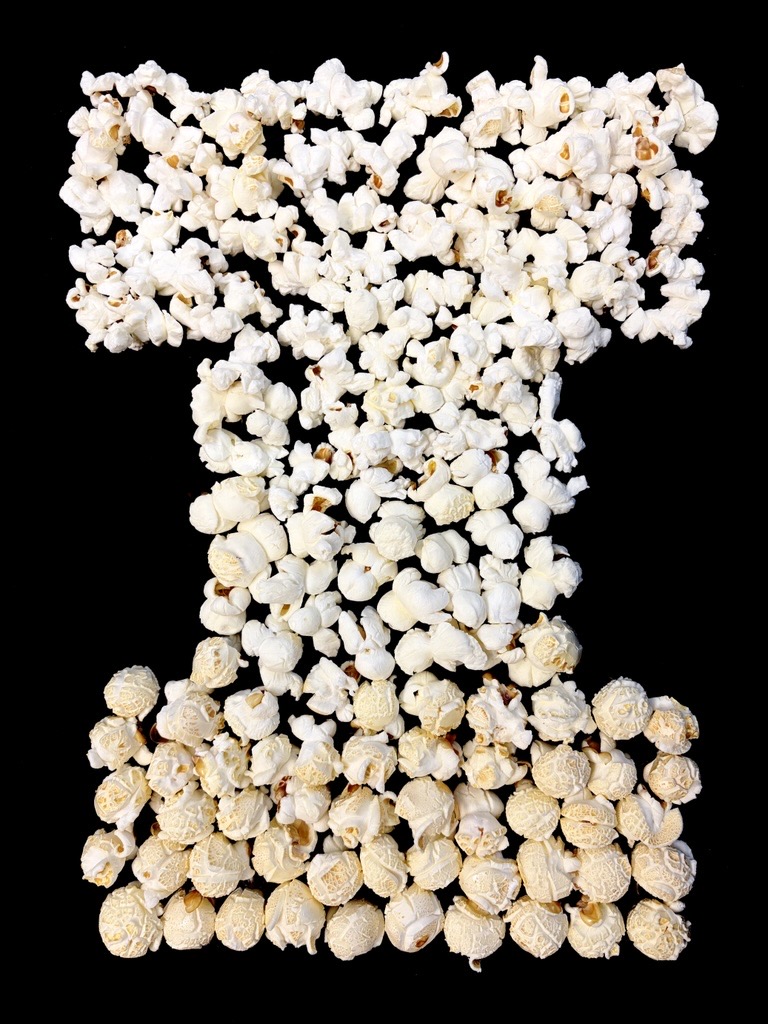
Flake refers to the shape of the popped kernel, with two main types. The first, ball, which is round and sturdy for caramel corn. The second, butterfly, is the wider movie-theater style Studer’s team was targeting. An intermediate mushroom type also exists.
Undergraduates score the flakes, and the team is even linking those shapes to observable kernel features.
“There are anecdotal observations that the shape of your kernel relates to how much of your hull releases off the flake, as well as the flake itself,” Studer says.
Studer has tested this selection method with high school students. He asked them to predict which kernels would pop best based on appearance alone. While random picks succeed about 25% of the time, some students reach success rates above 60% with careful observation.
This is where artificial intelligence comes in.
“If a high schooler can pick out traits just by looking at kernels, machine vision will be able to pick out and quantify those traits. That will really change the way we do things,” Studer says.
The team is testing lines in the field that machine vision models selected. They do this alongside human selections and random controls, as they evaluate the technology over the coming years.
Moving Beyond the Research Plot
To take Illini SuperPop to the next level, Studer partnered with brothers Matt and Darin Riggs of Riggs Beer Company. They began brewing to create a unique, value-added product directly from their fifth-generation family farm.
“A lot of smaller farmers have gotten out of farming because it’s hard to compete, but our ethos has always been to not be afraid to be different and try something new,” Darin Riggs says.
After expanding beyond traditional field crops to grow barley, wheat and brewing grains, they looked into popcorn as a new revenue opportunity and connected with Studer. They eventually planted a 3-acre test plot of Illini SuperPop.
At the university, plots are small and students hand-harvest each ear. The Riggs brothers needed a popcorn that could be harvested by combine.
“We liked that the ears were bigger than other commercial popcorns we’ve grown before. It made it easier to combine with a standard corn head and run through the grain cleaner,” Riggs says.
Even with drought and slightly smaller ears than the team had hoped for, the experiment succeeded. The university sold the popcorn at basketball and football games, with plans to continue increasing production.
Making Genetics Pop in the Classroom
For Studer, the classroom impact has remained one of the popcorn project’s biggest motivations.
Through a grant from the USDA National Institute of Food and Agriculture, Studer is helping develop a popcorn-based curriculum for students across the state. In partnership with the Champaign County Farm Bureau Foundation’s Ag in the Classroom program, the lessons introduce agricultural science, genomics, computer science and more through hands-on activities.
“We’re dedicated to teaching kids where their food, fuel and fibers come from, and popcorn is our state snack, so it’s a fun way to bring something into classrooms that kids can immediately connect with,” says Sarah Kaper, Ag in the Classroom director.
“No matter someone’s background, chances are they’ve had popcorn,” Studer says.
The curriculum introduces younger students to agriculture and corn through art and kernel-identification projects, while older students explore plant breeding using Legos to model crosses and create their own varieties.
Kaper expects up to 3,000 students will participate in each lesson of the program.
“We’ve developed the lessons with the Studer lab to be right on grade level and I’m thrilled to get to combine what we know about teaching with what they know about corn to make learning fun and exciting for students,” she says.
The Search for a True Illinois Blue
As for the original color project, Studer isn’t ready to let it go.
“I haven’t given up on that, but the logistics have proven pretty difficult,” Studer says.
The team has developed an orange kernel, though Studer notes it does not remain orange after popping. Color in a corn kernel is largely contained in the outer layer, with a white interior underneath.
“People always ask me if it pops orange, but there isn’t a line I can cross it to that has orange endosperm to make that happen,” he explains.
Most natural plant pigments break down under the heat and pressure of popping, which is why colorful kernels rarely stay bright once popped. While a transgene could potentially solve the problem by creating a more stable pigment, conventional breeding is limited to traits and mutations already found in nature. Nature does not offer much blue.
“We’ve isolated a blue that’s not the same chemical compound,” Studer says. “It isn’t consistent yet and a paper will probably come out on the unique pigment before we have an actual line ready. Nature just doesn’t do a lot of blue.”
While that project continues, Illini SuperPop popcorn has been trademarked and hybrid lines will be released under the brand.
There is a lag while inbred lines are bulked up for large-scale hybrid production. Nothing will be available for sale in 2026, but Studer hopes the popcorn could be available to home gardeners in 2027, even though that means handing off production.
“It’s hard for me because I’ve gotten it this far, but my job as the breeder here is to get a product that people like and that farmers can grow and I’ll turn it over to someone else who can grow the seed at a high enough quantity to where it’s available in stores for consumers,” Studer says.