What European seed companies and exporters need to know about packaging, EPR, recyclability, recycled content and future reuse requirements.
On 12 August 2026, the European Union began applying its new Packaging and Packaging Waste Regulation, Regulation (EU) 2025/40, commonly known as the PPWR. For seed companies, this is not simply a regulation aimed at bottles, food containers and consumer packaging. Seed packets, paper sacks, polypropylene bags, boxes, drums, liners, big bags, pallets and other packaging used to contain, protect, handle or deliver seed can all fall within its scope.
That does not mean every seed company had to replace its packaging on 12 August. Many of the PPWR’s most significant design requirements will not take effect for several years, while others still depend on secondary EU legislation. Nevertheless, packaging is becoming another part of the broader sustainability responsibilities of seed companies, an evolution already visible in how companies are addressing their environmental footprint across production, facilities and supply chains.
The practical task now is to establish who carries which responsibility, understand what packaging the company places on the European market, assemble the necessary information and documentation, and start preparing packaging formats for the requirements approaching later this decade.
First Establish Your Role
One of the more confusing aspects of the PPWR is that familiar terms such as manufacturer and producer have specific legal meanings. A manufacturer is not necessarily the company that physically makes an empty seed sack. Depending on the commercial arrangement, a seed company that has packaging produced for its products and places the packaged seed on the market under its own name or trademark can itself be considered the manufacturer for PPWR purposes.
A producer, meanwhile, is primarily the party carrying extended producer responsibility, or EPR, in the Member State where the packaging is first made available and is expected to become waste. An importer is an EU established company placing packaging or packaged products from a third country on the EU market. The European Commission’s June 2026 guidance on the PPWR provides detailed explanations of these economic operator roles.
These distinctions are particularly relevant in a sector where seed frequently crosses several borders before reaching the farmer. As Seed World Europe recently explored in its coverage of new EU trade agreements and their implications for seed movement, a variety may be bred in one country, multiplied in another, processed elsewhere and marketed across several destinations. PPWR responsibilities therefore need to be mapped against the actual supply chain rather than simply assigned to whichever company bought the packaging.
Consider a U.S. grass seed company selling seed in its own branded 25 kg polypropylene bags to a French importer. The U.S. company could have manufacturer responsibilities concerning the packaged product, while the French business has separate obligations as importer and may also become the relevant producer for EPR purposes in France. Direct sales from a non-EU company to European end users can produce a different allocation of responsibilities, including possible requirements concerning an authorised representative.
What Companies Need to Address Now
Manufacturers need to determine which PPWR requirements already apply to their packaging and ensure conformity with those provisions. Depending on the packaging and the company’s role, this includes conformity assessment, technical documentation, an EU declaration of conformity and identification of the manufacturer. Importers have their own obligations, including verifying that required conformity procedures and documentation have been completed and providing importer identification information.
Companies should not, however, interpret 12 August 2026 as the date on which every future PPWR requirement suddenly became mandatory. The harmonised material composition labelling system, for example, is scheduled for later implementation, and the detailed criteria governing several other provisions are still being developed. The Commission’s updated PPWR Frequently Asked Questions published on 3 August 2026 are therefore worth monitoring as the system develops.
EPR deserves particular attention because it can create obligations market by market. Seed companies should establish where their packaging becomes waste, who is considered the producer in that country and what registration, reporting and producer responsibility requirements apply. For companies accustomed to international seed trade, the challenge will sound familiar: Seed World Europe has previously examined how different national requirements can turn seemingly straightforward seed movement into a regulatory maze. PPWR aims for greater EU harmonisation, but companies should not assume that EPR compliance has already become one single European procedure.
Bigger Packaging Changes are Approaching
Recyclability is one of the central pillars of the PPWR. Beginning in 2030 or later where implementation depends on the adoption of delegated or implementing measures — packaging will increasingly need to meet harmonised design for recycling criteria. The goal is to ensure packaging is not only recyclable in theory but also designed for effective recycling at scale.
Plastic packaging will also face minimum recycled content requirements. For the general category of plastic packaging not covered by another specific category or exemption, the PPWR establishes a target of 35 % post-consumer recycled plastic from 2030, subject to the regulation’s detailed timing provisions and calculation methodology. A conventional polypropylene seed sack may therefore eventually be affected, making it sensible for companies to begin discussions with their packaging suppliers well before the deadline.
This fits into a wider shift already taking place within seed company sustainability strategies. Seed World Europe has highlighted how companies are moving beyond breeding targets to address energy, water, waste and operational footprints, including efforts to reduce waste and environmental impacts within seed related operations. PPWR effectively adds a regulatory driver to a transition that many companies had already begun voluntarily.
What About the 25 Kg Polypropylene Seed Bag?
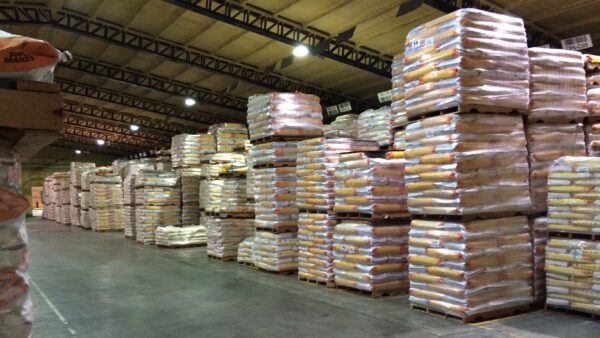
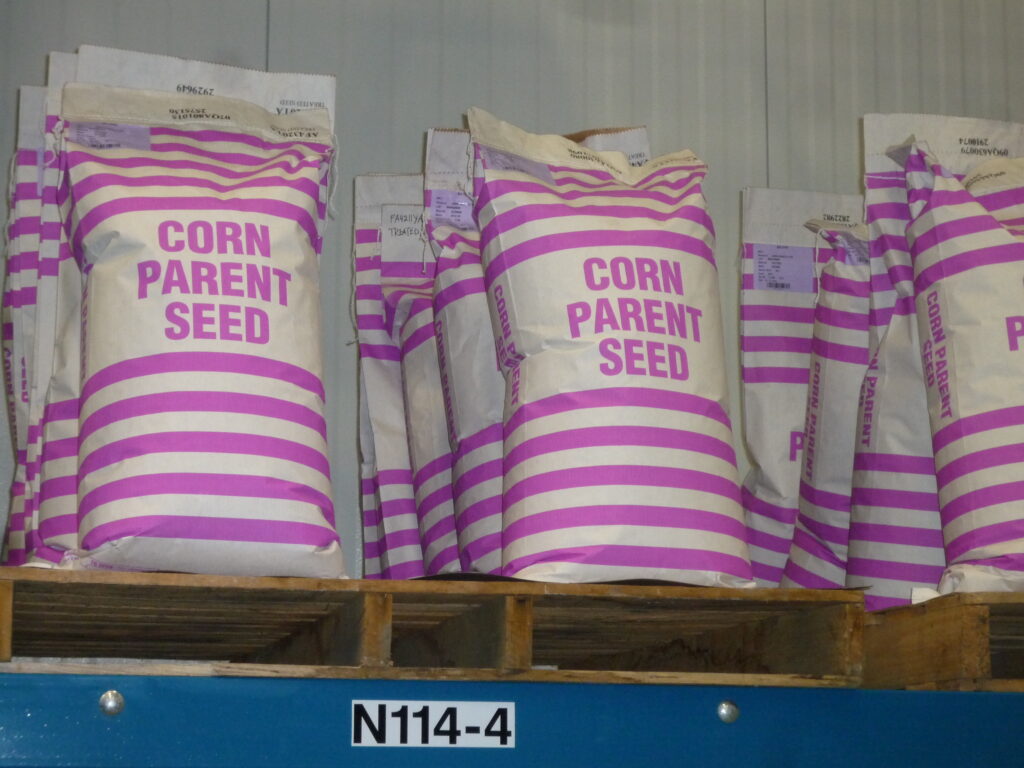
This deserves special attention because large polypropylene sacks are widely used for turf, forage, cereal and other seed shipments. The PPWR contains reuse targets from 2030 for specified transport packaging and for certain sales packaging used for transporting products, including flexible packaging formats. For several categories, the initial reuse target is 40 %.
The crucial question is whether a particular seed sack is considered merely sales packaging or sales packaging that also has an evident transport function. The Commission indicates that design, shape and size can be relevant when making that assessment. There is currently no specific commission ruling stating that every 25 kg polypropylene seed bag falls within the 40% target, so conventional sacks cannot yet be regarded as subject to a reuse requirement. At the same time, companies should not assume that these sacks automatically fall outside the provision.
It would be equally risky to assume that they are automatically outside the requirement. A substantial sack specifically designed both to contain a commercial quantity of seed and to facilitate handling and transport is precisely the kind of format companies should assess with their packaging suppliers and compliance specialists. This is especially relevant for international companies, which already face the practical consequences when regulatory requirements and physical seed logistics intersect, as illustrated in SWE’s examination of post Brexit seed movement and the costs created by regulatory friction.
What Should Seed Companies Do Now?
Companies do not need to panic or abandon their existing packaging overnight. They should, however, treat the PPWR as a compliance project now rather than something that can be left until 2030.
- Map the packaging portfolio. Record the bags, packets, boxes, liners, drums, big bags, pallets and other formats being used, together with their material composition, weight, dimensions, supplier and destination markets.
- Map the supply chain roles. Determine who is the manufacturer, importer, distributor and EPR producer for the relevant transactions. Do this separately where supply arrangements differ between countries or customers.
- Talk to packaging suppliers. Request accurate information on material composition, recycled content, packaging weight and recyclability. Ask suppliers how existing products are expected to perform against future PPWR requirements.
- Review conformity documentation. Establish which technical documentation, declarations, identification details and conformity procedures apply now and which will become applicable later.
- Check EPR obligations country by country. Identify where packaging is placed on the market and where it will become waste. Confirm registration, reporting, financing and representative requirements rather than assuming that the importer or customer automatically handles them.
- Put 2030 on the packaging agenda now. Assess recyclability and recycled plastic requirements and give particular attention to larger flexible seed sacks that could potentially fall within the PPWR reuse provisions.
Regulatory complexity is already becoming a recurring feature across many parts of the seed business. In areas such as biological seed treatments, Seed World Europe has similarly found that evolving and insufficiently harmonised rules can create substantial complexity for companies operating across markets. Packaging may appear less technically demanding than seed treatment or plant health regulation, but the combination of environmental requirements, supply chain roles and national EPR systems means it should not be underestimated.
For European seed companies and overseas exporters alike, the most useful question is therefore no longer simply whether seed can continue to be shipped in a particular bag. Companies increasingly need to know who is legally responsible for that bag, what evidence must accompany it, what happens to it after use and whether the same packaging format will still satisfy European requirements several years from now.
The familiar 25 kg polypropylene seed sack is not suddenly prohibited because the PPWR has begun to apply. But under Europe’s new packaging regime, it is no longer just a bag either.
Editors’ Note: This article provides a general overview of Regulation (EU) 2025/40 and does not constitute legal advice. Companies should verify the requirements applicable to their individual packaging formats, supply arrangements and EU markets.