The countries that lead plant breeding will be those that connect data, people and investment quickly enough to respond to changing farm conditions.
Our greatest competitive advantage may soon be the ability to turn uncertainty into a decision faster than anyone else.

Farming and its related industries have always been an exercise in incomplete information. Farmers choose seed before knowing what the weather will do. Breeders select parents years before knowing what pressures the resulting varieties will encounter. Companies invest long before knowing whether a product will reach the market. Governments design programs whose consequences may not become apparent for a decade.
We often describe innovation as the creation of something new. But increasingly, I think innovation will be measured by how quickly the seed sector can learn, and how effectively it can act on what it learns. That process begins earlier than we sometimes realize.
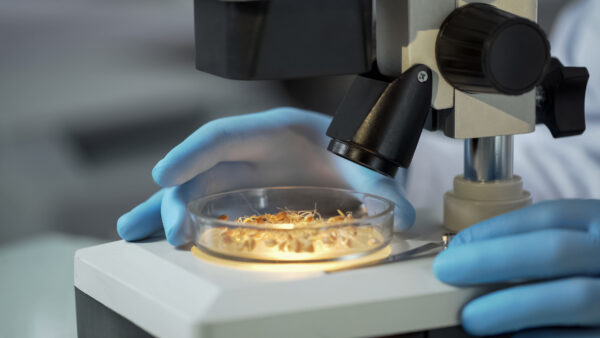
Morgan Webb of Seed Check Technologies writes that this year’s harvest holds the key to next year’s crop. Germination, vigour, mechanical damage and seed-borne disease are not simply numbers on a laboratory report. They are early signals about the decisions growers will face months from now. That makes harvest more than the conclusion of one growing season. It is the opening data-gathering stage of the next. The same principle is reshaping plant breeding.
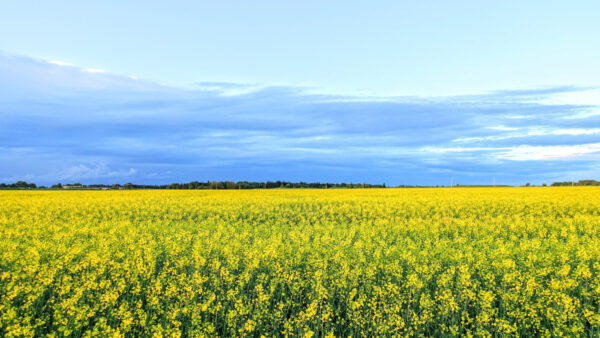
University of Manitoba researcher Shruti Kashyap is studying how water stress affects canola’s resistance to Verticillium stripe. The significance of that work extends beyond one crop and one disease. It reflects a larger shift away from evaluating traits under isolated conditions.
A variety is not just disease-resistant or drought-tolerant. Its performance emerges from an interaction among its genetics, the pathogen and the environment. Change the moisture conditions and the plant’s response may change with them. That is a much more complicated way to breed crops. It is also a much more realistic one.
The future will not reward breeding systems designed around a single, stable version of the Canadian growing environment, but will reward systems capable of learning from multiple environments, identifying interactions sooner and converting that knowledge into better varieties. New technology can accelerate that process, but technology is not the same thing as learning.
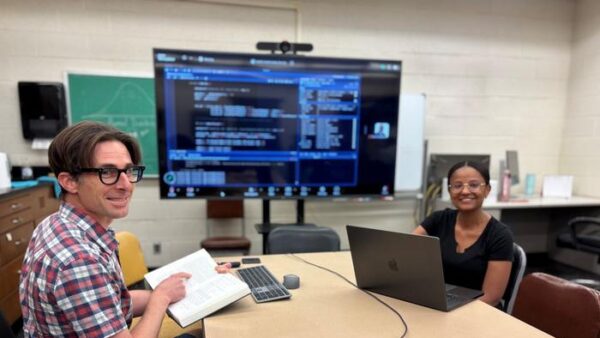
That was one of the most important lessons to emerge from this year’s National Association for Plant Breeding meeting in Texas held back in June. Corteva Agriscience corn breeder Zachary Jones uses genomic prediction and other advanced tools, but he argues that science is now table stakes. The differentiating skills are communication, teamwork and the ability to connect complex research with the people it is supposed to serve. That distinction matters. Data can reveal a signal. It still takes people to recognize its significance, explain it and persuade an organization to act on it.
Canada therefore does not just need better breeding technology, but requires institutions capable of moving knowledge across the boundaries separating researchers, farmers, seed growers, companies, regulators and funders. Right now, too much agricultural knowledge loses momentum at those boundaries. Information is collected in one part of the system, interpreted in another and acted upon somewhere else — often after valuable time has passed.
That is why the plant breeding funding conversation cannot be reduced to a debate over how much money Canada spends. Kenny Piecharka of KWS argues that Canada must compete for plant breeding investment. Predictable returns, efficient regulation, modern variety registration and workable royalty mechanisms all influence where breeding dollars go.
But capital will ultimately follow systems that can use it effectively. A country can possess excellent scientists, strong institutions, farmer funding and advanced technology yet still fall behind if decisions take too long, responsibilities remain fragmented or nobody can agree on how success should be measured.
The danger is not only that Canada will invest too little. It is that we will learn too slowly. That is also the challenge raised in the Season 3 premiere of On the Brink. After spending months documenting the pressures facing Canadian plant breeding, the conversation must move beyond diagnosis. We now have to decide what kind of system we are trying to build.
A thriving system would not eliminate uncertainty. That’s impossible. It would detect change earlier, move information faster and give people the confidence and authority to respond. It would connect what is discovered in a seed-testing laboratory after harvest with what happens in a breeder’s plots, a company’s investment meeting and a farmer’s field.
The future of Canadian seed will not be secured by one technology, one funding model or one institution. It will depend on how quickly the entire system can learn together. Because in a world where growing conditions, disease pressures and technology are all changing at once, the slowest part of the innovation pipeline may no longer be biology. It’s probably us.