André Negreiros, Vylor’s Southern Europe Commercial Unit Leader, on why becoming a pure seed company changes the competitive map, where he sees room for growth, and the power of innovation in agriculture.
André Negreiros has spent his career moving across some of the lines Vylor is now preparing to redraw.
He came to seed through crop protection and seed treatment, before moving into Corteva’s commercial leadership in Central and Eastern Europe. Now, as Vylor’s Southern Europe Commercial Unit Leader, he takes on a territory stretching from Iberia “almost to China,” as he puts it.
That breadth matters because Negreiros sees independence changing some of the assumptions that have historically shaped the business. Vylor can be more open about where it licenses its genetics, where it relies on partners and even who those partners might be. Companies that once competed with Corteva in areas such as seed treatment could now find themselves working with Vylor. Those are no longer theoretical possibilities, he says. Some of those conversations are already beginning.
At the same time, Vylor is considering where else it could play, with Negreiros openly pointing to collaboration, joint ventures and, eventually, acquisitions as possible routes beyond its current crop footprint.
Seed World spoke with Negreiros about where Vylor could go next, who it might go there with, and what becomes possible when seed is the whole business.
Seed World (SW): You’ve spent much of your career in crop protection and seed treatment. Now you’re leading a large commercial region for a company that will be 100 per cent focused on seed. What looks different from this side of the business?
André Negreiros (AN): I think the seed market is one of the few markets that has a real opportunity to innovate. When you look at plant protection, you see more and more competition and more and more generic pressure. In seed, there is no generic story. The competition is based on genetics, germplasm and new technologies. It’s all about the power of innovation, the power of investment and where that will lead us. That is why I see the launch of Vylor as such a meaningful shift. We will be, as you say, 100 per cent focused on advanced seed and genetics, and innovation has to be the path forward.
SW: You use the phrase “open for business.” What does that mean beyond launch language? Where do you see the next meaningful source of growth coming from?
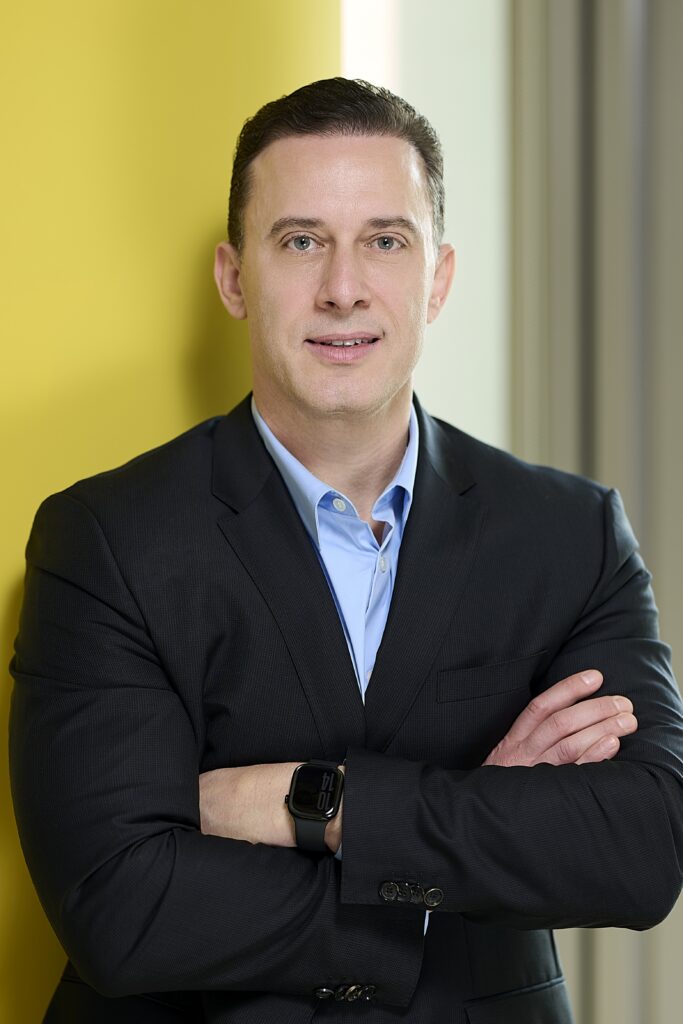
AN: We are super strong in corn, sunflower and soybeans in the U.S., but that’s it. We are limited in our total number of crops. We are very focused today and potentially we want to increase where we play. That opens different possibilities. We can talk about collaborations, potentially joint ventures and, eventually, acquisitions.
There is also a much bigger focus on collaboration. That was never, I would say, the top priority in the past. Now it is a top priority. We are looking at increasing licensing agreements, both licensing in and licensing out.That could mean working with distributors in areas where maybe we don’t want to go as a company ourselves, and licensing part of the business to someone else to play in those territories.
SW: There is a lot of expectation around what Vylor is going to do next. Do you feel pressure from the market to prove that independence actually changes something?
AN: Yes, definitely. I see customers and farmers who are very curious to know what we’re going to bring and what’s going to be next. I also see the competition. I see the whole market talking about it. And we’re already hearing from previous competitors, companies that competed with Corteva in seed treatment, for example, or other technologies. Now they can become new partners. We are a pure seed and genetics player now. That changes the possibilities for who we can work with.
SW: You joined Corteva specifically to build its seed-treatment portfolio from scratch. Now that portfolio stays with Corteva. What does Vylor gain by no longer owning it?
AN: Seed treatment will remain with Corteva, as will the biologicals portfolio. But on the Vylor side, we will have the freedom to decide what we’re going to do, where and how we’re going to partner, what recipes we’re going to develop and what new recipes we’re going to develop or co-develop with new partners.
There will be countries where we continue selling biologicals together with seed. I already have some cases in my new commercial unit. It will be country by country. Where we see an opportunity, we will use it. But the key focus for us is to increase our innovation and penetration in seed. The focus is seeds now.
SW: You keep coming back to innovation. How much can you actually tell the market today about what is coming?
AN: We have our current conventional breeding pipeline ready to be launched in the next years. When you see it in the field today, there are going to really be breakthrough hybrids in corn, sunflower and winter oilseed rape. Then there are NGTs. We have plenty of new things to bring to the market and are already market leaders. So what else can we do? What else can we bring to farmers? That is going to be technology and innovation.
SW: What does moving to the seed side mean for you?
AN: My whole background before joining Corteva was crop protection. That was my expertise. But when I decided to join Corteva eight years ago, I joined because of Pioneer.
Pioneer had been my customer, and I loved the way the people worked and how engaged they were with the brand. I remember head-hunters telling me the most difficult people to headhunt were Pioneer employees.They didn’t want to move. They wanted to stay because they liked the way the company worked.
So for me, staying on the seed side means taking that same engagement into something new. We are becoming a new company, 100% focused on seeds and genetics, and I’m super excited about what we can build from here.