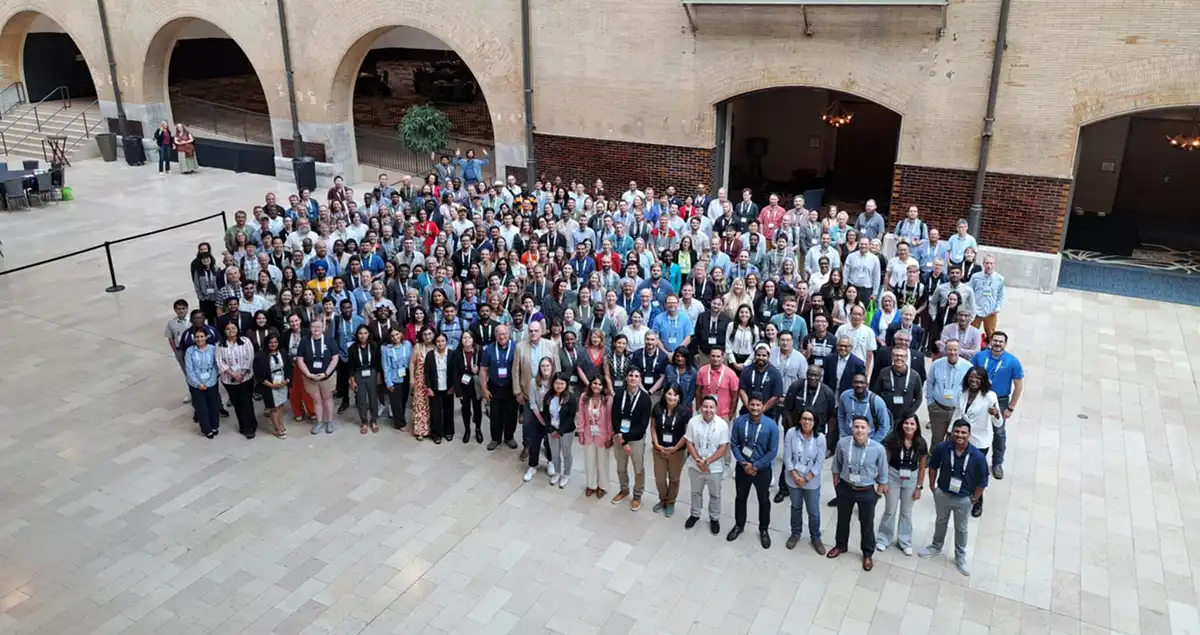
The National Association of Plant Breeders (NAPB) broke new ground this year both in terms of its membership and its technological capabilities with regard to its annual meeting.
The meeting was held virtually this year, taking place Aug. 17-20 and organized by NAPB members at the University of Nebraska-Lincoln. It was the 10th annual meeting of the NAPB and was supposed to have physically taken place in Lincoln, Nebraska.
Despite challenges posed by recent global events, attendance numbers exceeded expectations and the organization continues to grow.
The NAPB has surpassed 450 members, including a modest Canadian contingent — an all-time high — thanks in part to an outreach initiative led by pulse breeder Valerio Hoyos-Villegas of McGill University in Montreal, Canada.
The NAPB is also enjoying renewed interest from the private sector thanks to the efforts of its Commercial Plant Breeding Committee.
“Part of my mission will be to continue to engage the private sector and ensure we have a good level of private sector involvement and support. I’m not the first president to come from the private sector,” said incoming NAPB chair Dave Bubeck, research director logistics for global breeding services and NA regional crops for Corteva Agriscience.
“From a private sector perspective, the public sector is training our future employees. In order to stay the course and continue fostering technologies that improve plant breeding and crop performance, to be able to be shoulder to shoulder with the public sector is important for us in the private sphere to do.”
With most of the conference being held via Zoom, it was a new way of hosting what has become a high-profile annual event in the plant breeding world. As many groups in an array of industries work to simply maintain their numbers, the NAPB is enjoying continual growth since it was founded by the Plant Breeding Coordinating Committee (PBCC), which works to advance the interests of public sector plant breeders in the United States and beyond.
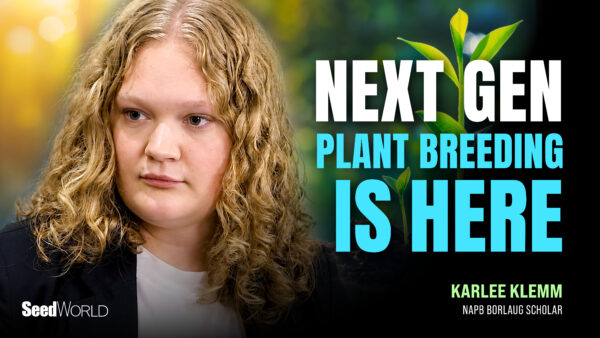
Due to the decreased costs associated with holding a virtual event, the NAPB was able to sponsor significantly more young plant breeders to be Borlaug Scholars this year. Eighteen students (16 graduate and two undergraduate students) were able to attend the virtual meeting and get involved with the NAPB.
“Everybody in the private sector should remain compelled to ask themselves, ‘What’s the interaction I need with academia, the public sector and grad students. Someday I may be in a position where I need to recruit future employees, so I need to stay connected with the public sector,” Bubeck added.
Richard Pratt, incoming chair of the Plant Breeding Coordinating committee, said due to recent changes in federal funding and the fact the industry in general is heading in new directions, now is an important time for plant breeders everywhere to unite.
“We’re all interconnected. It’s not public versus private sector. It’s about the important of plant breeding. What we’ve found is there’s a lack of recognition for the importance of plant breeding, and it’s in the interests of both the public and private sector to increase that awareness. We’re in this together and we’re much stronger united. I think the multigenerational aspect of the PBCC and the NAPB is really important,” said Pratt, a corn and bean breeder at New Mexico State University.
“There’s a real focus on mentoring grad students and a ground-breaking thing the PBCC accomplished was bringing agronomic, horticultural and forestry crop breeders together as plant breeders. These organizations really unify plant breeders. Public and private breeders have come to understand that we have a lot of common ground and we’re reminded the majority of graduates go to the private sector.”
The NAPB restructured its annual awards program for 2020 to reflect its public and private sector involvement. Instead of handing out its annual Plant Breeding Impact Award, it now gives out three different honours: the Public Sector Plant Breeding Impact Award (awarded to Kendall R. Lamkey, chair of the Department of Agronomy at Iowa State University); the Private Sector Plant Breeding Impact Award (going to Thomas C. Osborn, head of global analytics and pipeline design for vegetable R&D at Bayer Crop Science; and the Friends of Plant Breeding Award (awarded to corn breeder Don Cummings).