The Canadian Seed Growers’ Association couldn’t have picked a better location for its annual meeting. The story of the Klondike Gold Rush shows that lasting success comes from building communities — not chasing quick fortunes.
Standing on the banks of the Yukon River in Whitehorse these past couple days, it’s impossible not to think about the people who came north chasing gold.
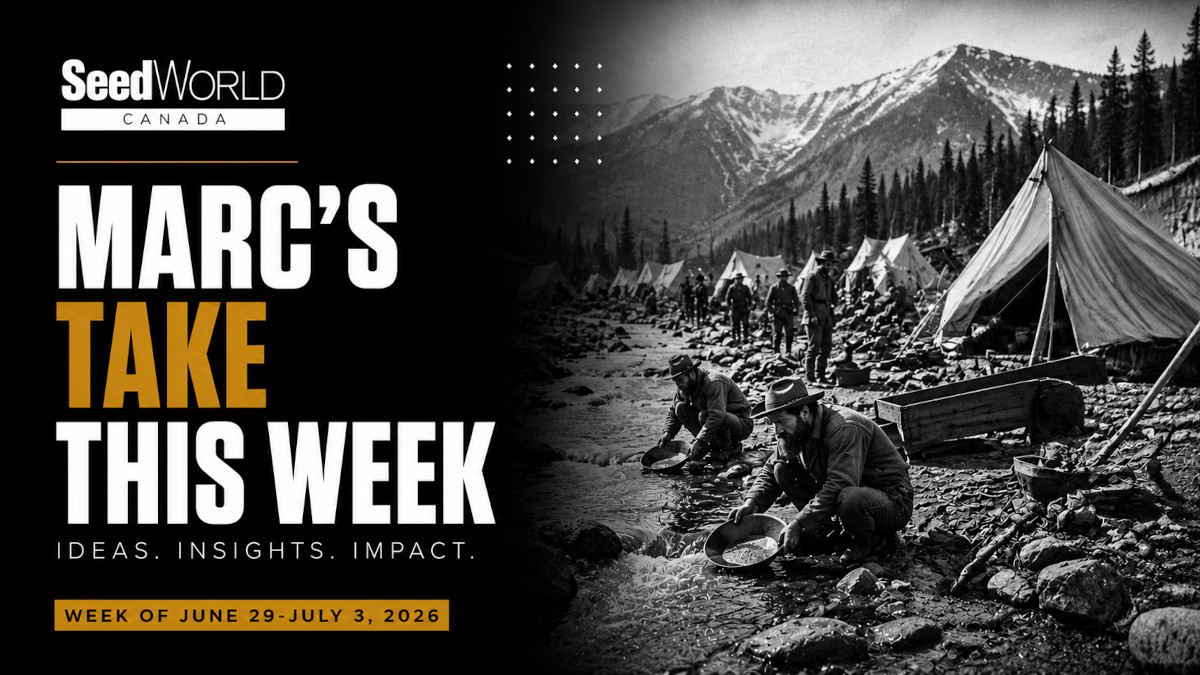
Around 100,000 people set out for the Klondike in the late 1890s, driven by the promise of striking it rich. Fewer than half actually made it to the goldfields around Dawson City. Of those who did, only a tiny fraction found enough gold to make their fortunes. Most lost money. Many lost everything.
Yet if you only measure the Klondike Gold Rush by how many people became wealthy, you miss the bigger story.
The rush built communities. It created transportation networks. It established businesses that outlasted the frenzy itself. Whitehorse exists today because of it. What began as a rough stopping point for stampeders navigating Miles Canyon became a permanent city with a unique identity, one that still welcomes people from across Canada and around the world.
This weekend, that same city is hosting another gathering of ambitious Canadians as the Canadian Seed Growers’ Association holds its annual meeting.
Of course, the seed sector isn’t driven by the same lottery-ticket mentality that defined the gold rush.
Nobody becomes a pedigreed seed grower because they think it’s a shortcut to easy money. If anything, it’s one of the more demanding businesses out there. It requires patience, attention to detail, strict standards, long-term investment and a willingness to build something that may take years to fully pay off.
In many ways, seed growers are the opposite of gold prospectors. Prospectors searched for something that already existed beneath the ground. Seed growers create something new. Every generation of certified seed represents years of breeding, testing, multiplication and stewardship. Rather than extracting value, they’re constantly investing in creating more of it.
Still, there are parallels. Both groups are pioneers in their own way. The stampeders heading over Chilkoot Pass couldn’t know whether success waited on the other side. Today’s seed sector faces its own uncertainties: changing regulations, climate pressures, evolving technology, public breeding challenges and shifting markets. Progress still requires people willing to head into unfamiliar territory.
The difference is that the seed sector’s success isn’t measured by a lucky few striking it rich. Its success is measured by how many people benefit together. When breeders develop better genetics, seed growers multiply them, retailers deliver them and farmers put them in the ground, the gains spread across an entire system. Higher yields, better disease resistance, improved quality and greater resilience don’t belong to one person. They ripple through rural communities, food processors, exporters and ultimately consumers.
That’s a much healthier kind of rush.
As I’ve walked through Whitehorse this week, I’ve been reminded that communities are built by people willing to invest in something larger than themselves. The gold miners didn’t all find gold, but they left behind towns, roads and stories that continue to shape the Yukon more than a century later.
The seed sector has the opportunity to leave a different kind of legacy.
The conversations happening at this year’s CSGA meeting won’t generate the headlines of a gold strike. There won’t be dramatic discoveries or overnight fortunes. Instead, they’ll focus on governance, certified seed, quality assurance, innovation and the future of food.
Those discussions may not sound glamorous. But decades from now, they will prove every bit as important as the decisions that transformed a muddy stop along the Yukon River into the thriving northern capital I’m visiting today.
Often, the greatest value isn’t found in what you discover. It’s found in what you build.