New research suggests consumers may pay more for bread with a smaller environmental footprint. The bigger question is whether the seed industry can build a business around that demand.
Every new crop faces the same question before it reaches commercial scale: Will someone pay for it?
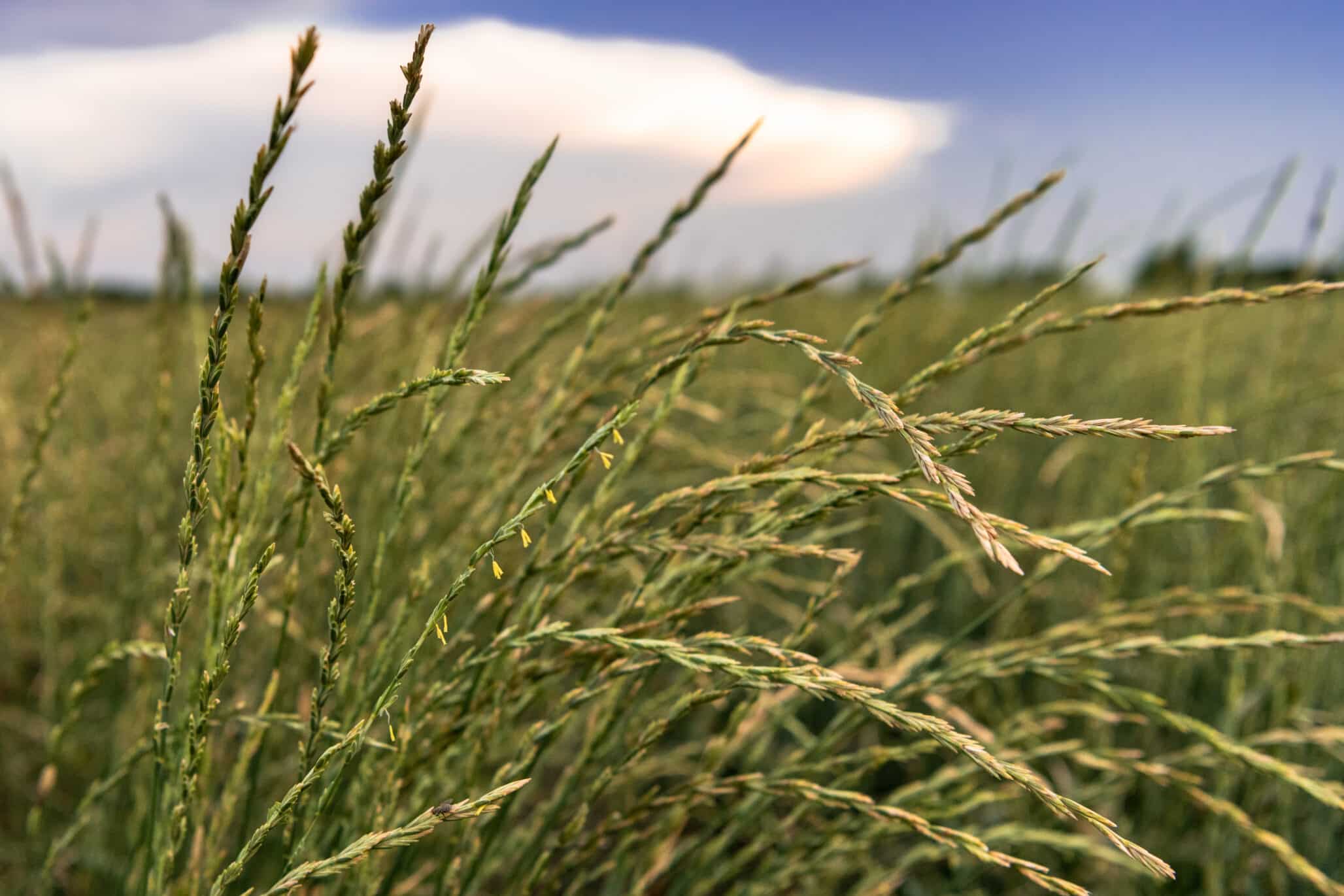
Researchers at Cornell University set out to answer that question for bread made with intermediate wheatgrass (IWG), a perennial grain marketed as Kernza®. Using real-money auctions instead of hypothetical surveys, they found consumers were willing to pay a modest premium for bread made with the grain.
The findings may offer an encouraging signal for breeders and food companies working to develop climate-friendly cropping systems. They also reveal how much must happen before consumer interest translates into commercial success.
“Cautiously optimistic.”
That’s how Jie Li, director of programs for Cornell University’s Food Industry Management Program and senior research associate in the Dyson School of Applied Economics and Management, describes the findings.
“Unlike typical surveys, we used real-money auctions, so participants had genuine financial stakes in their decisions,” Li says. “That said, our sample skewed younger and more educated — likely early adopters. A 5-10% price premium is meaningful in a billion-dollar premium bread market, but we need retail-setting studies before claiming this scales broadly.”
For the seed industry, the study raises a different question. If consumers are willing to pay more, what will it take to turn that interest into acres?
Taste May Decide the Market
Price isn’t the only hurdle facing climate-friendly grains.
“Taste might be the most immediate constraint,” Li says.
The research found bread containing 15% intermediate wheatgrass performed well with consumers. At 25%, however, acceptance fell.
“The IWG crop produces a denser, less elastic loaf due to a weaker gluten network,” Li says. “On the supply side, IWG costs more to produce because of lower yields, higher seed costs and underdeveloped processing infrastructure. Both barriers are real, but taste needs to be solved first.”
The findings shift the conversation beyond sustainability claims. Consumers may appreciate the environmental story, but they’ll still expect bread that looks, feels and tastes familiar.
Better Genetics Still Matter
While Cornell examined the demand side of the equation, The Land Institute continues working on the production side.
Its breeding program focuses on increasing grain yield, improving seed size, enhancing free-threshing ability, reducing seed shattering, accelerating maturity and improving seedling vigor. Each target addresses a practical obstacle to growing the crop at commercial scale.
The organization also cautions against comparing Kernza directly with annual wheat.
“Kernza is not a type of wheat, so it’s difficult to make direct comparisons with annual wheat since these are two distinct crops,” the institute says.
Commercial production remains modest. According to The Land Institute‘s 2025 Supply Report, growers planted 3,511 acres of Kernza across 19 states and harvested 98,752 pounds of clean, dehulled grain.
The institute views Kernza as a complement to annual cropping systems rather than a replacement. Many growers already use it in rotation with annual crops or as a dual-purpose forage and grain crop, with the greatest opportunity in areas where perennial systems can improve soil health and reduce erosion.
The Business Case Has to Grow With the Crop
Li believes the research sends a positive signal to breeders, but not a reason to ease off the accelerator.
“Consumer demand exists when the sustainability story is clearly communicated, but it’s conditional on taste,” she says.
“IWG yields still lag well behind conventional wheat and decline over time. Without closing that productivity gap, farmers have little incentive to plant it regardless of consumer interest.”
That observation may be the study’s most important takeaway.
Breeding better crops is only part of commercialization. The genetics also have to generate enough value for farmers, processors, millers, retailers and consumers to move together.
One Link Can’t Move Alone
The challenge extends well beyond the farm.
“Farmers face lower yields and higher costs without reliable demand,” Li says. “Processors and millers have little incentive to invest given IWG’s tiny share of global cereal production. And retailers lack the infrastructure to communicate sustainability at scale.”
She describes the situation simply.
“It’s a classic chicken-and-egg problem that requires coordinated movement across the chain, not just action at one end.”
Moving climate-friendly grains beyond niche markets will require progress on several fronts at the same time.
“Several things need to happen in parallel,” Li says. “Better breeding for yield performance, consumer education and standardized eco-labeling, early supply chain development in agronomically suitable regions like the U.S. Midwest and policy support to reduce risk for early movers. No single lever is enough; they need to move together.”
The Land Institute shares that long-term view. While Kernza is expected to complement annual grain systems during early adoption, researchers are also developing perennial wheat that could one day serve as a more direct substitute for annual wheat. That work, however, remains in the research stage.
For now, Cornell’s study offers encouragement rather than certainty.
Consumers appear willing to pay a modest premium under the right conditions. Breeders continue improving the crop. The next challenge is connecting those advances with a value chain that can support them from the field to the bakery shelf.
Whether climate-friendly grains remain a specialty product or become a mainstream cropping option will depend on far more than consumer interest. It will depend on whether every step between breeding and the bread aisle evolves together.