At UC Davis, Reagan Reed is testing how genes work together to influence germination and seed quality.
Reagan Reed has a way of describing his research that might make a plant breeder pause.
“I’m the sort of person who likes to break things to understand them,” he says.
What he breaks are genes involved in seed germination. Reed, a Ph.D. candidate at the University of California, Davis, is investigating whether changing those genes can help seeds establish healthy plants under a wider range of conditions.
Reed recently attended the National Association for Plant Breeding meeting in College Station, Texas, as an NAPB Borlaug Scholar. His work speaks to a question that matters well beyond a research lab: what does it take for a seed to get a crop off to a strong start?
A seed that germinates quickly, alongside the others planted with it, spends less time vulnerable to stresses before seedlings become established.
“If you’re able to bridge that gap between germination to stand establishment, then that’s going to give you the highest probability of having a solid yield that year,” Reed says. “There’s a bunch that can go wrong after that, but it maximises your yield from the start, at least.”
Reed works in Dr. Imtiyaz Khanday’s lab at UC Davis, where his research focuses on seed quality in tomatoes and potatoes. He brings an unusual academic background to the work: at Skidmore College, he studied both biology and Latin.
Reed believes that combination prepared him for research. Translating an ancient text means studying each word, weighing its possible meanings and using context to reach the best interpretation. There is rarely a way to know with complete certainty what an author intended. Science, he says, requires a similar willingness to work through uncertainty.
“Attention to detail and comfortability working with uncertainty,” is how he sums up what Latin taught him.
In the lab, uncertainty can produce a surprise. Reed describes changing one gene and seeing little effect. Changing a second gene also appears to do little. Put both changes in the same genetic background, though, and the result can be substantial.
“I break this gene, nothing really happens. I break this other gene, nothing really happens. I combine them into the same genetic background, and now there’s a massive effect,” he says.
Those interactions matter as researchers gain the ability to edit multiple genes at once. They also complicate any simple account of how a trait works: improving a seed may depend on understanding what several genes do together.
For Reed, the question is whether that knowledge could help seeds germinate reliably when conditions are difficult. Some of the genes he studies prevent germination under certain conditions. That response may serve a plant well in one setting while limiting its usefulness in agriculture. He wants to learn what happens when those genes are changed, and whether the result improves establishment.
Yet a discovery that works in a lab still has a long way to travel before it reaches a field. Reed argues that agricultural biotechnology faces an economic challenge as well as a scientific one. New tools can create value for farmers, he says, but developing them requires a way to support the work in an industry where margins can be thin.
His fellowship with Flagship Pioneering gave him a view across AI, agriculture-related work and human health research. It also reinforced the importance of bringing people with different expertise into the same conversation—a benefit of gatherings such as the NAPB meeting.
“You need to have a team of people with different backgrounds who are willing to work together and approach the same problem in different perspectives and different ways,” he says.
That thinking connects the different parts of Reed’s path. Latin taught him to examine details without expecting a perfect answer. Gene editing lets him test what individual genes do—and what happens when their effects combine. Working with people beyond his own field helps him ask what those findings could become.
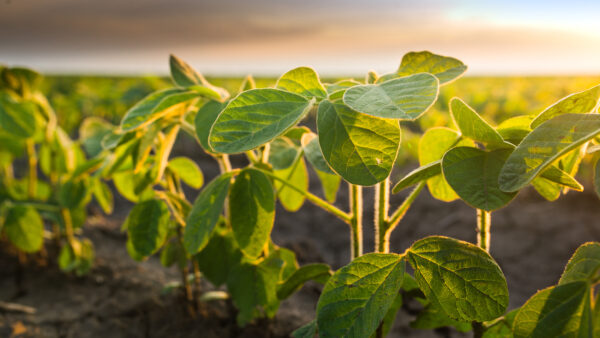
He came to agriculture because of its reach: the possibility that work by a small group of researchers could eventually make a difference on a much larger scale. His immediate focus is smaller and more precise. He wants to understand what helps a seed get through its first days and become a healthy plant.
For a farmer, that may be where a better crop begins.
Podcast: Play in new window | Download