For pea and lentil seed treaters, applying an inoculant is only one part of the job. A key question is whether the rhizobium bacteria will still be viable when the seed reaches the soil.
Treatment schedules, seed storage, transportation, and changing planting conditions can all create a gap between application and seeding. That gap matters because rhizobium must remain viable on the seed to initiate the relationship with emerging plant roots that leads to nodule formation, where nitrogen fixation takes place.
As demand grows for treatment programs that fit commercial workflows and grower needs, on-seed viability has become an increasingly practical consideration for pulse seed treatment.
The biology behind the seed treatment
Peas and lentils form a mutually beneficial relationship with Rhizobium leguminosarum biovar viciae, a naturally occurring soil bacterium.
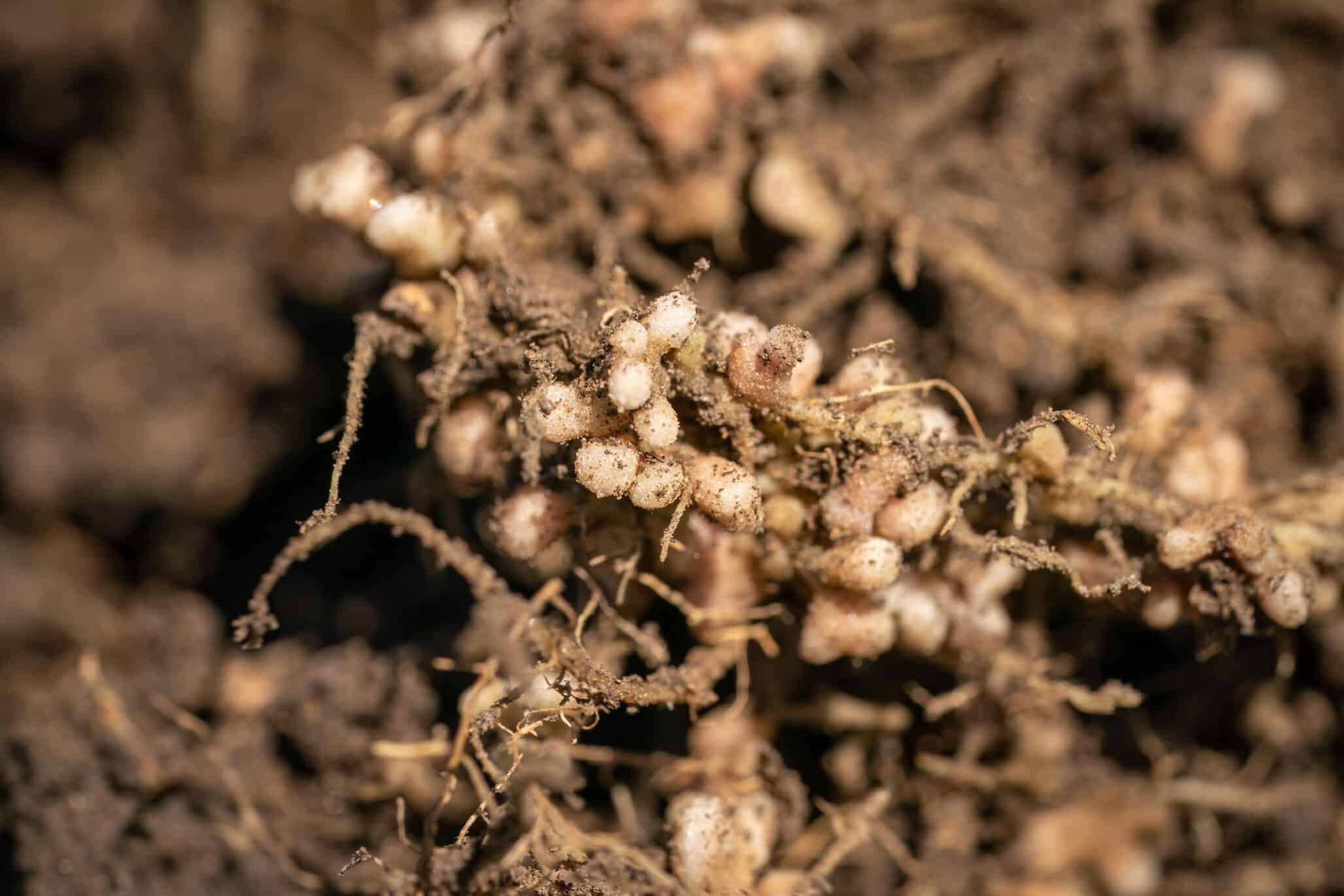
After planting, viable rhizobia near the emerging root communicate with root hairs and stimulate nodule formation. Nitrogen fixation occurs in these nodules. The bacteria capture nitrogen from the atmosphere and convert it into a form the plant can use for growth and protein production.
In return, the plant provides the bacteria with a protected environment inside the nodules, along with sugars and other resources.
This process is well known, but it depends on timing. If the rhizobium population declines before planting, fewer viable bacteria are available to colonize the developing root system. That is why the period between seed treatment and seeding deserves attention.
More time between treatment and planting
Historically, inoculant application has often been closely tied to planting because bacterial viability can decline over time, especially when seed is stored in warm conditions.
New on-seed viability options are giving seed treaters more latitude to plan treatment runs earlier. AGTIV FUEL® P and AGTIV FUEL® L each provide up to 30 days of on-seed viability on pea and lentil seed stored below 14°C.
For operations that require a longer timeline, EXTENDER™ L can be used specifically with AGTIV FUEL® L to provide up to 90 days of on-seed viability when treated seed is stored at 0 to 8°C.
Temperature remains central to this equation. When AGTIV FUEL® L is used with EXTENDER™ L, the viability window for treated pea and lentil seed is up to:
- 90 days at 0 to 8°C
- 60 days at 8 to 14°C
- 30 days at 14 to 24°C
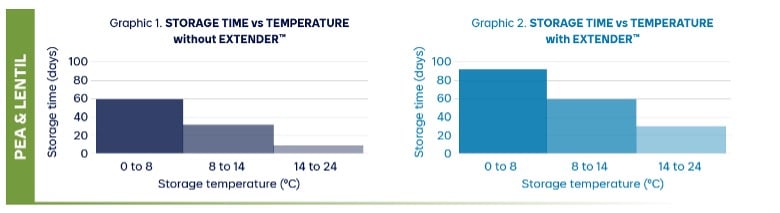
The numbers illustrate a practical reality: treated seed can be prepared earlier, but storage conditions must be managed accordingly. A long viability window at refrigerated temperatures does not automatically translate to the same window in a warm warehouse or during spring handling.
Compatibility requires a plan
Storage temperature and viability are not the only factors. Seed treaters frequently work with fungicides, insecticides, and other treatment components. The compatibility of each input, as well as the selected application method, can influence the final treatment plan.
A compatible product combination may still have specific requirements. In some cases, products can be tank mixed only for a defined period. In others, separate-tank application is recommended. These details are especially relevant when a treatment operation is handling large seed volumes or coordinating multiple product applications.
Before treating seed, operators should confirm:
- The inoculant and seed treatment products being used
- Whether application should occur in separate tanks or as a tank mix
- The permitted tank-mix contact time, if applicable
- The anticipated storage temperature
- The planned seeding timeline
Reviewing current compatibility resources and label directions is essential, as recommendations can vary by product and may change as new data become available.
Operational flexibility without losing focus
Longer on-seed viability can simplify scheduling, but it does not replace sound seed handling practices. The goal remains the same: deliver viable rhizobium to the soil when the crop is ready to establish its root system.
For seed treaters, that means treating viability as part of a broader operational plan. Treatment timing, product handling, storage temperature, and compatibility should be considered together, rather than as separate steps.
This approach can help treatment operations manage variable planting schedules while ensuring pea and lentil growers receive seed prepared to support early nodulation and nitrogen fixation.
For product specifications, application directions, storage requirements and current compatibility information, visit the AGTIV® Toolbox or contact your representative.
[RR1]If possible, please include the graph.