Breeder-led innovation communities target soybean, pea, lentil and more to address underinvestment and yield gaps.
WHY IT MATTERS
Legumes are central to developing more resilient European farming systems, yet their on-farm performance has fallen behind major arable crops. A key reason is chronic underinvestment in plant breeding. The Legume Generation project responds by placing breeders at the centre of innovation, building structured collaboration with research to accelerate genetic progress in key legume species.
The Legume Generation consortium is dedicated to enhancing legume breeding in Europe by fostering collaboration between entrepreneurial breeders and an inventive research community.
Its goal is two-fold: to directly strengthen the breeding of key legume species, and to establish innovation frameworks that support sustained public and private investment. To achieve this, the project brings together genetic, agronomic, economic and research strategy perspectives across soybean, lupins, pea, lentil, phaseolus beans and clovers within species-specific innovation communities.
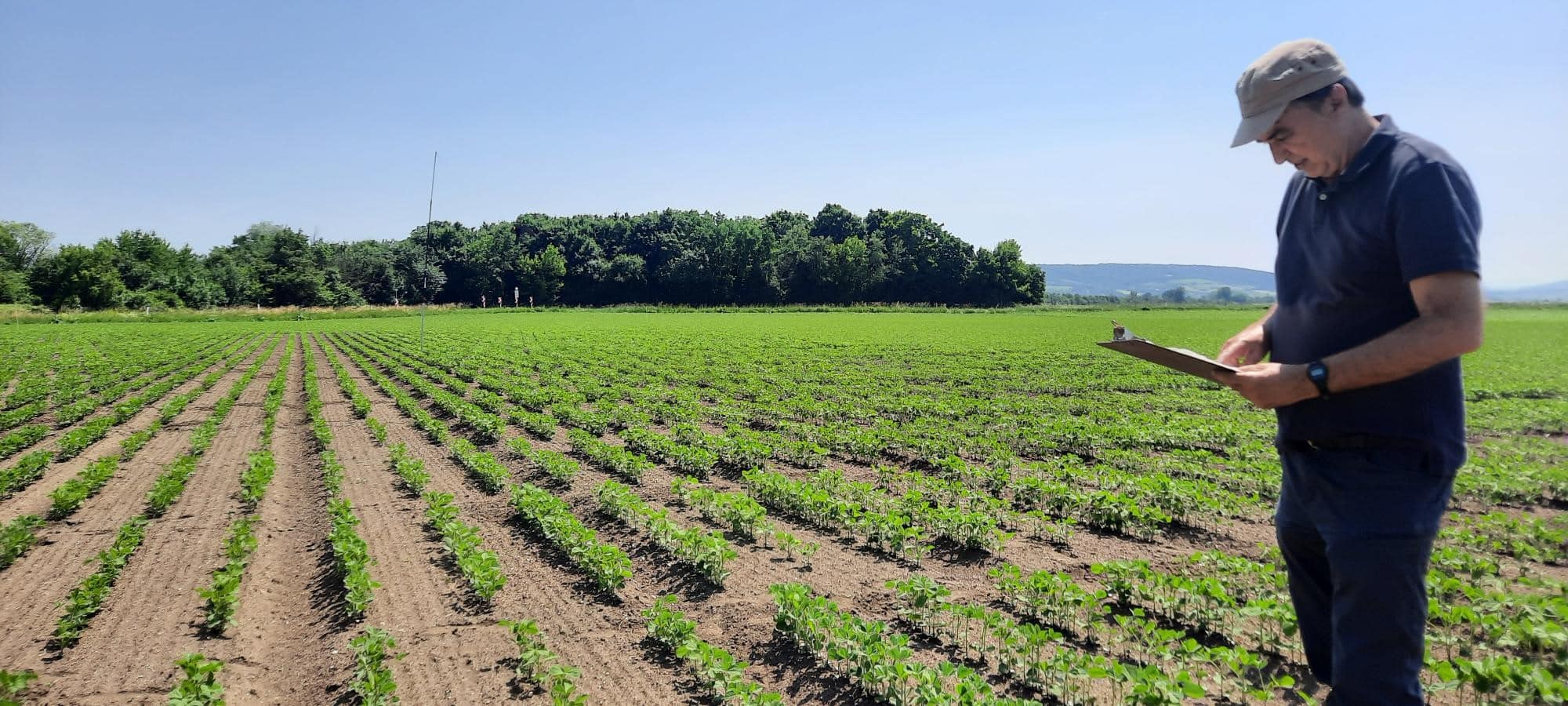
Our six communities support 32 breeding and 43 pre-breeding programmes. Each innovation community is unique, but all are supported by investigations into beneficial traits, breeding methods; the creation and validating novel resources; screening and testing germplasm and new cultivars in different regions; ideotype concepts, and the provision of training to support breeding gains. We also develop governance and financial models, business plans, and facilitate internal and external communication through the European Legume Hub.
Why Legumes Have Lost Ground in European Fields
The last 60 years has seen huge changes in European farmers’ cropping choices and how these are supported by plant breeding. Thanks to high latitude and the moderating effect of the North Atlantic Drift, European farmers are particularly good at growing carbohydrate-rich crops — especially winter wheat, winter barley, and maize. In line with Ricardo’s theory of international trade, comparative advantage has led farmers to specialise in these crops.

Even though they grow well in Europe, the production of grain legumes has declined from about 6% of the arable area in the early 1960s to 2-3% today. Farmers complement their specialisation by importing about 19 million tonnes of plant protein. The outcome is remarkable.
The EU is now generally self-sufficient in all major foods and feed that can be produced effectively in the EU, except soya, supporting resource and carbon intensive diets for more than 450 million people. But Europe’s large dependence on external sources of protein and on fertiliser nitrogen is increasingly seen as a fundamental challenge to the resilience, acceptance and performance of European agri-food systems.
A major reason for the decline is that grain legume crop yield has not kept pace with the yield of the competing crops that European farmers excel in growing. Unlike the more widely grown crops, key traits such as crop architecture have seen limited progress in recent decades, with few notable advances beyond the semi-leafless pea trait developed in the 1970s. The opportunity cost of growing pea in France with respect to wheat has increased from about 1.3 tonnes of wheat per tonne of pea in the 1960s to about 2 tonnes of wheat today.
This means that, at least for grain yield, the agronomic performance of pea compared with wheat has declined. This is what matters to farmers. Reversing this trend is essential if the use of legumes is to be restored.
Plant Breeding: The Foundation of Crop Performance
The surge in the agronomic performance of the major arable crops since 1960 is attributable in large part to plant breeding carried out in publicly owned breeding programmes. As illustrated by the privatisation of the public Plant Breeding Institute in Cambridge in 1987, there has been a steady weakening of long-term strategic links between academic plant science research and the plant breeding programmes upon which the benefits of plant science for farmers largely depend. Debate about the great potential of plant science often overlooks the fact that the practical use for society of genetic resources, gene editing, GWAS, genomic selection, transcriptomics, resistance genes, metabolomics, phenotyping etc., depends on plant breeders using these to deliver improved cultivars to the market for purchase by farmers.
Why Legume Breeding Struggles to Attract Investment
Achieving meaningful genetic improvement in legumes, especially for yield, requires long-term, high-risk investment that is unlikely to come solely from private breeding programmes under current market conditions. In addition to directly benefiting farmers, the plant breeder’s privilege in Europe makes each breeder’s gains freely available to all competing breeders for their own further breeding. This fosters innovation and gives most plant genetic improvement a strong public-good character. However, as is expected for public goods, it comes with the risk of under-investment in breeding due to resulting biological constraints on the revenue from breeding. This is especially so for minor crops such as the grain legumes. Grain legumes in particular are easily reproduced on farms without paying royalties and their minor crop status means that the market for their seed for multiplication by agents is limited. The overall result is sub-optimal investment in legume breeding from both an agricultural and wider societal viewpoint. This market failure applies to all relevant agronomic and quality traits, including crop yield. Against this background, we hold that relevant public funding needs to focus on supporting the connection between biological research and breeding within collaborative innovation structures focused on clear researchable scientific and innovation challenges and opportunities identified by breeders.
A New Model: Breeder-led Innovation Communities
Legume Generation boosts breeding by funding breeder-led, species-specific innovation communities. The consortium has established six innovation communities — soybean, lupins, pea, lentil, phaseolus beans, and clovers — supported by cross-cutting activities in data management, genetics and genomics, phenotyping, training, governance and finance, and communication. Each community reflects the biology and research landscape of its crop, focusing on targeted genetic improvement. These investments foster new ways of working and thinking between breeders and researchers, with potentially lasting impact. The species-specific approach enables pre-competitive collaboration tailored to each crop, supported by governance frameworks that allow genetic resources, data, and expertise to move efficiently and securely while protecting commercial interests and aligning with farmers’ needs. Partners exchange seed and breeding lines under material transfer agreements to accelerate trials while maintaining traceability. Innovation communities also align on data governance, using harmonised trait descriptors and coordinated multi-site, multi-year trials. An Open Science approach promotes early internal sharing of data and insights, followed by academic publication that safeguards intellectual property balancing collaboration with competitiveness.
By organising research around breeding structures rather than scientific disciplines, the consortium ensures breeders more directly guide and benefit from research while strengthening pre-competitive collaboration.
Editors’ Note: Legume Generation (Boosting innovation in breeding for the next generation of legume crops for Europe) is an innovation action funded by the European Union through Horizon Europe under grant agreement 101081329. It also receives support from the governments of the United Kingdom, Switzerland and New Zealand. The Legume Generation consortium comprises 34 partners in 15 countries.