From biotechnology regulation to counter-season breeding, Costa Rica is emerging as a key platform for global seed innovation.
Costa Rica has emerged as a high-performance platform for seed innovation, combining regulatory certainty, ecological diversity and specialised talent within a compact and highly efficient operating environment. The country has developed a consistent track record in seed research, production and technological development, positioning itself as a strategic location for global companies operating across multiple markets.
Rather than a single advantage, Costa Rica offers an integrated operating environment where natural conditions, institutional strength and long-term stability converge to enable companies to test, develop and scale innovation. From tropical lowlands to cooler highland zones, Costa Rica offers a compact yet highly varied landscape. Stable temperatures between 22°C and 27°C, abundant water resources and a low risk of extreme weather disruptions provide ideal conditions for year-round agricultural activity. For seed companies operating across continents, the country’s counter-season advantage relative to Europe and North America allows breeding cycles to move faster and more efficiently, reducing operational uncertainty and accelerating research and development timelines.
However, natural conditions alone do not explain Costa Rica’s growing relevance. Its competitive advantage is defined by how these conditions are integrated with policy, talent and institutional support.
Building a System, Not Just an Opportunity
Costa Rica’s rise as a seed sector hub is rooted in a deliberate regulatory and institutional framework that dates back more than two decades. Since 1998, the country has developed a science-based system governing conventional, organic, living modified and gene edited organisms.

For Mónica Umaña Delgado, general manager of Foreign Investment at PROCOMER, this long-term vision is central to the country’s appeal. “Costa Rica has built a science-based regulatory framework that is predictable, transparent and aligned with international standards. This provides companies with the certainty they need to operate, scale and integrate into global value chains,” she explains.
Rather than forcing a choice between production systems, Costa Rica has adopted a coexistence model. Conventional, organic and biotechnology-based approaches are all supported under the same regulatory umbrella. This allows companies to align their breeding programmes with global compliance requirements while reducing operational risk.
“Our approach enables different production models to operate side by side. This flexibility is critical for companies working across multiple markets and regulatory environments,” Umaña Delgado says.
The system is reinforced by strong institutional coordination. Clear procedures for research approvals, field trials and seed propagation are supported by technical guidelines and operational protocols. Costa Rica’s alignment with international frameworks such as the World Trade Organization and UPOV 1991 further strengthens its integration into global trade and innovation networks. “We are not operating in isolation. Our framework is aligned with international standards, which facilitates market access and integration into global seed systems,” she adds.
This regulatory clarity is complemented by a broader investment environment that consistently ranks among the strongest in Latin America. With high levels of political stability, a long-standing commitment to the rule of law and more than 75 years without an army, Costa Rica offers a level of predictability that is rare in the region, particularly for long-term investment decisions in research and development.
From Framework to Field
If policy provides the foundation, companies like Bayer demonstrate what that foundation makes possible in practice. Nearly three decades ago, Bayer made a strategic decision to establish its counter-season operations in Costa Rica. What began as a calculated investment has since evolved into a highly specialised and technologically advanced operation.
“Costa Rica offers unique conditions for seed research and production, particularly because of its diversity of microclimates and its counter-season advantage,” says Adrian Vargas, Costa Rica pipeline delivery lead at Bayer Crop Science.

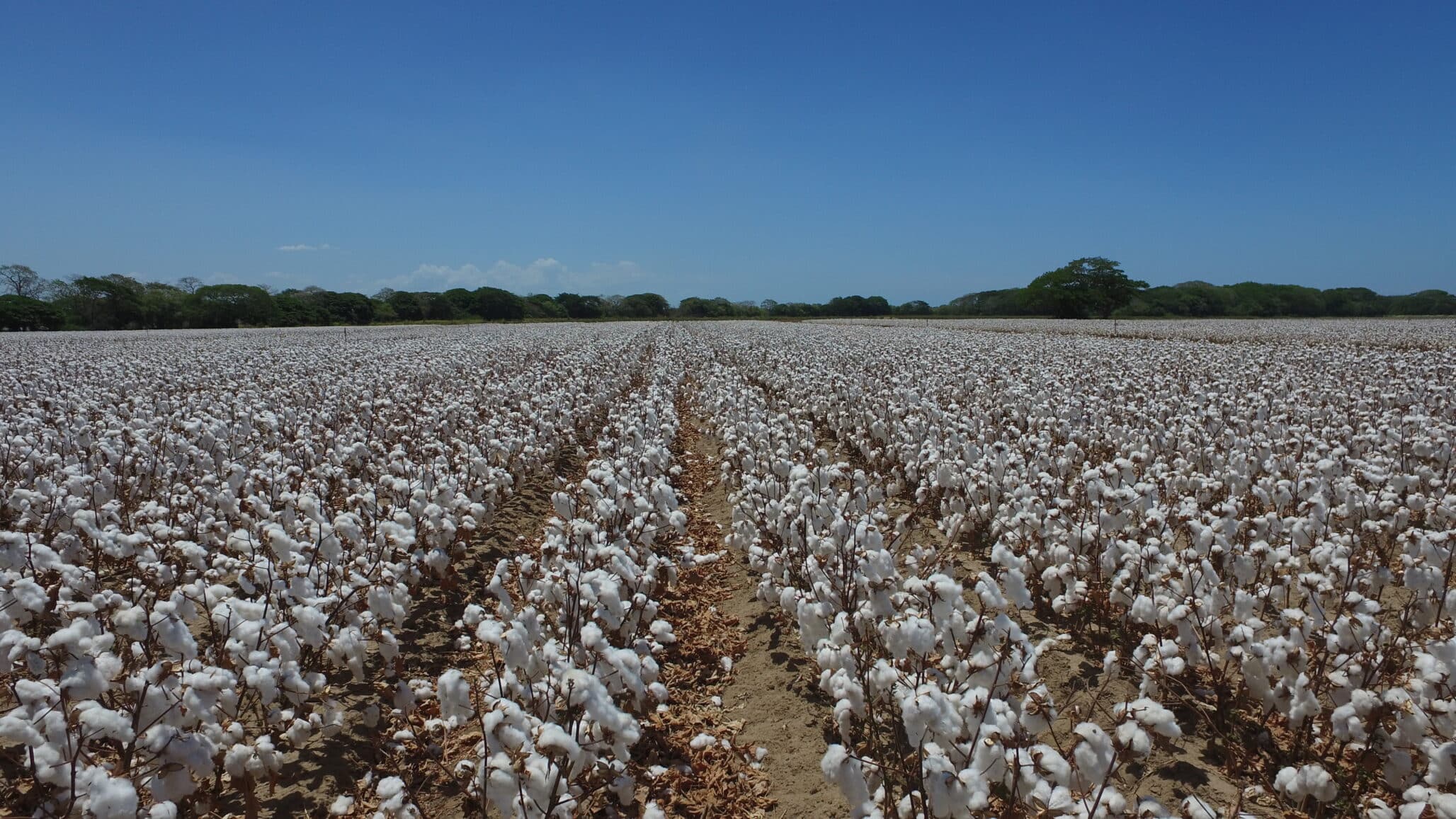
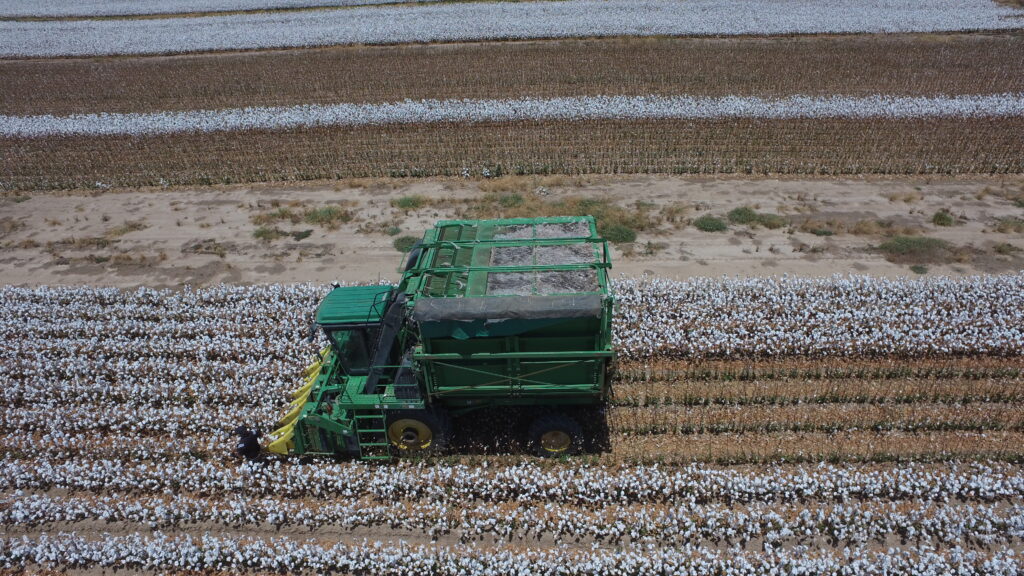
Over time, Bayer has built a specialised team focused on cotton seed production, supported by local expertise and continuous training. Operations in regions such as Guanacaste and Chomes de Puntarenas have been refined and expanded, enabling consistent evaluation and production for international markets.
“Local farmers bring a depth of knowledge and experience that has been essential to achieving the level of quality we require. This is a collaboration that has grown stronger over time,” Vargas explains.
Today, the scale of activity reflects both the maturity of the operation and the strategic importance of the location. Bayer exports more than 50,000 candidate lines each year for further genetic improvement, while its manufacturing plant produces over 40 tonnes of seed annually in advanced stages.
Technology plays an increasingly central role. Digital planning tools, smart mapping, drone-based data collection and automated irrigation systems are integrated into daily operations, improving both efficiency and sustainability. “Our programme has evolved beyond production. We are developing solutions that address broader agricultural challenges, from climate resilience to resource efficiency,” Vargas says.
This evolution reflects a wider shift in how Costa Rica is positioned within global R&D networks. Costa Rica is increasingly positioned as a space where innovation is developed, tested and refined, rather than solely executed. “All our operations are conducted under the highest international biosafety standards, with full transparency. That is essential for building trust in science and ensuring long term sustainability,” he adds.
A Bridge for Regional Innovation
Beyond individual operations, Costa Rica plays a broader role in the Latin American innovation ecosystem. It acts as a bridge between research, regulation and market adoption. José Perdomo, executive president of CropLife Latin America, sees the country as a strategic connector. “Costa Rica has positioned itself as a platform where different production systems and technologies can coexist. That creates a valuable environment for testing and scaling innovation across the region,” he says.

The country’s success in crops such as cotton and flowers, alongside emerging projects in soybeans and sorghum, illustrates its versatility. At the same time, its strong export base in pineapples and bananas highlights its ability to move beyond commodity production towards higher value, specialised products. “In crops like pineapple, we are already seeing how innovation can create differentiation, from new varieties to carbon neutral production. That is where the real opportunity lies,” Perdomo explains.
The regulatory framework plays a crucial role in enabling this transition. Clear rules governing biotechnology, genome editing, organic and conventional systems allow producers to choose the most appropriate approach for their markets. “Our role is to help bridge the gap between what technology can offer and how it is applied in practice. That includes ensuring that rules are transparent and that stakeholders understand how to use these tools responsibly,” he says.
At the same time, there is recognition that further progress is needed, particularly in areas such as stewardship and information transparency. “There is an opportunity to strengthen how information is shared at the varietal level. Transparency will be key to maintaining trust as new technologies reach the market,” Perdomo adds.
Balancing Opportunity with Reality
Despite its many strengths, Costa Rica is not without challenges. Its tropical climate brings constant pressure from pests, diseases and weather variability. While these conditions can be advantageous for testing resilience, they also require continuous adaptation. “Climate variability is a constant factor. It requires us to anticipate different scenarios and integrate resilience into our operations,” Vargas notes.
Talent is another critical area. Although Costa Rica produces more than 2,500 graduates annually in agri-food programmes and maintains a strong network of universities and technical institutions, competition for skilled professionals is increasing. “New generations are looking for purpose, innovation and sustainability in their careers. Companies need to respond to those expectations to attract and retain talent,” Vargas says.
To address these challenges, Costa Rica has implemented targeted initiatives to strengthen workforce capabilities in high-demand sectors. Through PROCOMER, the country has established a dedicated trust fund focused on human capital development, aimed at co-financing upskilling and reskilling programmes aligned with industry needs. This initiative complements existing efforts and reinforces collaboration with technical institutions and universities, ensuring a continuous pipeline of specialised talent to support innovation-driven investment.
From a structural perspective, limitations in arable land and relatively high production costs can constrain large scale commodity production. However, these constraints also reinforce Costa Rica’s strategic focus on high value, specialised segments. “Costa Rica is not aiming to compete on volume. Its strength lies in niche products and innovation driven production,” Perdomo explains.
A Multiplier in the Global Seed System
What ultimately sets Costa Rica apart is not any single factor, but the way multiple elements come together. Natural diversity, regulatory clarity, skilled talent and institutional support form an ecosystem that amplifies impact. For PROCOMER, this integrated approach is central to the country’s long-term vision. “We see Costa Rica as a platform where companies can innovate, test and scale solutions that are relevant globally. Our role is to facilitate that process and ensure that the conditions remain favourable,” Umaña Delgado says.
This positioning transforms Costa Rica into something more than a production location. It becomes a multiplier within the global seed system, accelerating breeding cycles, enabling experimentation and supporting the development of technologies that can be deployed worldwide.
For Bayer, that long term perspective is already embedded in its operations. “We are cultivating the seeds of future crops that will help clothe the world in the coming years. Doing that with Costa Rican talent and conditions is something we are very proud of,” Vargas reflects.
In a global seed sector increasingly defined by speed, precision and sustainability, Costa Rica is not competing on scale, but on capability. Its role may be less visible than larger agricultural economies, but its impact is increasingly decisive in shaping how innovation is developed and deployed worldwide.