Researchers in Japan have identified a new way plants detect hydrogen peroxide, a key molecule involved in stress response and immunity. The discovery could help scientists develop crops that are better able to withstand disease, environmental stress, and changing growing conditions.
The study, published in Nature Communications, shows that plants use a copper-dependent sensing system to detect hydrogen peroxide, rather than the cysteine-based mechanism previously assumed. This finding changes how researchers understand plant stress signaling and could open new paths for improving crop resilience.
Hydrogen peroxide and quinones play important roles in how crops respond to pathogens, drought, heat, and other stresses. By understanding how plants perceive these molecules, researchers may be able to support stronger crop protection and improved stress tolerance, according to a press release.
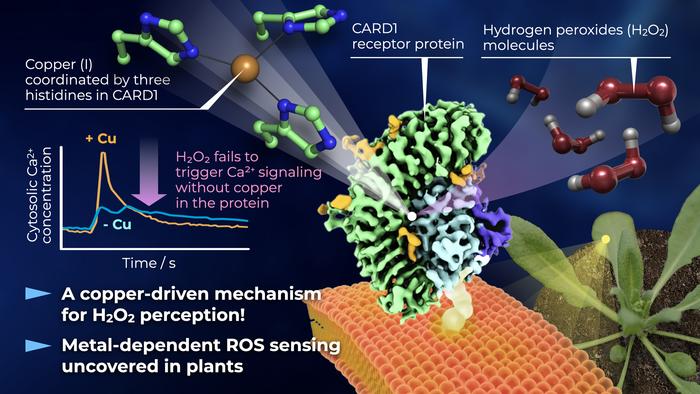
The team found that the CARD1 receptor, also known as HPCA1, contains a copper ion bound to histidine residues on its surface. This copper site allows the receptor to detect hydrogen peroxide through redox chemistry. Surprisingly, cysteine residues, once thought to be essential for hydrogen peroxide sensing, were not required.
The findings provide new insight into how crops monitor stress signals at the cellular level and may contribute to future strategies for breeding or engineering more resilient plants.
“The results showed that when the copper-binding site is disrupted, plants lose their ability to respond to H₂O₂ signals,” said Anuphon Laohavisit, lead author and designated associate professor at the WPI-ITbM. “In contrast, mutations in cysteine residues had little effect on signaling, indicating that their primary role is structural rather than signaling.”
Using computational approaches, the team suggests that CARD1 may sense ROS through the oxidation of copper at the receptor surface, from Cu⁺ to Cu²⁺. This redox change could either directly activate signaling or produce secondary molecules that trigger downstream plant responses. The researchers also suggest that quinone perception likely occurs through a separate pathway that has yet to be identified.
The study provides the first structural evidence of a metal ion–based sensing mechanism in plant plasma membrane receptors. This finding reshapes understanding of how plants perceive ROS and could support future research into metal-based ROS signaling mechanisms in crops and other biological systems.