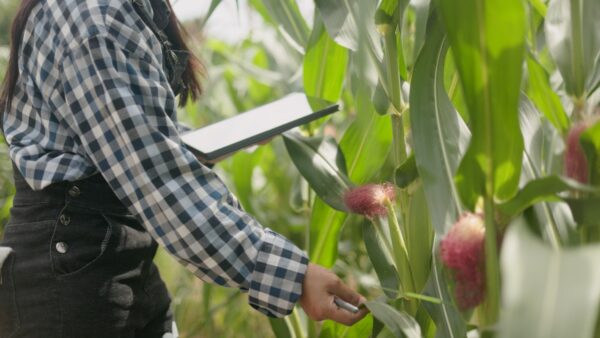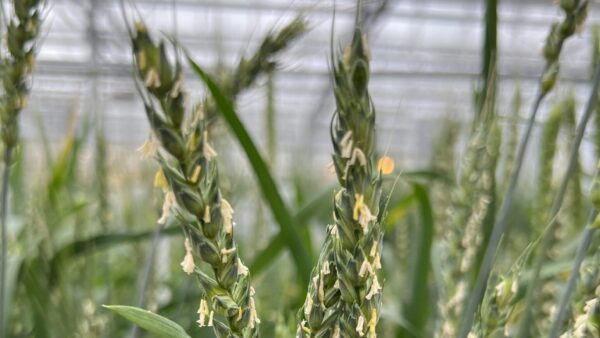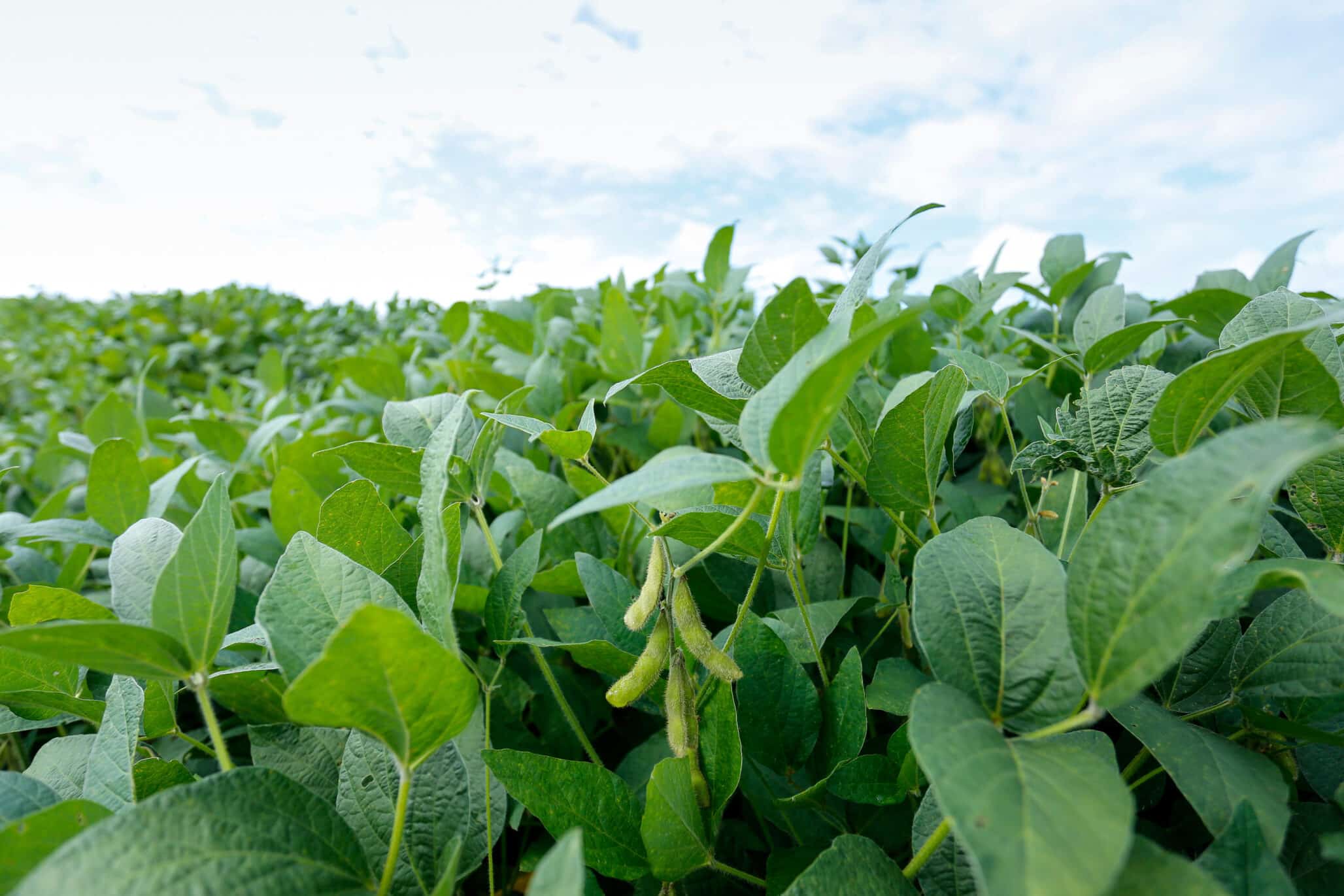
Scientists from Embrapa Agrobiologia (RJ) found that struvite, a slow-release fertilizer produced from pig farming residues, can help reduce reliance on imported phosphate fertilizers in crops such as soybeans and wheat.
In soybean trials, struvite supplied up to 50% of the crop’s phosphorus needs while maintaining yields of 3,500 kg/ha, close to Brazil’s 2025 national soybean average of 3,560 kg/ha under conventional fertilization.
The research is part of a broader Brazilian effort to reduce dependence on imported fertilizers, which currently supply around 75% of national demand, according to a press release.
According to Embrapa Agrobiologia researcher Caio de Teves Inácio, who coordinates the study, the goal goes beyond simply replacing one fertilizer with another.
“We are creating a new technological route for the Brazilian countryside, aligned with sustainability, autonomy and innovation,” he emphasizes.
Struvite is made of magnesium and ammonium phosphate crystals and is produced by recovering nutrients from pig farming residues. “It is a fertilizer that represents the concept of circular economy applied to agriculture. We transformed an environmental liability, which are animal effluents, into an agricultural input of high added value,” explains the researcher.
Field trials also show that struvite can improve phosphorus recovery in crops. In Brazil’s tropical soils, where weathering causes phosphorus to bind quickly and reduces the efficiency of conventional fertilizers, struvite’s gradual release and alkaline reaction help crops make better use of the nutrient.
A Promising Fertilizer For Crops
Preliminary recommendations indicate that struvite can be used alone or combined with soluble fertilizers, at rates ranging from 50% to 100% of the recommended phosphorus dose, depending on the crop and soil conditions.
Researchers are also developing and testing an organomineral fertilizer that combines mineral nutrients with organic matter. In soil phosphorus diffusion experiments, the formulation performed 50% better in the first 28 days than pure granulated struvite, pointing to potential gains in nutrient availability for crop production.
Crop, Environmental and Economic Benefits
Struvite offers agronomic, economic and environmental advantages. “We are talking about a national technology, which reduces dependence on imported inputs, reuses the nutrients of agricultural waste and improves the efficiency of the use of phosphorus, a non-renewable natural resource,” reinforces Inácio.
For growers, the fertilizer can help improve phosphorus use efficiency in tropical soils, where phosphorus fixation is high and conventional fertilizer performance is often limited.
It also addresses the challenge of managing animal waste. On farms with intensive pig production, especially in Brazil’s South and Midwest regions, struvite precipitation removes excess nutrients before residues are applied to the soil, reducing the risk of surface and groundwater contamination. This can also support farm expansion, which is often limited by the amount of phosphorus and nitrogen that can be safely applied to the soil.
Economically, struvite could create a new revenue stream for producers by turning waste into a marketable input for crop fertilization. “It is also an economically viable and especially attractive alternative for medium and large pig breeders,” points out the researcher. Embrapa estimates that farms with more than 5,000 pigs could generate about 340,000 tons of struvite per year in Brazil.
Globally, interest in struvite has grown sharply over the past decade. By 2019, more than 80 struvite production facilities were operating, mainly in developed countries dealing with phosphorus surpluses from intensive livestock systems or high population density.
China, the United States and Germany are leading research and innovation in the field, often through international cooperation. Brazil’s participation, however, remains limited, leaving a knowledge gap around how struvite performs under tropical crop conditions.