Research identifies how a key protein helps regulate early plant growth when seedlings rely on stored energy
Before a plant can turn sunlight into energy, it has to survive without it.
During the earliest stage of life, seeds depend on stored fatty acids to fuel growth. Processing those fatty acids happens inside the peroxisome, a membrane-bound compartment found in plant and human cells alike. In a recent Rice University news release, researchers detailed how a protein known as PEX11 helps manage that process, offering new insight into how young plants develop before photosynthesis begins.
Understanding Growth Before Photosynthesis
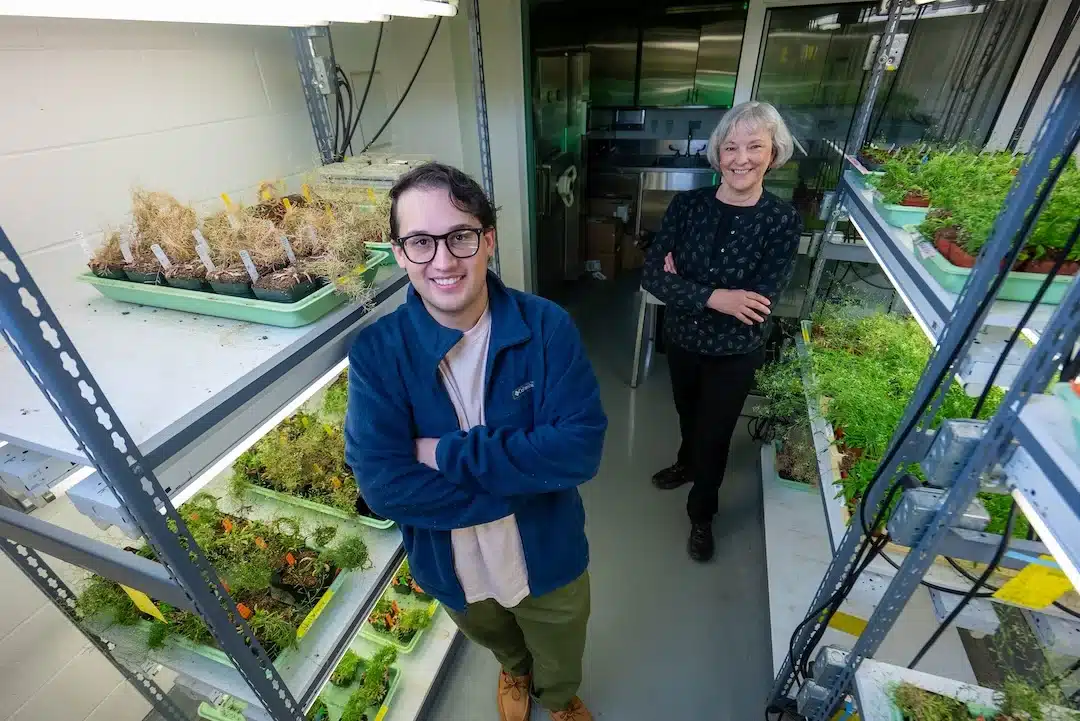
“The plant we use, Arabidopsis, has large cells and peroxisomes so large that we can see inside them with a light microscope,” Rice University biosciences professor Bonnie Bartel said in the release. “The peroxisome gets even larger during the seed to seedling stage, when the plant is relying on fatty acids for energy, before shrinking back down to its normal size once the plant can photosynthesize.”
Bartel’s lab has long studied peroxisomes, particularly PEX11, a protein previously known for its role in helping these structures divide. But new findings, published in Nature Communications, show the protein also plays a critical role in controlling how peroxisomes grow and shrink during early development.
“Peroxisomes are implicated in some human diseases and used in bioengineering,” said Nathan Tharp, first author of the study. “They can, however, be rather tricky to study.”
That challenge stems from the genetics behind PEX11. Instead of a single gene, the protein is produced by five. Disrupting one gene had little effect. Disrupting all five proved fatal. To isolate its function, Tharp turned to CRISPR gene editing to selectively disable different combinations.
“I was able to use recent advances in CRISPR to go in and break specific combinations of the five genes,” Tharp said. “It was only then that we were able to see that PEX11 is clearly involved in controlling the growth of the peroxisome during the seed to seedling stage.”
What Happens When Growth Goes Unchecked
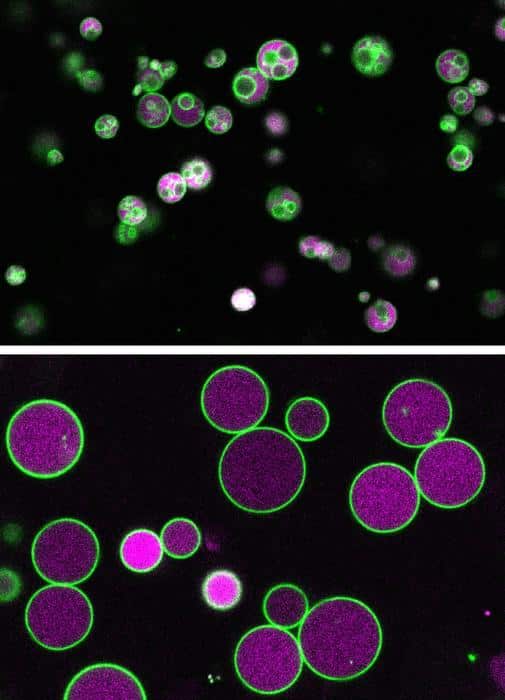
The results were striking. In mutant plants lacking certain PEX11 genes, peroxisomes continued growing instead of returning to normal size. Some expanded until they stretched across the entire cell.
At the same time, those oversized structures were missing something important: vesicles, small membrane-bound compartments that typically form as fatty acids are processed.
“The vesicles taking pieces of membrane as they form may help control the peroxisome’s growth,” Tharp said. “In our PEX11 mutants, these vesicles either don’t form or are abnormally small and rare, and so we see these massive peroxisomes, way larger than normal.”
A Signal That Extends Beyond Plants
To test whether the findings extended beyond plants, the team introduced a yeast version of the protein, known as Pex11, into the mutant plant cells.
“We put yeast Pex11 into our mutant plant cells to see if it could return the peroxisomes back to normal,” Tharp said. “And it did.”
That result points to something bigger than plant biology. Despite more than a billion years of evolutionary separation, the protein appears to function similarly across species.
“Finding that this protein fills the same role in yeast and plant cells suggests that it may be a highly conserved protein,” Bartel said. “Our findings in plants, in this relatively easy-to-study model, may thus be applicable to human cells and cells used for bioengineering.”