What gets rejected, downgraded or thrown away is feeding back into breeding decisions across the U.S. food system.

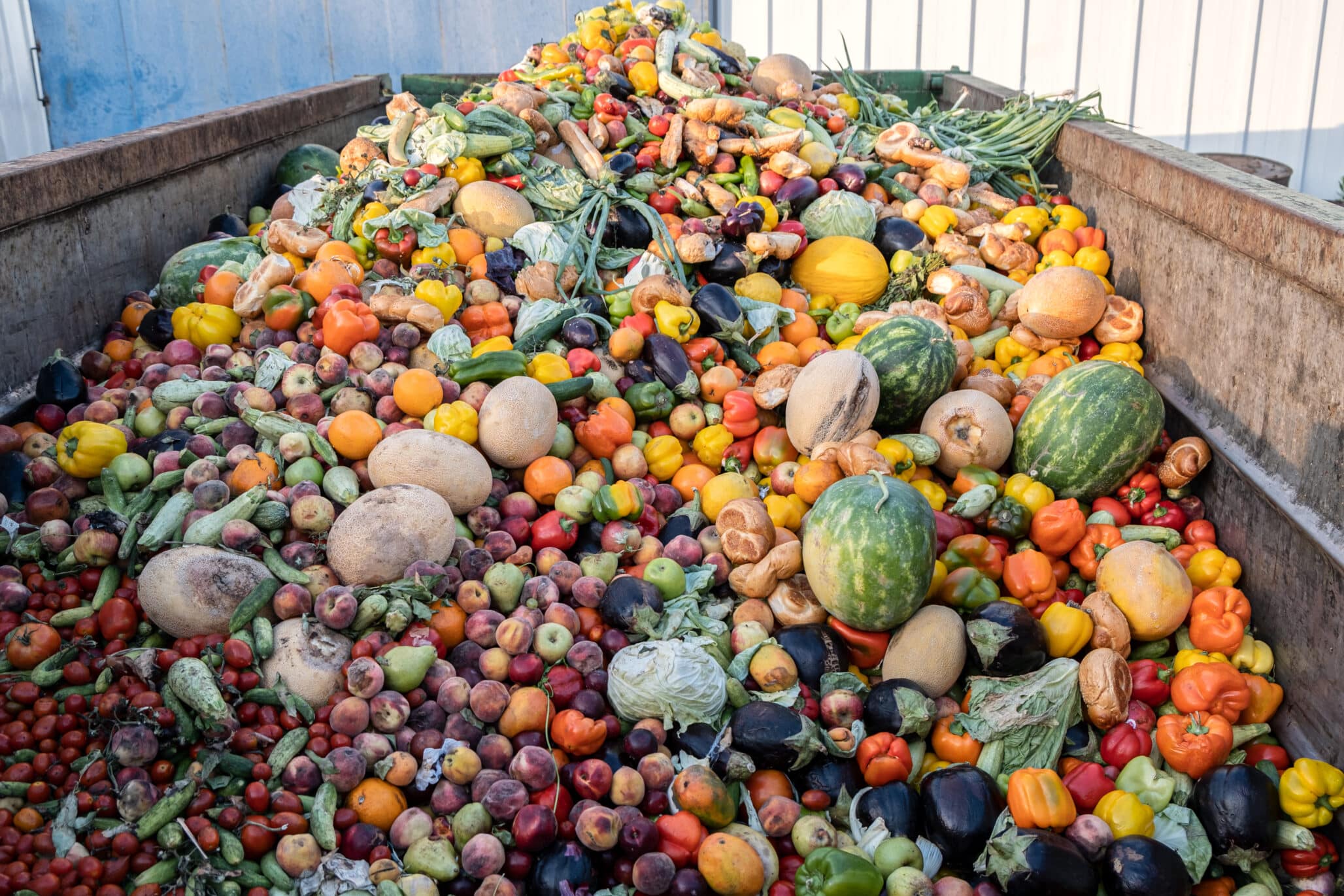
Roughly 30–40% of the U.S. food supply never gets eaten, according to the United States Department of Agriculture. That translates to about 133 billion pounds lost each year, representing an estimated $161 billion in retail and consumer-level waste.
Those numbers are often framed as a consumer issue. But by the time food is discarded, much of the outcome has already been set in motion.
Food is also the single largest component in U.S. landfills. Data from the U.S. Environmental Protection Agency (EPA) show just how much of that loss ultimately ends up as waste rather than value.
Loss Is Built In Earlier Than Most Think
A significant share of food loss occurs before products ever reach a grocery shelf.
Uneven emergence leads to uneven maturity. That complicates harvest timing and increases culls. Cosmetic defects tied to disease or stress push product out of premium channels. Weak storage traits shorten shelf life before distribution even begins.
Then there is handling. Products that bruise, soften or break down quickly are more likely to be downgraded or rejected.
This is not waste in the traditional sense. It is loss driven by how well a product performs under real-world conditions.
U.S. Department of Agriculture (USDA) analyses have consistently pointed to these pre-retail losses as a meaningful share of the total, even if they are less visible to consumers.
Breeding Is Already Deciding What Makes It
For seed companies, this is not a new set of challenges. What is changing is the clarity of the connection.
Traits that determine marketability also determine survivability.
Firmness, shelf life and structural integrity extend the window for sale. Uniformity supports tighter harvest and grading. Disease resistance protects both yield and post-harvest quality. Processing traits reduce rejection rates.
These are not labeled as food waste solutions. But they directly control how much product actually moves through the system.
In practical terms, breeding decisions are already deciding what makes it and what doesn’t.
Waste Is No Longer Random
The shift is in how measurable the problem has become.
Retail specs, processor thresholds and consumer expectations generate consistent data on rejection, shrink and spoilage. That data does not stay at the endpoint. It feeds backward to me.
Patterns in what gets discarded are shaping:
- trait prioritization
- variety selection
- definitions of quality
Waste is becoming predictable. And once it is predictable, it becomes actionable.
At $161 billion annually, the economic pressure is not subtle.
What Gets Thrown Away is Steering What Gets Bred
Food waste is often treated as an outcome. Increasingly, it is functioning as an input.
Every rejected load and downgraded shipment carries information. Over time, that information influences breeding pipelines, product positioning and ultimately what reaches the market.
What gets thrown away is quietly steering what gets bred.
For an industry built on improving performance, that creates a clear tension. Yield still matters. But so does durability, consistency and the ability to withstand the realities of handling, storage and distribution.
As more of that data becomes visible, the feedback loop tightens. And the distance between waste and seed continues to shrink.