After decades of shrinking acres and market competition, breeders are rebuilding alfalfa from the ground up.
Plant Breeder Don Miller, aka “The Alfalfa Doc,” walks through the genetics, traits and strategies that could put the “Queen of Forages” back at the center of U.S. agriculture.
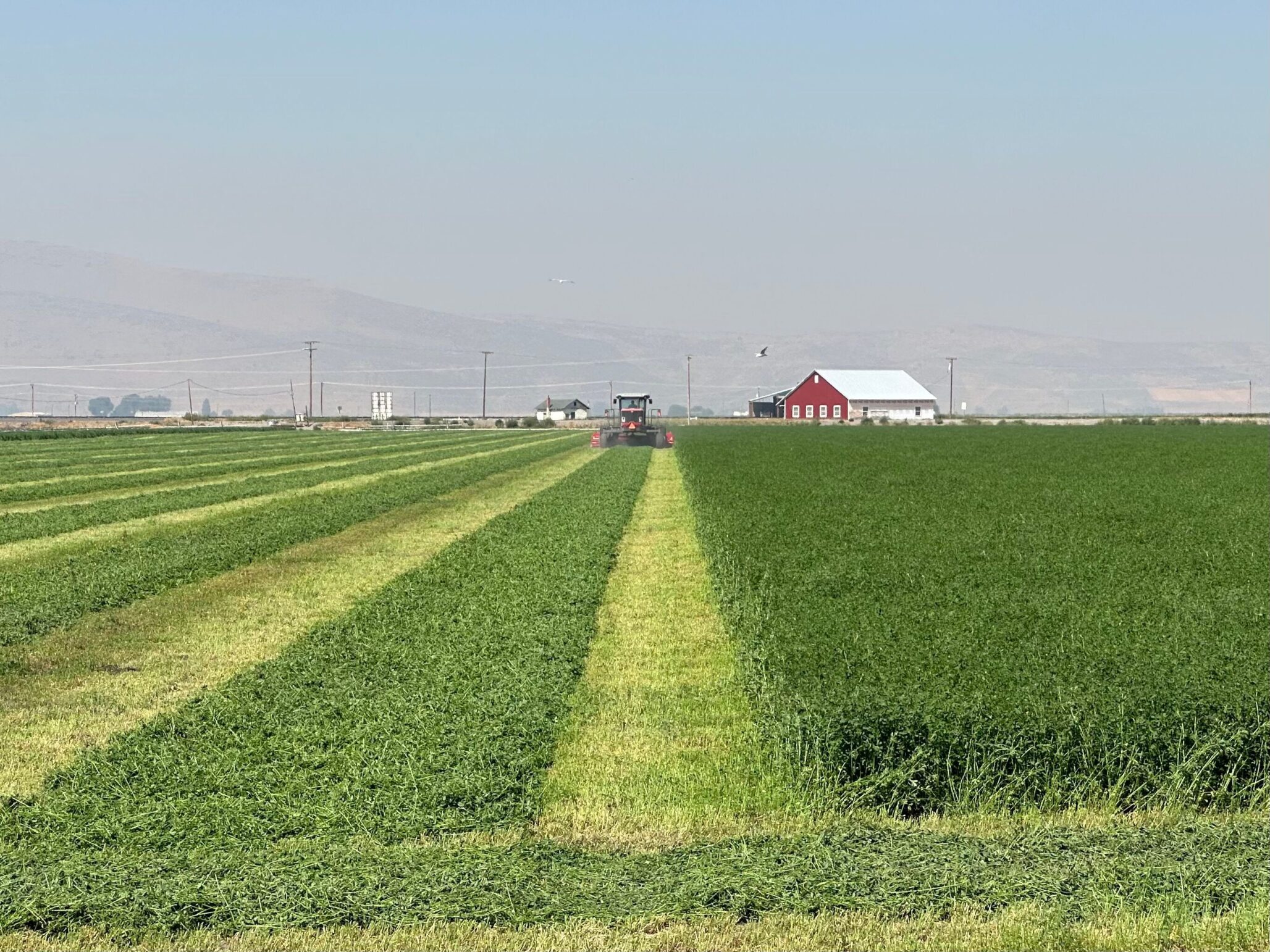
For much of the 20th century, alfalfa was the undisputed “Queen of Forages,” claiming millions of acres across the United States. Its deep roots and protein-rich leaves made it the foundation of dairy and livestock systems, while its nitrogen-fixing abilities quietly enriched soils for crops that followed. But over the past few decades, that crown has slipped.
Corn, driven by high-yield hybrids and silage demand, muscled into dairy rations. Other forages competed for ground. Public and private breeding programs consolidated or closed. In many regions, alfalfa acreage slid year after year.
To some, this might look like a slow decline. To breeders like Miller, it’s the moment to rebuild.
“We’ve come a long way,” says Miller, who joined the team at Mountain View Seeds in 2023. “And we’re still just scratching the surface of what alfalfa can do.”
A Smaller Industry, a Bigger Challenge
When Miller entered the business, there were plenty of places to work on alfalfa.
“In the 1970s to early 2000s, we had seven or eight large proprietary companies breeding alfalfa varieties,” he says. “On top of that, there were about 10 university programs developing germplasm or even releasing varieties.”
That landscape has changed.
“Now, what used to be seven to 10 companies breeding alfalfa varieties is down to maybe two or three,” Miller says. “And the remaining companies have significantly downsized their breeding programs — especially in semi- and non-dormant classes.”
For seed companies still in the game, Miller sees an opportunity: with fewer players, there’s room to stand out with unique, high-performance genetics. But it means understanding where the biggest gains can be made.
Fall Dormancy and the Push for Yield
One of alfalfa breeding’s most powerful tools is the fall dormancy scale — a 1-to-10 rating that helps determine whether a variety can survive a given climate. Dormancy one is bred for the cold winters of Canada. Dormancy 10 thrives in southern California or Mexico.
Historically, growers in colder regions stayed with lower dormancy ratings for winter survival, but Miller says yield potential increases as you move up the dormancy scale.
“A fall dormancy five generally out-yields a four, and a four out-yields a three,” he says. “That’s because of how they respond to day length; they’ll grow a little longer into the fall and wake up earlier in the spring.”
The problem? Push a higher dormancy variety too far north, and it might not make it through the winter.
That’s where a second tool, the winter survival rating, comes in. Scored from one (excellent survival) to six (poor survival), it lets breeders identify which higher dormancy lines can handle colder winters.
“If you’ve got a fall dormancy five with a winter survival rating of two, you can go almost anywhere in the U.S. with confidence,” Miller says. “That’s your insurance policy — and it’s also a yield kick.”
Miller recalls moving growers in Idaho from dormancy threes and fours to a specially developed five that could handle the winters. “We topped all the yield trials,” he says.
Breeding for Quality, Not Just Quantity
In the early days, much of alfalfa breeding focused on removing yield-robbing factors like disease and insect pressure.
“We selected for anything that detracted from yield,” Miller says. “Now we’re selecting more directly for yield itself — and for quality traits.”
Among the most important advances:
- Fiber digestibility: making more of the plant usable for livestock nutrition.
- Leaf-to-stem ratio: more leaves mean more crude protein.
- Low lignin content: improving digestibility without sacrificing stand life.
“These are significant gains,” Miller says, “but Relative Feed Value (RFV) doesn’t measure them.”
Instead, he advises using Relative Forage Quality (RFQ), which picks up improvements in digestibility and protein.
“If you’re marketing on quality, you need the right measuring stick,” he says.
He says there’s also a management benefit.
“With better fiber digestibility and more protein, you start with higher quality, so you have a wider harvest window,” Miller says. “If weather delays you a few days, you can still hit dairy quality — something older varieties couldn’t do.”
Disease Resistance: The Arms Race
No matter how advanced the variety, diseases adapt.
“Once we had Phytophthora controlled, Aphanomyces showed up,” Miller says. “First race one, then race two, now they’re even talking about race three.”
He explains that anthracnose is another example, as there are now varieties with resistance to race five. And if growers have had stand problems, he says that rating in the national variety list matters.
But some challenges remain stubborn.
“We’ve tried for years to get resistance to alfalfa weevil or armyworm,” Miller says. “Conventional breeding hasn’t done it yet.”
The Belowground Battle
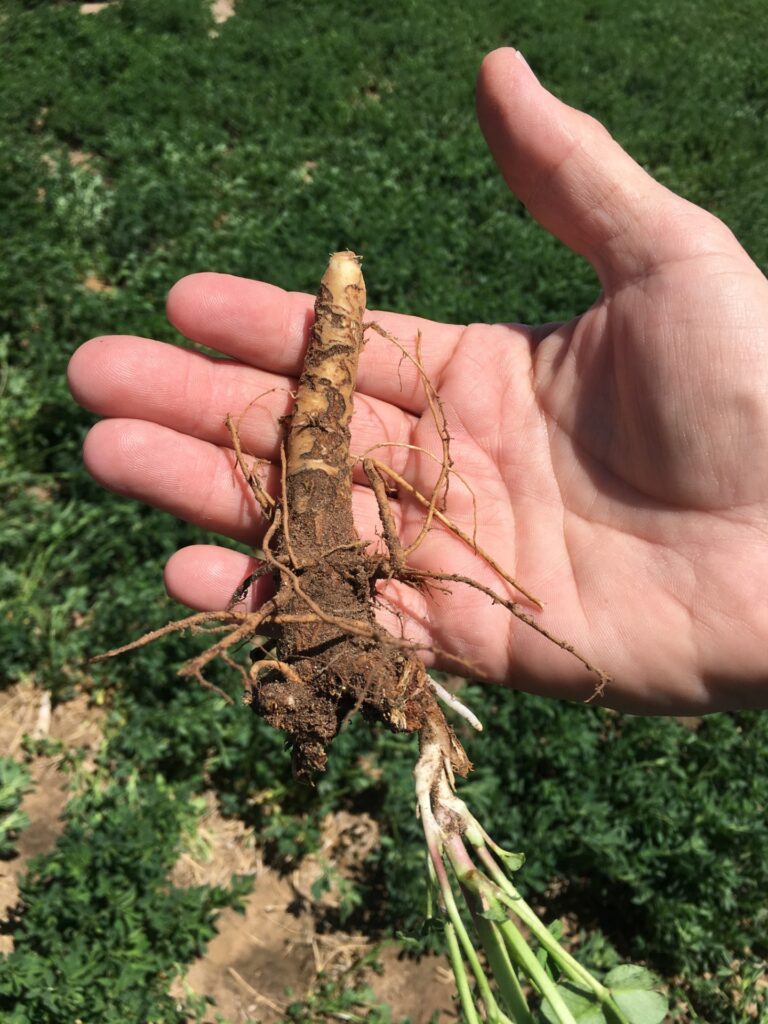
Some pests do their damage where growers can’t see it — in the root zone. Clover root curculio, for example, chews away the bark of roots, reducing water and nutrient uptake and opening the door for secondary infections.
“We don’t have any varieties with resistance to it,” Miller says. “But Cornell is working with beneficial nematodes, and they’re getting some control.”
Managing stress is critical.
“If you’ve got clover root curculio and then lose irrigation, you can lose the field,” Miller says. “Keep fertility high and stress low, and the plants have a better chance of recovering.”
Other Breeding Frontiers
Miller points to several areas where breeders are pushing boundaries:
- Autotoxicity: After three or four years, alfalfa leaves enough chemical in the topsoil to suppress new seedlings. Michigan State University is developing a soil bioassay to tell growers when it’s safe to replant — and breeding for varieties that deposit less toxin.
- Bloat tolerance: Grazing pure alfalfa carries risk but breeding efforts continue alongside management-based solutions.
- Acid soil and aluminum tolerance: Renewed interest is coming from the Southeast, where low pH soils limit production.
Climate Change Genetics
Miller says drought stress is one of the most limiting factors in crop production. That’s why he’s focusing on varieties that can handle drought, salinity and heat extremes.
In New Mexico trials, some alfalfa stood unwatered for three months in summer.
“It looked dead, but it was in drought-induced dormancy,” Miller says. “Once water came back, it recovered.”
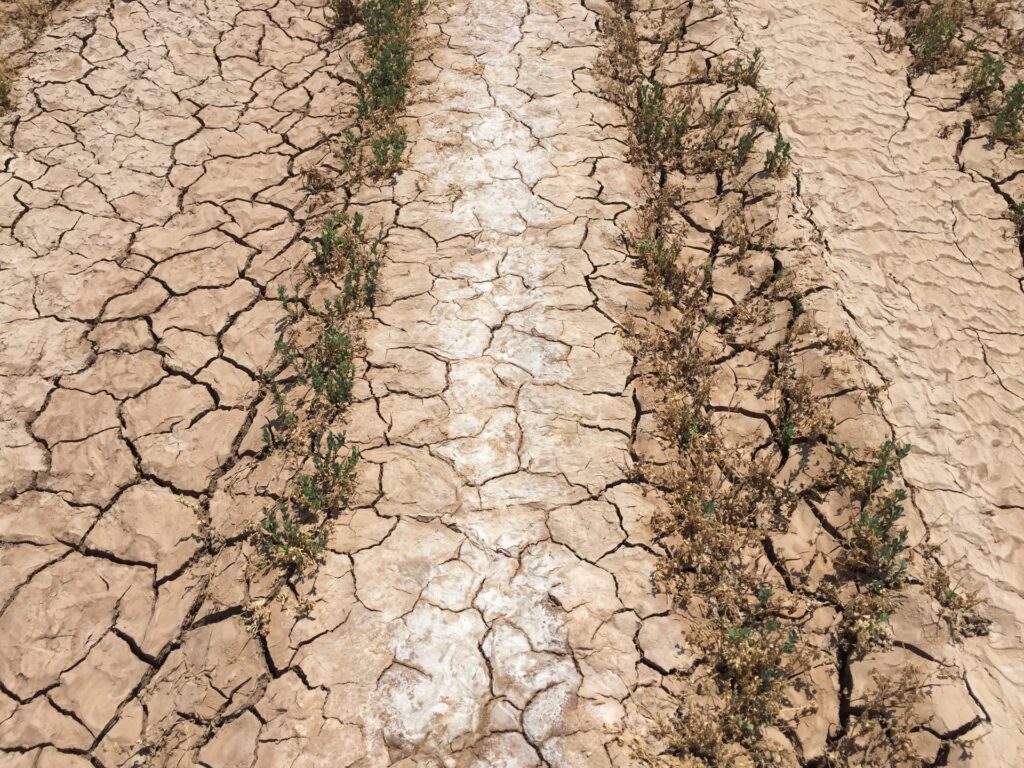
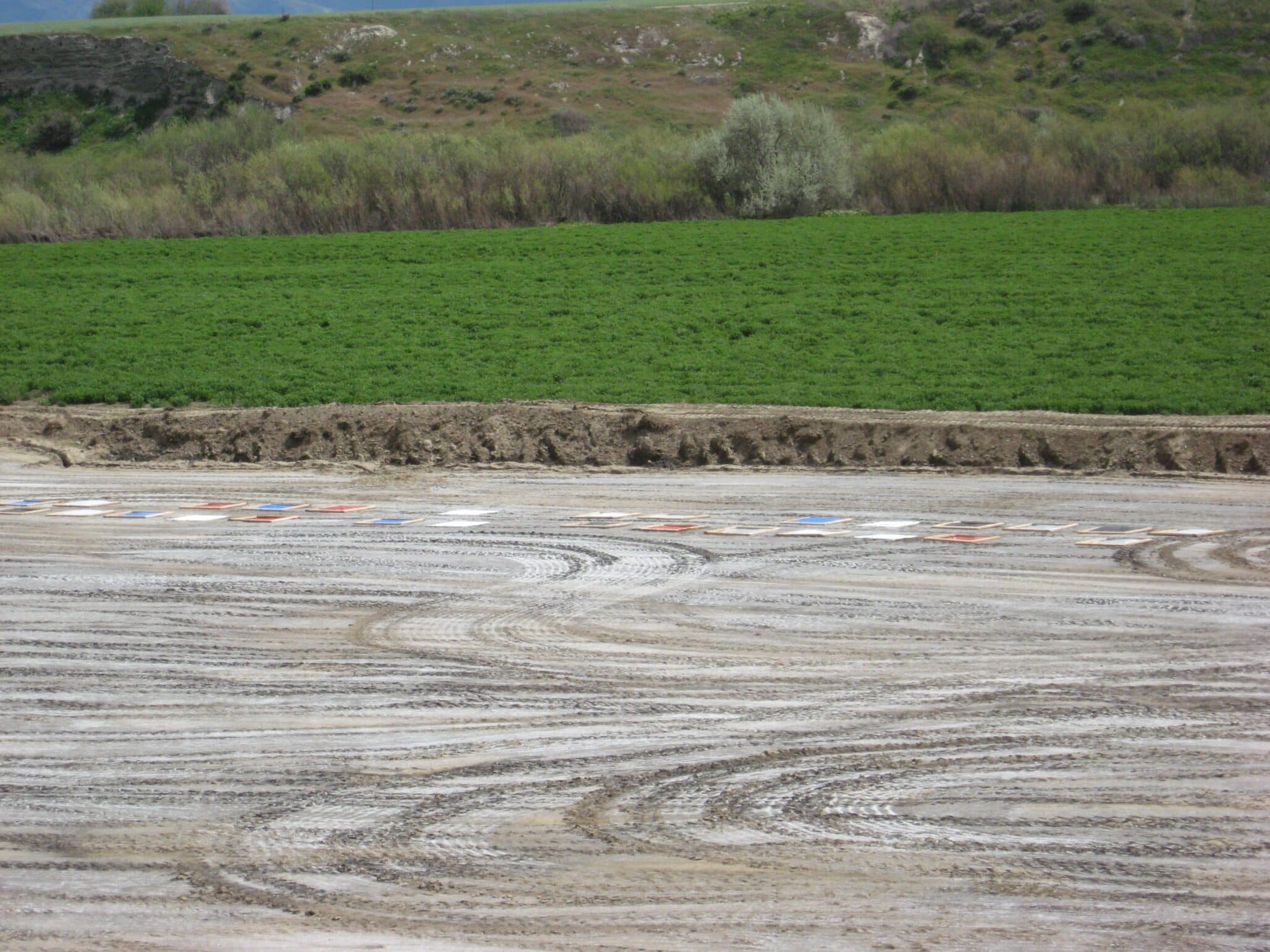
Salt tolerance in alfalfa is another frontier. It’s becoming a bigger breeding target because it ties directly into both climate change resilience and water management issues.
“We’ve germinated seed at half the concentration of seawater,” he says. “The survivors become breeding material.”
By exposing seed and seedlings to high electrical conductivity (EC) solutions — EC 20 in some trials, which is about half the salinity of seawater — breeders can find the rare individuals that not only germinate but survive and grow under salt stress.
These survivors then become parent material in breeding programs, passing on traits for:
- Improved germination under saline conditions
- Better seedling establishment in salty soils
- Maintained yield potential in fields with moderate salinity
New and Expanded Roles
Alfalfa’s agronomic benefits are also getting fresh attention.
Miller says nitrogen fixation can contribute about 200 units of nitrogen to the next crop – a valuable offset as fertilizer prices rise. Deep roots, sometimes reaching 20 to 25 feet, sequestering significant organic carbon. Branch-rooted types can improve performance in hardpan or high-water-table soils and add grazing tolerance.
Grazing itself may be poised for growth, especially in the Southeast where humidity makes haying difficult.
“Argentina grazes pure stands of alfalfa,” Miller says. “We can do it here, too — with the right varieties and management.”
Why the Seed Industry Should Care
For Miller, the case for alfalfa’s future is straightforward: improved genetics are making it a more flexible, resilient and profitable crop.
“We’re going to see more alfalfa on marginal ground, where other crops don’t perform well,” he says. “With disease resistance, stress tolerance and quality traits, we can give growers options they haven’t had before.”
For seed companies, that means positioning alfalfa not as yesterday’s forage, but as tomorrow’s multi-tool crop — one with a role in sustainability, profitability and resilience.
“At the end of the day,” Miller says, “these new varieties are bred to complement each other — and to help growers meet the challenges ahead.”