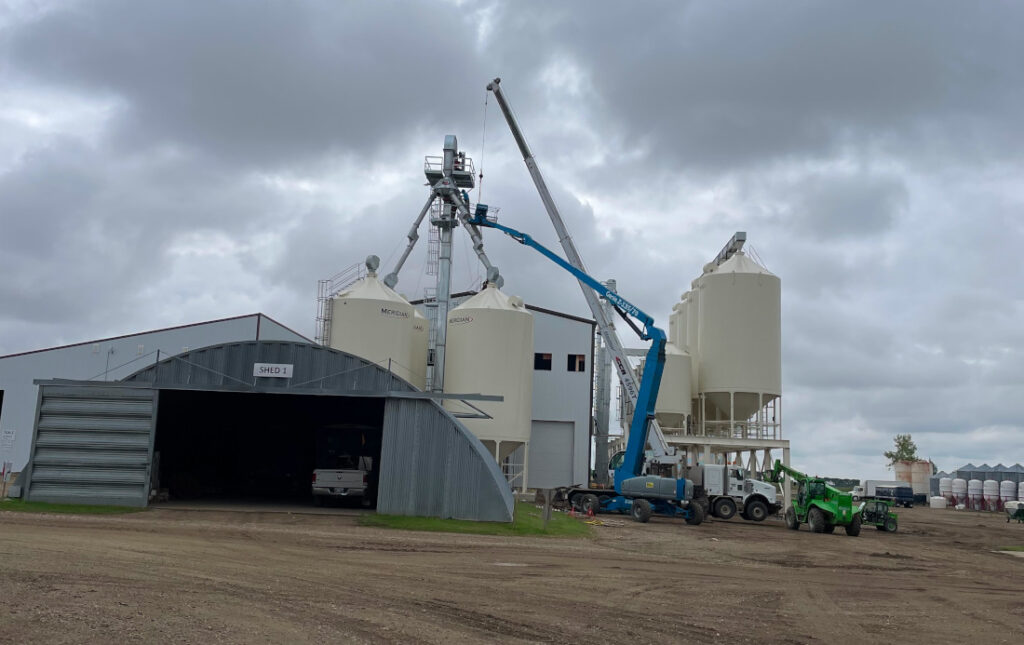

Standing in a new seed processing facility for the first time is equal parts pride and pressure. Pride, because years of planning have finally taken physical shape. Pressure, because the real test doesn’t start when the doors open — it starts when the first seed lots hit the system and every design decision becomes operational reality.
At J.S. Henry & Son, this new facility represents the biggest step forward we’ve taken in decades. Depending on how you count it, it’s technically our third-generation seed plant build on this site.
We started with J.S. Henry’s original seed plant from back in the 1950s. Then Cam Henry built a seed plant in the 1980s. In 2015, my wife Marnie and I led a major revamp that essentially rebuilt our operation again. Now we’ve built an entirely new facility while keeping the older one in place.
One of the biggest reasons this build turned out differently than the earlier ones is that we approached it with less guesswork. In 2015, we did a lot ourselves — drawing layouts, making changes on the fly, and relying on experience to make things work.
This time, working with Manitoba’s Nexeed helped push us into a more disciplined planning process. Instead of assuming we could “make it work” during installation, we spent more time getting the plan right before steel ever went up.
That process reinforced one of the most important lessons I’ve learned: a seed plant shouldn’t be designed only for today’s crop mix. Markets change. Crop types change. Opportunities change. So we built this facility to adapt, using gentler handling conveyance, routing options that allow us to bypass certain machines, and enough space to “plug and play” future upgrades.
Another major takeaway from this build was thinking beyond flow and efficiency and focusing on long-term serviceability. When you’re packing equipment close together, everything looks great on paper — until 10 or 20 years later when a key machine fails and you realize you’ve boxed yourself in. In our older facility, we’ve hit that reality. With this new plant, we made sure there’s room to access equipment from different angles and remove machines without tearing the building apart. 3D modeling also changed the game. Being able to see the plant before it was built, down to measurements, angles, and clearances, eliminated a lot of uncertainty.
Nexeed’s process helped us take advantage of that detail, and it made it easier to plan the install and materials more accurately.
If you build it right and work with the right provider, a seed processing facility becomes a generational asset, and a platform for whatever comes next.