A rare alignment of climate indicators raises the possibility of a historic super El Niño.
What are the potential implications for global crop supplies, seed sector planning and agricultural profitability?

When it comes to predicting climate, it has been our experience that history rhymes consistently. Meaning, if we have a good concept of what has happened in the past, those events will reoccur in the future. Although no two events are exactly the same, they do rhyme sufficiently to be able to make some grande conclusions in terms of possible weather anomalies, at-risk areas and potential impacts to agricultural prices, inflation, geopolitics and the ag economy.
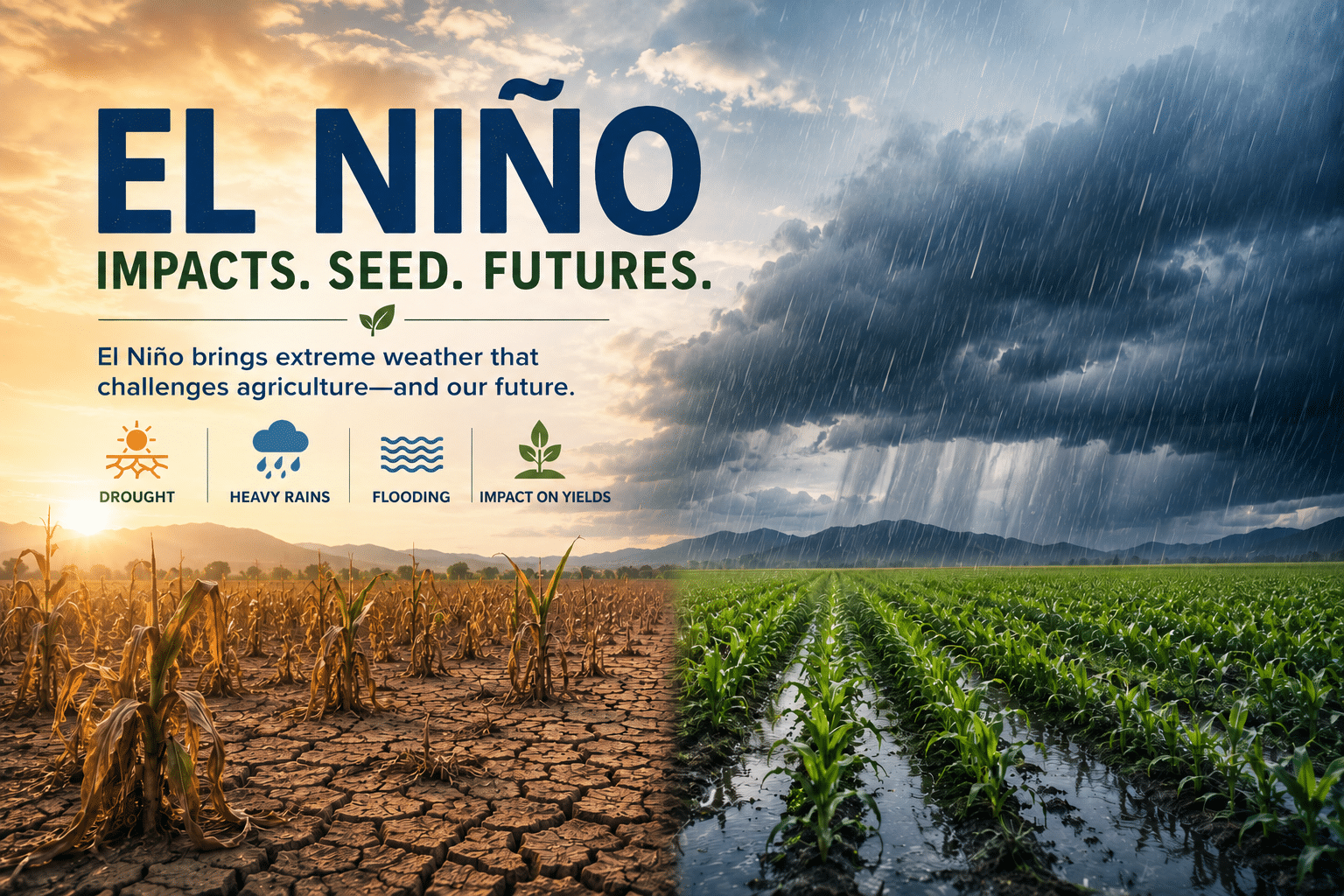
For the seed industry, adverse weather that a super El Niño may bring can alter world seed production. It may also modulate seed demand as planted acres shift while adding an element of economic uncertainty to seed pricing structures. Being prepared to adapt to these rapidly changing world seed dynamics to future seed business planning decisions can be the difference maker in aligning grower needs with seed producer interests.
First let’s define what a super El Niño means. A super El Niño is when the sea surface temperatures of the central Pacific Ocean are warmer than normal by at least 2°C or more. Since 1850, there have been six super El Niños that have occurred. There are many contributing synchronized variables that determine whether or not the weather conditions around the world are going to be on the more severe side or less severe. Our work and the forecast models are all forecasting it will reach this threshold by the fourth quarter of 2026.
A Rare Climate Setup Is Taking Shape
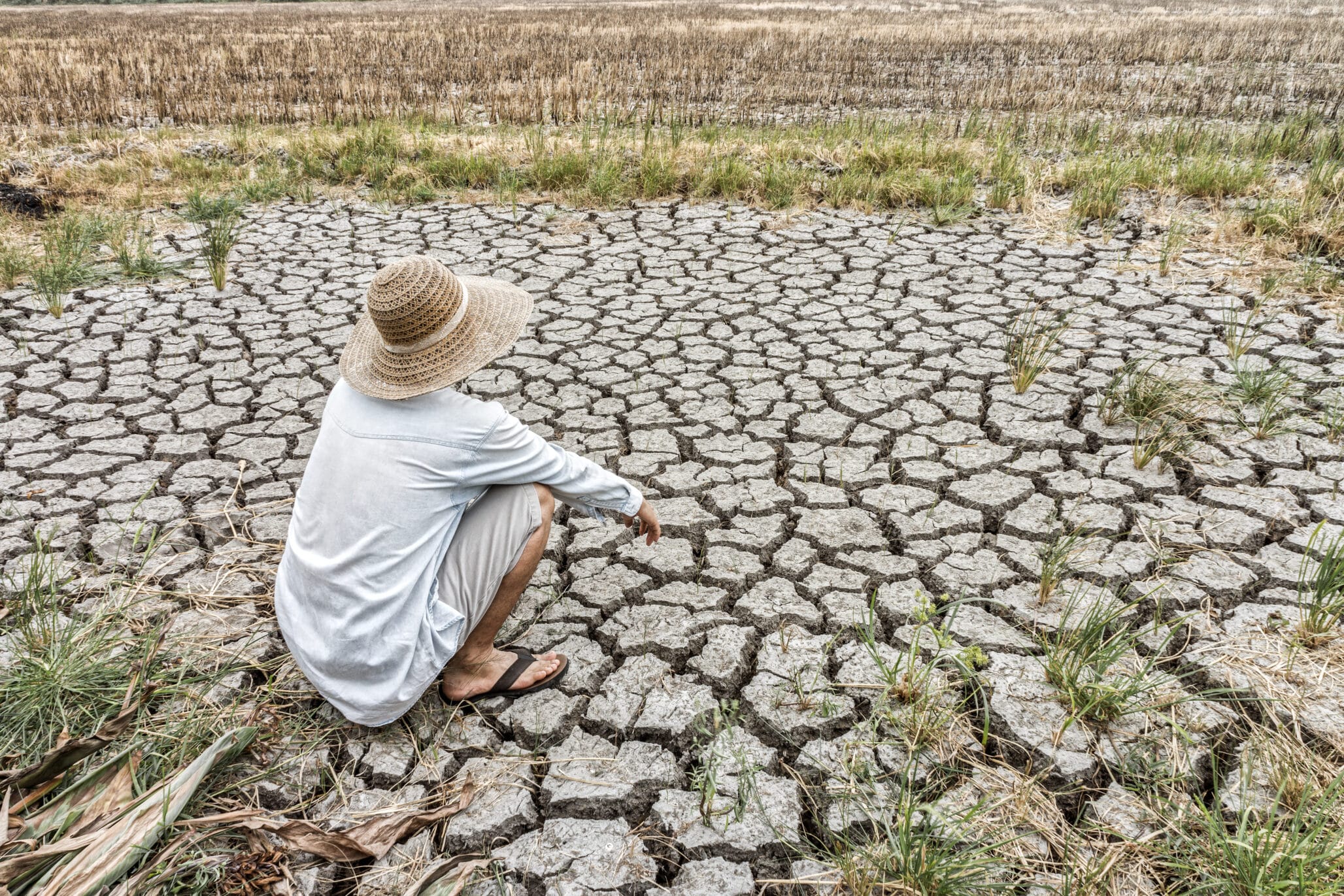
The 1877-1878 super El Niño was one of the worst droughts in Asia depending on the country you’re talking about it was a 100- to 500-year drought. It brought crop failures across the board and many of the greatest famines in these Asian regions occurred during that super El Niño event.
Interestingly, despite five super El Niño years since 1877-1878, we have not repeated the 1877-1878 weather extremes. We have seen drought develop in parts of Asia, but it’s been nothing along the lines of what took place back then. Many unusual factors made 1877-1878 more extreme that did not show up in the following super El Niños.
Why 1877-1878 Still Matters
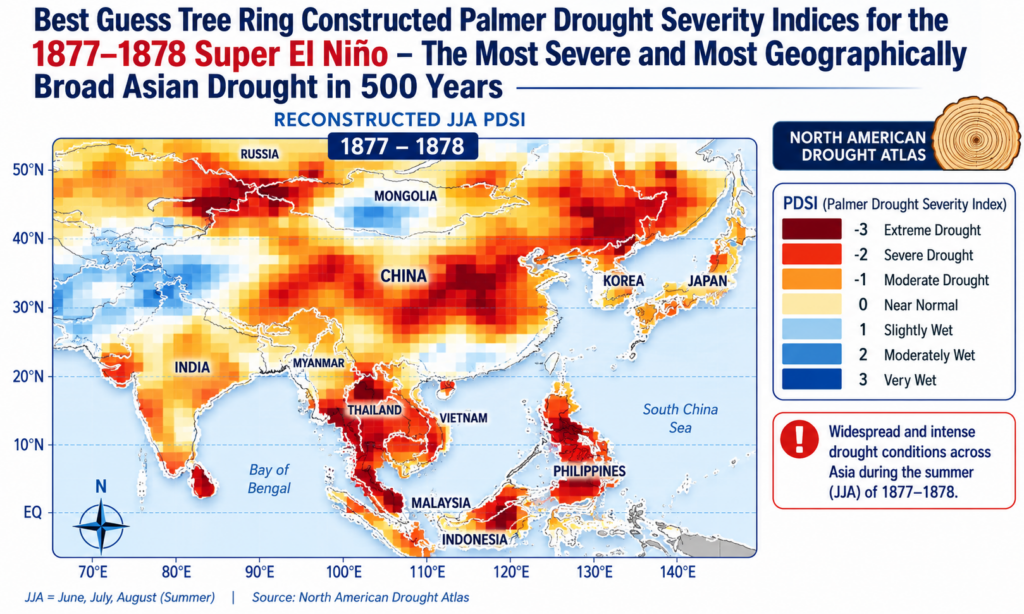
One important variable is the Indian Ocean dipole, which is essentially the sea surface temperature differential in the waters west of India from the waters east of India. All super El Niños that have occurred since 1850 had positive Indian Ocean dipoles where western waters are warmer than the eastern waters. When that happens, it typically increases the moisture potential for the western Asian countries like India helping at least half of Asia mitigate the worst drought type conditions. The super El Niño of 1877 to 1878 had a neutral-to negative Indian Ocean Dipole which allowed the drought conditions to encompass the entire Asian continent. Right now, the Indian Ocean dipole is in the negative phase, and all indications and model forecasts suggest it will remain neutral to negative at least through the summer months.
Another very unusual factor that occurred in 1877-1878 was the duration of the peak warm waters of the central Pacific lasted up to six months before cooling down. Every super El Niño since then has remained at those warm levels for only one to two months, making both the persistence of the warm waters and the El Niño-driven drought impacts on Asia an order of magnitude more extreme in 1877-78. While there’s no way to forecast if this super El Niño will have the same duration as 1877-1878, it is something we will look at as a verification or a signpost to watch as we approach peak El Niño.
Several Warning Signs Are Flashing
Another factor that helps suppress the Asian monsoon during the summer growing season other than El Niño is having high Asian sand dust aerosols in the atmosphere from the Arabian Peninsula. This is something we are already seeing this year and it is very similar to what we saw in 2002, which was a moderate El Niño. Although moderate, it did trigger one of the worst droughts in India in 50 years. We will be watch this variable very closely to see if these concentrations remain high going into the key summer months.
Lastly, we are seeing a very early active start to the western Pacific typhoon season which helps pull moisture away from Asia as they tend to curve east of Japan and into the arctic airflow. If this hyperactivity continues, we expect additional Asian monsoon suppression. The number of variables aligning in ways similar to the 1877-78 super El Niño is one reason the drought unfolding across Asia, particularly in India, could rival the severity of the event 150 years ago.
The Seed Industry May Need to Prepare Now
This pattern also drives strong drought teleconnections across central and northern Brazil, home to 70% of the country’s soybean and corn production from Oct. 15 through May 15. It could exacerbate a 15-year structural decline in moisture caused in part by Amazon deforestation weakening regional monsoon flow.
We could see extreme shortages develop in key crops like rice, sugar, corn, soybeans and palm oil over the next 12 months. While El Niño tends to be adverse to growing good crops in these regions, North America usually has very good growing weather.
With that in mind, we expect generally favorable weather conditions for North American production. Developing shortages overseas could also drive prices higher, creating opportunities for North American producers to market strong crops at better prices. That could ease some of the financial pressure farmers have faced from low commodity prices, high production costs and disruptions tied to conflict in the Middle East and the closure of the Strait of Hormuz.
Whether you are a producer, end user or involved in the seed and agricultural input industries, the next 12 months will require careful risk management. Navigating this rare and unusual super El Niño setup could determine who thrives and who simply survives higher prices and potential shortages.