At just 25, Anirup Sengupta is using genomics, AI, and predictive breeding tools to help plant breeders develop more resilient crops — without losing sight of the farmers those innovations are meant to serve.
When Anirup Sengupta talks about plant breeding on this week’s episode of the Seed World Canada Podcast, he reaches for an analogy almost anyone can understand.
“Without a reference genome,” he says, “breeding is a bit like trying to assemble a massive puzzle without seeing the picture on the box.”
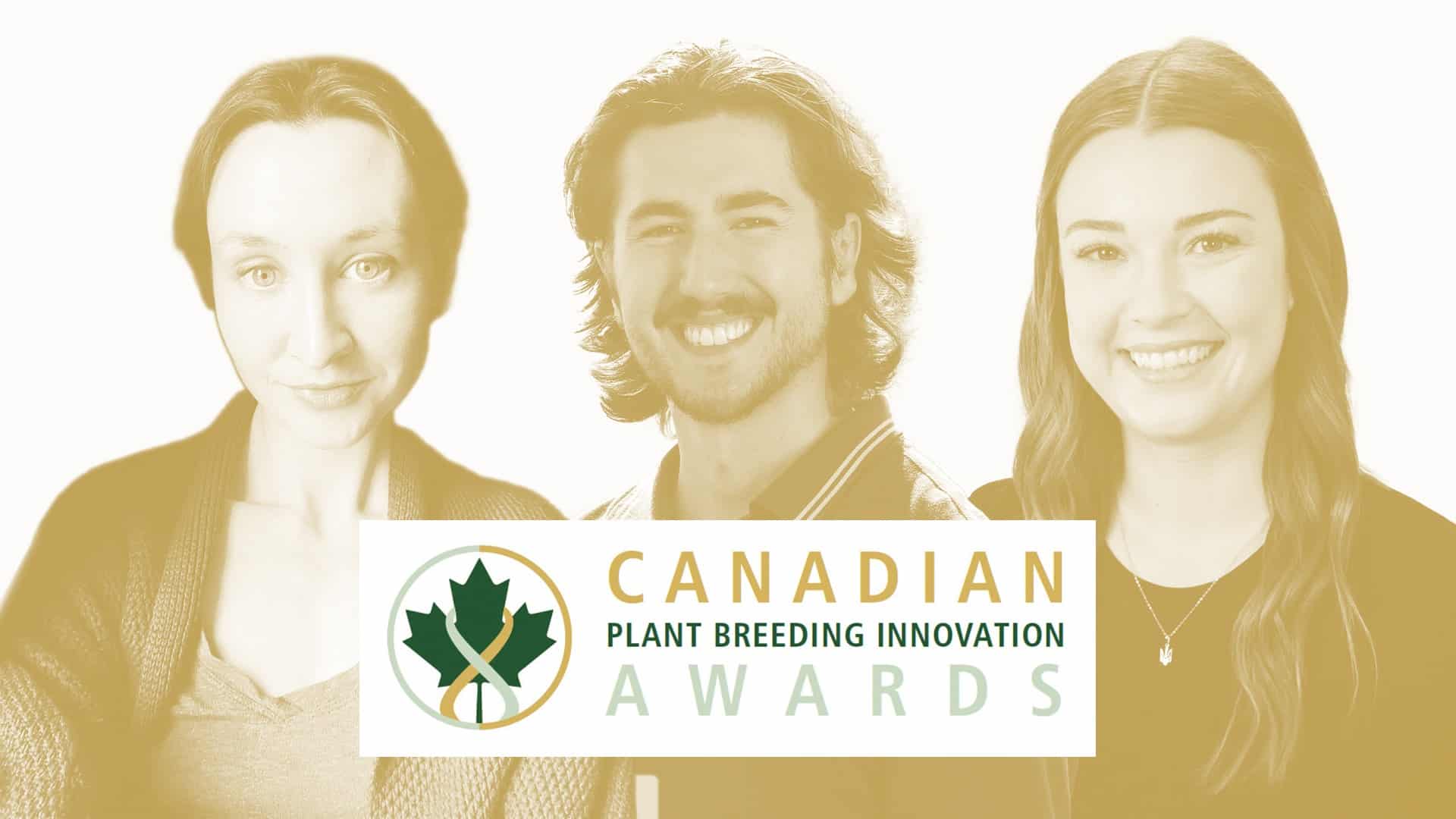
It’s a fitting description of the challenge he has chosen to tackle as a PhD student at the University of Saskatchewan, where he works with the Crop Development Centre and the Global Institute for Food Security. Originally from West Bengal, India, Sengupta is one of three recipients of the 2026 Canadian Plant Breeding Innovation Scholarship, an award recognizing graduate students advancing the future of plant breeding and genetics.
His research focuses on cicer milkvetch, a perennial forage legume valued for its nutritional quality and ability to reduce frothy bloat in grazing livestock. Despite those advantages, the crop has never reached its full potential because of poor germination, weak seedling establishment, and limited genomic resources.
“My research is about providing plant breeders with a much more detailed roadmap to improve crops faster and more efficiently,” Sengupta says.
The cornerstone of that roadmap is the crop’s first reference genome—a complete genetic blueprint that allows researchers to identify genes associated with traits such as seedling vigour, forage yield, disease resistance, and stress tolerance.
But that’s only part of the picture.
Sengupta is also analyzing the crop’s genetic diversity and applying genomic selection, an increasingly important tool that uses DNA markers and predictive models to identify promising breeding lines long before years of field testing are complete.
“Instead of waiting several growing seasons,” he explains, “breeders can make decisions much earlier, save a lot of time and resources in the breeding program, and help accelerate genetic gains.”
The Next Generation of Plant Breeding
Traditional breeding remains the foundation of crop improvement, but today’s breeders have access to tools previous generations could scarcely imagine.
For Sengupta, the future lies in combining—not replacing—those approaches.
“The future of crop improvement would be to combine the strengths of traditional breeding, the breeders’ knowledge and expertise, with genomics, AI, and big data approaches,” he says. “It is not basically replacing the breeders. It is giving them much more precise tools to make faster and smarter decisions.”
That philosophy reflects a broader transformation happening across agriculture, where advances in sequencing technology, computational biology, machine learning, and environmental data are making breeding increasingly predictive rather than purely observational.
Curiosity Before Technology
Despite publishing scientific papers, presenting internationally, and earning conference awards early in his career, Sengupta doesn’t attribute his success to technical ability alone.
“I think one of the biggest factors that drives me is curiosity and consistency,” he says. “Research can be challenging because results don’t always work the way you want them to work, but having this curiosity kind of helps you stay motivated.”
That curiosity extends well beyond the laboratory. Conferences, outreach, teaching, and leadership roles have all become essential parts of his development as a scientist.
“A lot of growth happens outside the regular coursework or experiments,” he says.
Yet he also offers a note of caution for young researchers eager to embrace every new technology.
“As young researchers, we naturally get excited about new technologies,” Sengupta says. “But sometimes that can lead to a situation where we almost have a solution looking for a problem.”
Instead, he believes the science should always begin with the biological question.
“It’s better to start with the important biological or agricultural questions first,” he says. “Technology is a tool. It’s not the final objective of your work.”
Bridging Biology and Data
Modern plant scientists increasingly work at the intersection of field biology and computational science.
For Sengupta, success depends on understanding both.
“Agriculture is ultimately field-driven,” he says. “At the same time, genomics and computational biology are giving us incredibly powerful tools to understand plant traits at a much deeper level. We need both perspectives working hand in hand with each other.”
That balance ensures that sophisticated genomic predictions remain grounded in real-world agricultural challenges rather than existing only on a computer screen.
Science That Farmers Can Use
Equally important is communication.
“Research only creates impact when people understand and apply it,” Sengupta says. “As researchers, we often work with highly technical concepts, but ultimately our work affects farmers, industry, policymakers, students, and the public.”
It’s why he has devoted time to teaching, graduate student leadership, mentoring, and outreach throughout his academic career. Explaining science clearly, he believes, makes both the research—and the researcher—better.
Looking Ahead
As sequencing becomes less expensive and computational tools become more accessible, Sengupta believes plant genomics is entering a new era.
“We are entering a period where plant science is becoming far more precise, predictive, and connected than ever before,” he says.
The implications extend well beyond any single crop.
“Plant genomics will not solve everything on its own,” Sengupta says, “but I believe it will be one of the most important tools that helps agriculture adapt to the challenges that we are facing in the real world right now.”
Looking ahead, he sees enormous promise in the convergence of genomics, artificial intelligence, and increasingly accessible sequencing technologies.
“We are entering a period where plant science is becoming far more precise, predictive, and connected than ever before,” he says. “Advances in plant genomics are giving us the ability to understand crops at an incredibly detailed level—from individual genes all the way to how plants interact with changing environments.”
Those advances, he believes, won’t simply produce better crops. They could reshape how agriculture responds to some of its biggest challenges, from climate change to global food security.
“Plant genomics will not solve everything on its own,” Anirup says, “but I believe it will be one of the most important tools that helps agriculture adapt to the challenges we are facing in the real world right now.”
The Canadian Plant Breeding Innovation Scholarship is made possible by Alberta Grains, the Canadian Seed Growers’ Association, FP Genetics, HyTech Production, Richardson, SaskWheat Development Commission, SeCan, Seeds Canada, Seed World Canada, and Warburtons.
Podcast: Play in new window | Download