CRISPR, base editing, prime editing and other new genomic techniques are rapidly expanding the plant breeder’s toolbox. What will it take for gene editing to become a routine part of breeding by 2045?
Earlier this year, a colleague asked me what kind of headline I would like to read in the future if Europe gets New Genomic Techniques (NGTs) right. One of the headlines we came up with was: “First NGT varieties approved smoothly across the EU; farmers embrace new tools.”
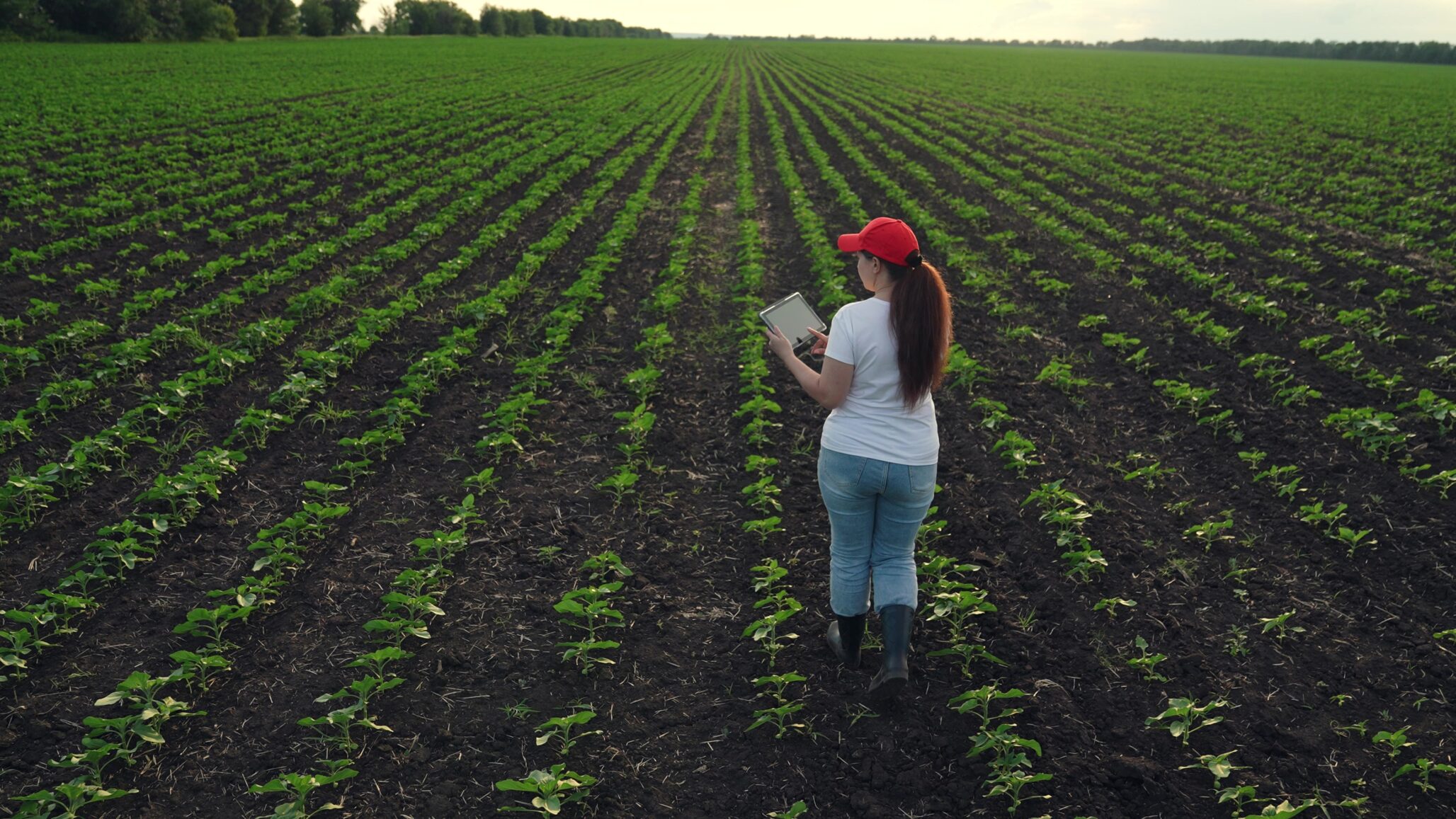
I still like it. In fact, those few words contain two rather different tests of success. The first is whether our regulatory systems can move useful breeding innovation predictably from the laboratory into commercial varieties. The second, and ultimately more important, is whether farmers actually want to grow them.
By 2045, however, I hope the word new in New Genomic Techniques will sound slightly quaint. Genome editing may by then no longer be regarded as a separate breeding activity carried out by a specialist team somewhere down the corridor. It could simply be one of the tools breeders use alongside crossing, genomic selection, phenotyping, doubled haploids, speed breeding and whatever comes next. If that happens, gene editing will have moved from being an innovation in itself to simply becoming part of plant breeding. So, what needs to happen between now and 2045?
First, What Are We Actually Talking About?
One difficulty with the NGT discussion is that we routinely use several very different terms as if they meant the same thing. They do not. CRISPR is a technology platform. Gene editing describes a family of ways of making targeted changes to genetic material. SDN 1, SDN 2 and SDN 3 describe different kinds of genetic changes associated with site directed nucleases. Cisgenesis describes the introduction of genetic material from the conventional breeders’ gene pool. And NGT is increasingly also a regulatory umbrella term, particularly in Europe.
This distinction is important because regulation is not always based simply on the tool that was used. The new EU framework, for example, covers plants obtained through targeted mutagenesis and cisgenesis, including intragenesis, rather than creating one legal category called “CRISPR plants”. The European Commission provides a useful overview of what it means by new genomic techniques.
We have been explaining these technologies for almost a decade, from early discussions around ZFN, TALEN and CRISPR to the much broader toolbox available today. The important change is that “gene editing” no longer describes one molecular operation producing one kind of genetic alteration.
NGT Alphabet Soup: The Terms Breeders Need to Know
| Term | What it means |
| ZFN | Zinc finger nuclease, one of the earlier programmable systems for cutting DNA at a targeted location. |
| TALEN | Another protein-based system designed to recognise and cut a chosen DNA sequence. |
| CRISPR/Cas | An RNA guided editing system that is comparatively easy to retarget and has become the dominant genome editing platform in plant research. |
| SDN 1 | A targeted DNA cut repaired without a supplied repair template, often producing small insertions or deletions. |
| SDN 2 | A targeted change in which a repair template is used to introduce a defined, usually small, sequence alteration. |
| SDN 3 | Targeted insertion of a larger DNA sequence at a chosen genomic location. |
| ODM | Oligonucleotide directed mutagenesis, in which a short synthetic nucleic acid sequence guides a specific change. |
| Base editing | Directly changes one DNA base into another without the conventional double strand break used in standard CRISPR cutting. |
| Prime editing | A more flexible precision system able to make defined substitutions and small insertions or deletions. It is sometimes described as genetic “search and replace”. |
| Multiplex editing | Editing several genomic targets at the same time. |
| Cisgenesis | Introduction of genetic material from the conventional breeders’ gene pool. It describes the genetic outcome, not a specific editing platform. |
| Intragenesis | Recombination of genetic elements originating within the conventional breeders’ gene pool into a new arrangement. |
We Have Moved Far Beyond the Original Molecular Scissors
The popular explanation of CRISPR is wonderfully simple: molecular scissors cut DNA at a selected site, and the cell repairs the break, creating a mutation. That remains useful shorthand, but increasingly it describes only the entrance to the toolbox.
Base editors can change individual nucleotides without creating the conventional double strand break. Prime editing can introduce specified substitutions, insertions and deletions with considerably more control. Multiplex systems can target several genes simultaneously, while promoter editing can adjust when and how strongly a gene is expressed rather than simply switching it off.
The scientific horizon is moving further still, from targeted genome modifications towards precise manipulation of much larger DNA segments. A 2025 perspective on the future of genome editing in plants argues that editing may increasingly be used to generate structural variations such as insertions, duplications, inversions and translocations that resemble processes which have shaped crop evolution naturally.
That is a very different technological landscape from the simple knockout that dominated the early CRISPR discussion. It also raises an awkward regulatory question: are we designing tomorrow’s rules around our picture of what genome editing looked like yesterday?
The Edit May Become the Easy Part
For a non-specialist, the spectacular part of genome editing is the moment somebody changes the DNA. Increasingly, I suspect that may not be the hardest part of the breeding programme. And the first challenge is knowing what to edit. A useful edit requires understanding the biological pathway involved, the relevant gene or regulatory element, the allele that needs changing and the consequences of making that change. For relatively simple susceptibility genes, that may be fairly clear. For yield stability, drought tolerance, nitrogen use efficiency and many other complex traits, breeders are dealing with gene networks, pleiotropy, epistasis and genotype by environment interactions.
Then the editing machinery has to reach the right cells in the right genotype. A brilliant edit is of limited commercial use if it can be performed efficiently only in one laboratory friendly genotype but not in elite commercial germplasm.
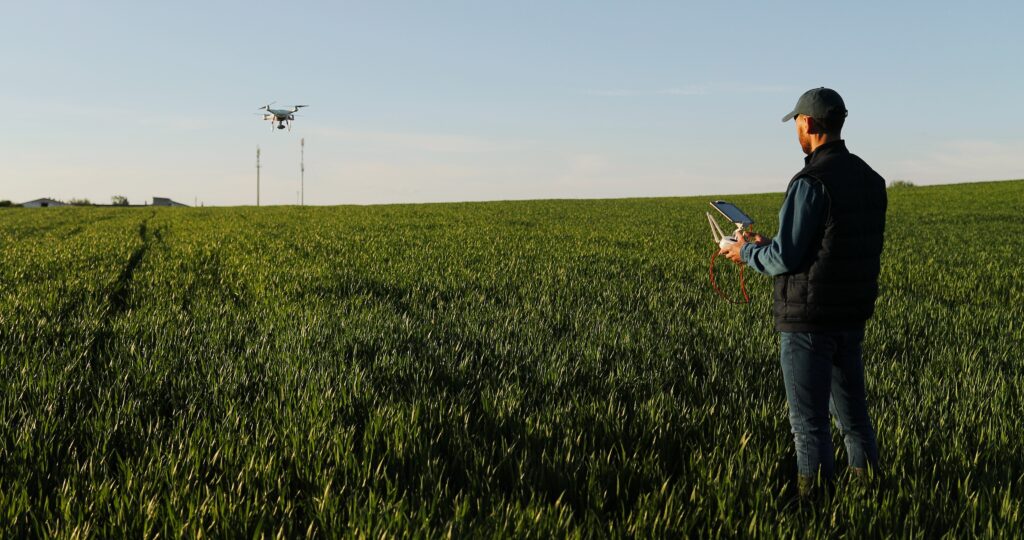
For many crops, transformation and regeneration remain major bottlenecks. A recent review of CRISPR editing without tissue culture describes how meristem targeted approaches, germline editing, viral delivery and compact editing systems are beginning to tackle the long standing problems of genotype dependence and regeneration. This may prove to be one of the quiet revolutions behind genome editing. If breeders can make editing much less dependent on difficult tissue culture procedures and specialised transformable genotypes, the technology becomes useful across many more crops and breeding programmes.
And then comes perhaps the most important test: does the edited plant actually perform? Molecular precision does not remove the need for phenotyping, field trials, selection, seed multiplication or understanding how a genotype behaves across locations and seasons. Agriculture still happens in fields, not DNA sequence files.
What Can Breeders Actually Do with It?
The applications already range from disease resistance and abiotic stress tolerance to quality, yield components, plant architecture, processing characteristics and nutritional composition. The searchable EU SAGE database provides a useful window into the breadth of published genome editing research in crops, although its entries represent research publications rather than a list of products heading towards commercialisation. And that distinction is important because scientific proof of concept, an advanced breeding line and a commercially successful variety are three very different things.
The longer-term possibilities include adjusting gene expression, modifying several components of a pathway together and gaining greater control over recombination, chromosome organisation and the movement of useful genetic variation. Genome editing may even accelerate the domestication of underutilised crops and wild relatives by changing a handful of domestication related characteristics while retaining valuable stress tolerance or nutritional traits. In that sense, the technology may not only improve established crops; it could help widen the crop portfolio available to future agriculture.
Importantly, these techniques do not have to be used only to produce a final change in a finished variety. Promoter editing, multiplex editing and other approaches can also create new genetic variation that breeders then take forward through crossing, selection, recombination and field testing. So genome editing can be used both to refine existing varieties and to create variation for further breeding.
Gene Editing Does Not Replace Plant Breeding
In a lively LinkedIn discussion following one of my earlier articles, several people questioned just how revolutionary gene editing really was. Plant breeders, after all, have been changing plant genomes for thousands of years. My answer then remains my answer now: gene editing is ‘just’ another tool in the breeder’s toolbox. That does not make the rest of the breeding programme disappear.
An edit does not magically turn mediocre germplasm into an elite variety. A successful variety is an accumulation of yield potential, maturity, quality, standability, resistance, adaptation, architecture and thousands of favourable genetic combinations. Editing can change one or several components of that package with extraordinary precision. It does not create the rest of the package for free.
That is why the convergence of technologies may ultimately matter more than any one tool. When I looked earlier at how CRISPR, AI, genomic prediction and speed breeding are beginning to converge, the most interesting prospect was how each could remove a different bottleneck. Gene editing changes DNA. AI may increasingly help identify which changes are worth making. Genomic prediction helps breeders manage whole genetic backgrounds. Speed breeding can shorten generation intervals. High throughput phenotyping measures what actually happens. But the breeder still has to put it all together.
From Tombstone to Rulebook
My own relationship with Europe’s NGT debate can probably be measured in tombstones. In July 2018, the Court of Justice of the European Union ruled that organisms obtained through newer mutagenesis techniques fell under the GMO Directive. We responded with a European Seed cover carrying a tombstone: “R.I.P. EU Plant Breeding Innovation, born 20,000 BC, died 25 July 2018.” The subsequent article, A Great Loss for Europe, examined what that ruling might mean for European breeders, smaller companies, research and international trade.
Five years later, the Commission finally presented a dedicated proposal for NGT plants. I asked whether we were Cracking the Tombstone and whether common sense had begun to prevail. Then came December 2025 and the trilogue agreement. In Europe’s New NGT Agreement: What the Trilogue Deal Means for Plant Breeding, the tombstone appeared again, this time with a pickaxe chopping it to pieces and considerably more optimism. The article ended by wondering whether perhaps one day we would need a birth announcement rather than another tombstone.
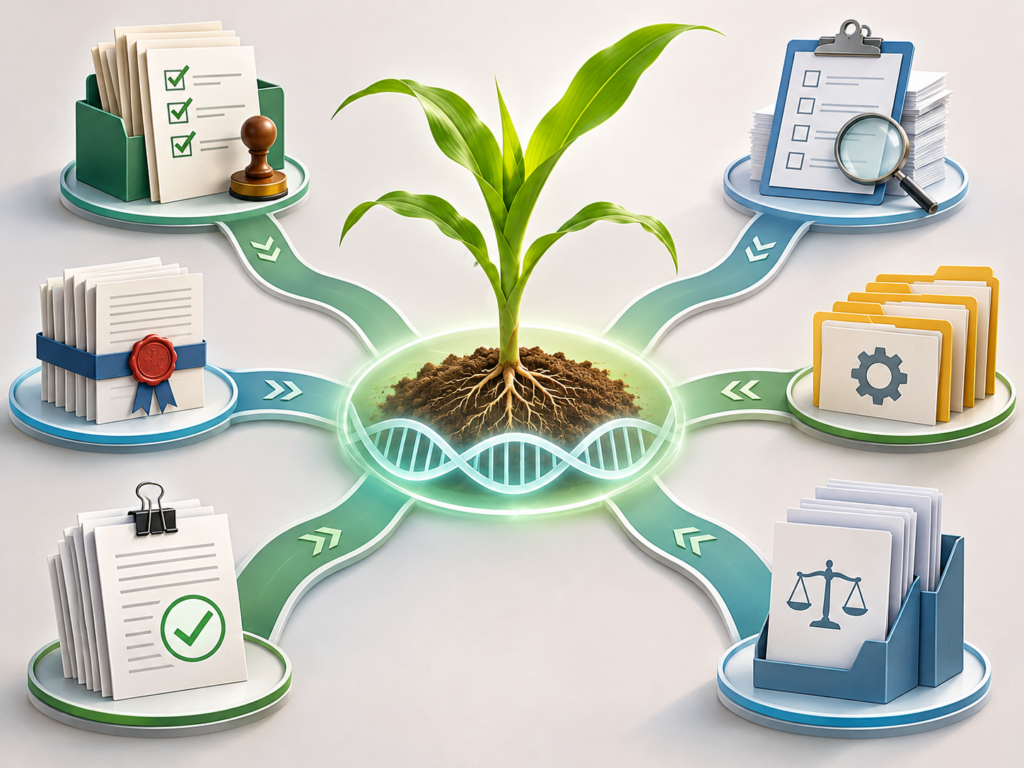
That legislative journey is now largely complete. Regulation (EU) 2026/1388 was adopted on 17 June 2026, entered into force on 16 July and will apply from 17 July 2028. Until then, targeted mutagenesis and cisgenesis remain subject to the existing EU GMO legislation. After eight years of asking whether Europe would open the door, the question has therefore changed: how wide is the door?
Category 1 and Category 2
The Regulation creates two broad routes. Category 1 covers NGT plants that meet defined equivalence criteria intended to identify modifications comparable with those that could arise naturally or through conventional breeding. Category 2 covers NGT plants outside those criteria and subjects them to a more extensive regulatory pathway. Conceptually, that is a profound departure from the post 2018 situation. Europe is no longer treating every plant created by newer targeted mutagenesis techniques as though it belonged in exactly the same regulatory box.
But, as always, the details matter. One of those details is the now famous 20 nucleotide rule. I previously described its possible consequences in my article on why the 20 nucleotide threshold could act as a handbrake on breeding innovation. Since then, I have become increasingly convinced that calling it simply “the 20-nucleotide threshold” hides almost as much as it explains.
What Does the 20 Nucleotide Rule Actually Say?
For targeted mutagenesis, Annex I of the final Regulation does not simply impose a 20 nucleotide ceiling. Substitutions and insertions are limited to 20 nucleotides, while deletions are not limited by size; there are also limits on the number of modifications and exclusions for certain traits.
The result can be counterintuitive: a 21-nucleotide insertion can encounter a regulatory boundary while, in principle, a deletion involving thousands of nucleotides is not excluded simply because of its size. The detailed rules are summarised below, but the wider point is simple: the biological significance of an edit and its regulatory classification are not proportional to the number of DNA letters changed.
The EU Category 1 Rule in Plain English
| Provision | In practical terms |
| Substitution or insertion: maximum 20 nucleotides | Up to 20 DNA “letters” may be replaced or inserted in a qualifying targeted mutation. |
| Deletion: no size limit | The rule does not impose the same 20 nucleotide limit on deletions. A deletion larger than 20 bases is not automatically outside Category 1 because of its size. |
| Maximum three modifications per protein coding sequence | The number of qualifying changes within one protein coding sequence is restricted. |
| Introns and regulatory sequences treated differently | Changes in these non-coding or gene regulating regions are not subject to that three modification per coding sequence limit. |
| Maximum 20 modifications per monoploid genome | There is also an overall ceiling, calculated against one basic chromosome set. |
| Some traits are excluded | Intended herbicide tolerance and production of a known insecticidal substance cannot enter Category 1, regardless of how small the molecular edit is. |
That is more complicated than “20 nucleotides”, but it is also much more interesting. There is no scientifically defensible percentage we can put on this question. We do not have a finite list of all useful edits against which we can count those shorter than 20 nucleotides.
What we can say is that very small edits are common in CRISPR repair outcomes. In a large 2026 tomato study using 420 guide RNAs targeting 137 genes, almost half of the observed mutations were one base insertions or deletions of four bases or fewer.
That does not tell us what share of commercially useful edits will fall within Category 1, but it does show how common very small changes can be. The more interesting question is what those changes can actually do.
How Small Can a Useful Gene Edit Be?
| Crop and objective | Size of the edit | What happened, in plain English |
| Tomato: resistance to tomato yellow leaf curl virus | 1 nucleotide inserted | Researchers disrupted a tomato susceptibility gene by inserting a single DNA letter. That tiny change knocked out the gene’s normal function and sharply restricted the virus. |
| Rice: broad disease resistance | 12 nucleotides deleted | A 12 base deletion created resistance to several fungal and bacterial diseases. Importantly, it avoided the severe yield loss caused by a larger naturally discovered mutation in the same gene. |
| Rice: herbicide tolerance | 2 nucleotide substitutions | Prime editing changed two DNA letters, one producing the useful amino acid change and one preventing the editing machinery from cutting the site again. Molecularly this is a tiny edit, yet intended herbicide tolerance is specifically excluded from EU Category 1. |
| Wheat: lower free asparagine | 36 nucleotide deletion plus a 1 nucleotide insertion in one edited line | Researchers altered asparagine synthetase genes to reduce free asparagine in grain, with the aim of lowering acrylamide formation during high temperature food processing. The 36 base deletion is larger than 20, but under the EU rule a deletion is not excluded merely because it exceeds 20 nucleotides. |
These are research examples, not a prediction that every resulting plant would automatically qualify as Category 1 in the EU. The full regulatory criteria still need to be considered in every case. But they illustrate something that I find fascinating. One DNA letter can matter. Twelve can matter. Thirty-six can matter. And a two-letter change can fall into a different regulatory category because of the trait it creates rather than because of the size of the edit. That is why I am wary of using nucleotide counts as shorthand for biological importance.
One Genome, Many Rulebooks
And then we cross a border. This is one aspect of the NGT discussion that still baffles me. The biology of a plant does not change because a seed crosses from one jurisdiction into another, yet the legal identity of the same type of genetic alteration can change dramatically.
I was asking essentially the same question back in 2018, even before the EU Court ruling. In a discussion with ISF about consistent criteria for regulatory oversight, we examined the risk of countries developing incompatible approaches to exactly the same breeding innovations. Eight years later, the editing technology has advanced enormously. Regulatory convergence has moved rather more slowly.
Different countries look at different things. Some focus heavily on whether foreign DNA remains in the final plant. Others distinguish between particular kinds of targeted changes. Some use notification or confirmation procedures, while others rely on broader GMO frameworks. Recent international overviews still show substantial variation in regulatory treatment around the world
There are understandable reasons for this. Almost 200 countries have different legal systems, agricultural sectors, political histories, public attitudes and approaches to risk. Complete regulatory harmonisation may be unrealistic, but much greater interoperability should not be. Countries do not need identical legislation if they use sufficiently compatible terminology, recognise comparable scientific principles and avoid unnecessary barriers when equivalent products move between markets.
For an international seed sector, breeding programmes, germplasm exchange, seed production and commercial markets routinely cross borders. A breeder developing one variety for several countries may therefore need to think not only about what the best biological edit is, but about how that edit will be classified in every relevant market.
A technically attractive edit may make little commercial sense if its regulatory status blocks the major target markets. Conversely, an enabling regulatory framework in a particular region could make that market more attractive for early product introduction. The danger is that breeders eventually choose molecular solutions because they fit the regulatory map rather than because they are the best biological solution. That would be an odd place for regulation to take us.
The same issue extends beyond seed to grain, feed and food. Agricultural trade becomes very difficult when an edited crop is treated as conventional in the exporting country but subject to a completely different regulatory category at destination. The seed sector raised precisely this concern long before CRISPR became a household acronym. The problem has not disappeared, but the number of potentially affected products is likely to increase significantly as editing becomes easier and more widely used. By 2045, regulatory interoperability may therefore be every bit as important to the commercial success of genome editing as another improvement in Cas efficiency.
Where Can Breeders Check the Rules?
NGT rules are changing quickly, so global regulatory maps can become outdated surprisingly fast. The sources below are useful starting points, but companies should always verify the position with the relevant national authority before making commercial decisions.
Where Can Breeders Check the NGT Rules?
| Resource | What it is useful for |
| European Commission | The European Commission’s official NGT legislation and implementation pages provide the EU framework, implementation timetable and information on forthcoming delegated and implementing acts. |
| EUR Lex | The authoritative legal text of Regulation (EU) 2026/1388 includes the Category 1 equivalence criteria and the detailed provisions companies need to consult. |
| ISAAA | ISAAA’s international regulatory overview provides useful orientation on new gene editing policies and product decisions across multiple regions. |
| Global Gene Editing Regulation Tracker | The Global Gene Editing Regulation Tracker offers a country-by-country comparative starting point for agricultural gene editing and regulatory status. |
| National competent authority | This should ultimately be the source companies verify before relying on a regulatory interpretation for field trials, imports, seed production or commercialisation. |
Has CRISPR Really Democratised Breeding?
When I wrote in 2020 that the world had got a new pair of scissors, CRISPR’s attraction was already clear. It was faster, more precise and much easier to retarget than many earlier technologies. Six years later, the tools are cheaper and available to far more researchers, but there is an important difference between cheap editing and cheap product development.
A commercial breeding programme still needs good germplasm, target discovery, transformation or delivery capability, regeneration, molecular screening, phenotyping, field testing, regulatory expertise, IP analysis, seed multiplication and eventually market development. The scissors may be cheaper, but the breeding programme around them certainly is not free.
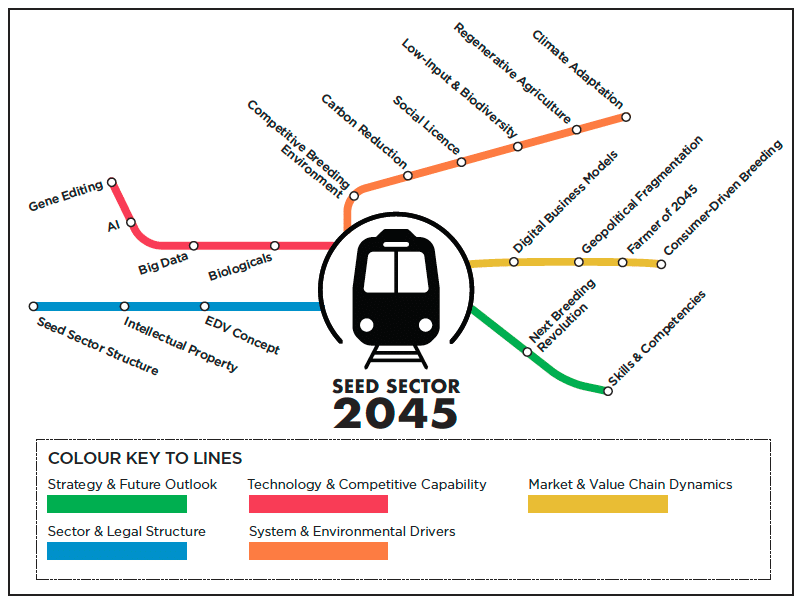
That fits closely with the picture I sketched in the earlier Seed Sector 2045 discussion of a more layered seed sector rather than simply a larger one. A company does not necessarily need to own every capability internally. Specialist editing providers, technology companies, public researchers, trait developers and breeders may increasingly contribute different parts of the process.
A smaller vegetable breeder might know its germplasm and market exceptionally well but outsource editing. A technology company may develop delivery systems that work across several companies’ elite genotypes. A public institute may discover a useful allele which commercial breeders subsequently deploy. By 2045, access to the right network may matter almost as much as owning the right laboratory.
Farmers Are the Final Proof
This brings me back to the future headline I mentioned at the start: farmers embrace new tools. Regulatory approval is not adoption. Scientific elegance is not adoption either. Farmers are unlikely to grow a variety simply because somebody tells them CRISPR was involved. The variety has to solve a problem. It needs to yield, stand, mature, resist disease, fit the farming system, find a market and make economic sense. This may sound obvious, but farmers do not buy CRISPR. They buy better varieties.
Consumers, processors and retailers may similarly care more about what the resulting product does than about the sophistication of the technology behind it. Better nutrition, longer shelf life, less disease or improved environmental adaptation may ultimately matter more, although public trust remains essential. Regulation can open the route to market; it cannot create adoption.
So, What Should Seed Companies Do?
- Start with the breeding problem, not the editing technology. Ask what phenotype needs improving and whether gene editing is genuinely the best route to get there. A technically elegant edit is of little value if another breeding route reaches the same destination more efficiently.
- Invest in target discovery and phenotyping as much as editing capacity. By 2045, the scarce capability may increasingly be knowing what to edit and predicting what the change will do in an elite genetic background. Making the molecular change itself may become comparatively routine.
- Solve the delivery and regeneration bottleneck. Companies working in recalcitrant crops or elite genotypes should watch tissue culture free and genotype independent approaches closely or build partnerships with specialists that can provide those capabilities.
- Build regulatory and commercial strategy together. Target markets should influence which edits and development routes make commercial sense, but regulatory treatment should also influence which markets a company targets, in what sequence and whether the business case works. Neither strategy should be developed without the other sitting beside it.
- Do not assume “less than 20 nucleotides” answers the EU question. Assess the full molecular and trait profile against the Category 1 criteria rather than relying on a single number.
- Keep farmers and the value chain inside the development loop. The ultimate measure of an edited trait is whether it creates enough agronomic, economic, processing or consumer value to justify adoption. That reality should influence target selection from the beginning.
By 2045, Will We Still Talk About Gene Editing?
Perhaps. But I suspect we will talk about it rather differently. The editing step itself may have become routine in many crops, while the harder questions remain biological and practical. Which part should we change, in which genotype, in which combination and for which farming environment? Biology has a habit of resisting simple predictions, and farmers’ fields are wonderfully good at exposing ideas that worked perfectly on a computer.
And that leads naturally to the next stop in this Seed Sector 2045 journey. If genome editing gives breeders the ability to make increasingly precise changes, artificial intelligence may help them decide which changes are actually worth making. If, by then, we hardly talk about NGTs at all because they have simply become part of breeding, perhaps that will be the clearest sign of success.
Read Article 1: The Seed Sector 2045: Climate Adaptation Becomes Breeding’s New Baseline
Read Article 2: Seed Sector 2045: How Low-Input Farming Is Changing Plant Breeding
Read Article 3: Seed Sector 2045: Cover Crops Offer Regenerative Opportunity for Seed
Read Article 4: Seed Sector 2045: Why Public Trust Matters for Plant Breeding Innovation
Read Article 5: Seed Sector 2045: Is Europe Competitive for Plant Breeding Innovation?
Read Article 6: Seed Sector 2045: The Future Seed Sector May Be More Layered Than Larger
Read Article 7: Seed Sector 2045: Why Plant Breeding IP Matters for Europe’s Future
Read Article 8: Seed Sector 2045: Why NGTs Make the EDV Question More Important Than Ever