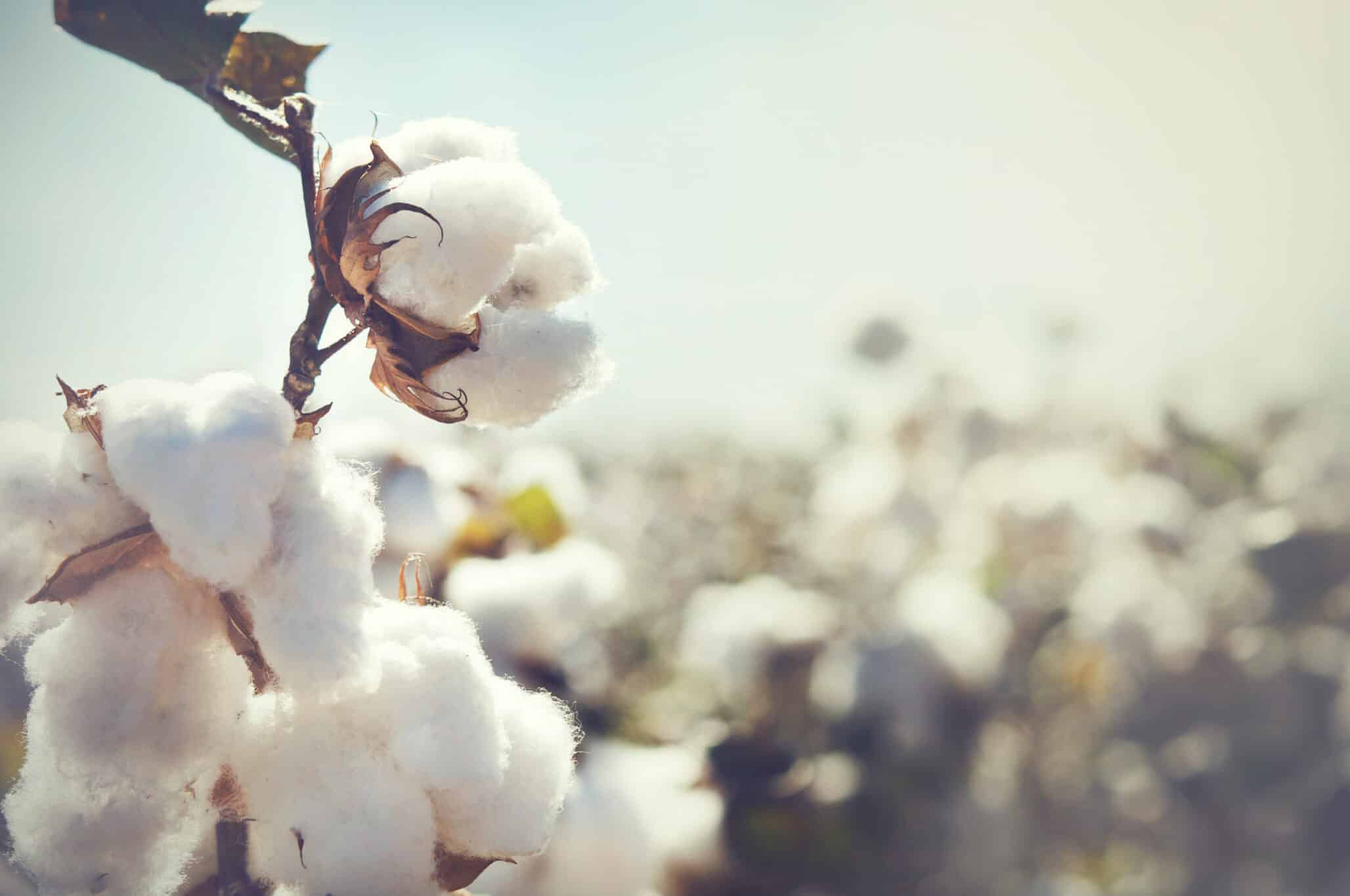
From native resistance that protects yield to gene silencing that could open new markets for cottonseed, public researchers and commercial breeders are expanding what genetics can deliver.
Cotton breeders ask a lot of a seed. It must produce yield across environments that change dramatically across the Cotton Belt while contending with nematodes, bacterial blight, insects, heat, drought and disease. At harvest, pounds matter, but so does fiber quality.
The seed carries another set of possibilities. Cottonseed already provides oil, livestock feed and other products, but the plant naturally produces gossypol, a compound that helps protect it from pests while limiting how its protein-rich seed can be used.
Nearly 30 years of research at Texas A&M University has shown those functions can be separated. Researchers used gene silencing to dramatically reduce gossypol in the seed while retaining it elsewhere in the plant, potentially opening new food and feed markets.
Commercial breeders are tackling a different set of problems. PhytoGen cottonseed develops varieties for U.S. cotton growers to plant on their row crop farming operations. PhytoGen breeders have spent roughly two decades finding native resistance to threats that already cost growers yield, including root-knot nematode, reniform nematode and bacterial blight.
Together, the work offers a look at cotton innovation from discovery through commercialization, and at how much more breeders and researchers are asking the crop to do.
Yield Gets the First Vote
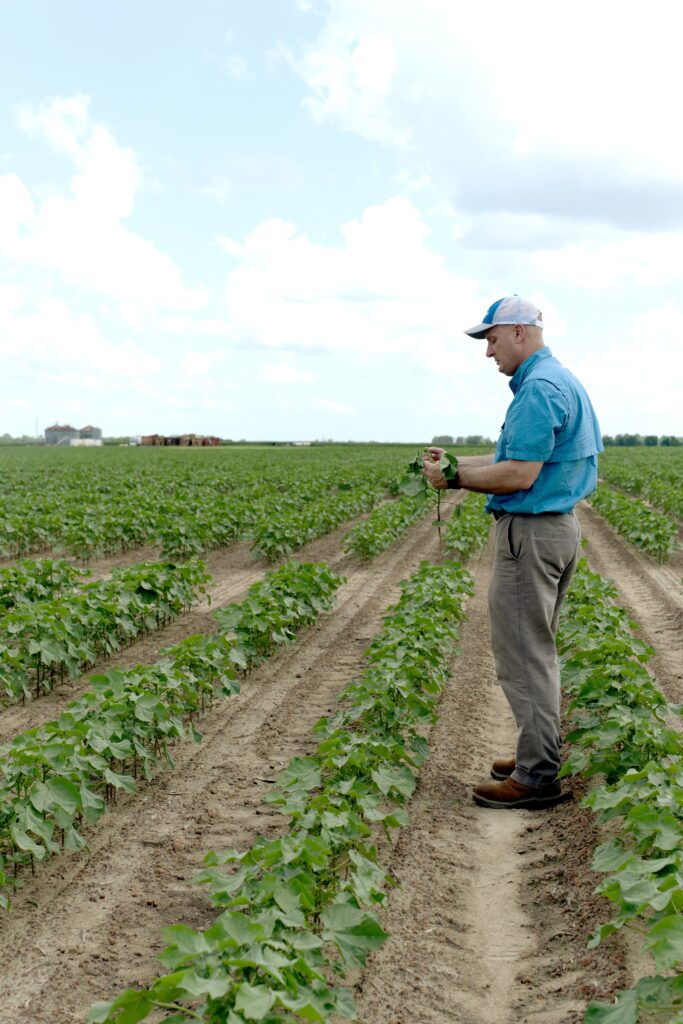
Phytogen’s Joel Faircloth examines cottonseed plants in the field. Photo: Phytogen
Commercial cotton breeding comes with plenty of complexity, but U.S. cotton portfolio lead for PhytoGen cottonseed Joel Faircloth says variety selection still begins with yield.
“Ultimately, yield is the No. 1 criteria when growers select cotton varieties, but they do have certain fiber quality parameters they are looking for to maximize the price they receive from cotton buyers,” he says.
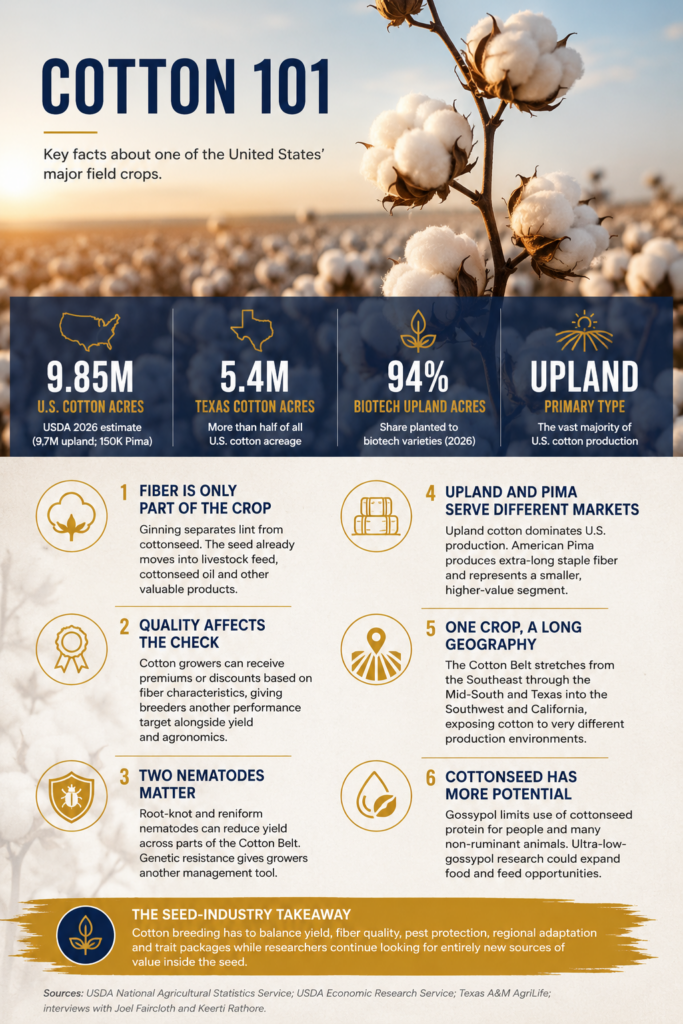
Fiber quality gives cotton breeders another target. Growers face discounts when quality falls below certain parameters and receive premiums when it rises above them, but Faircloth says the economics generally don’t favor sacrificing yield to chase a premium.
“In most growers’ minds, the mantra is yield, yield, yield, and then fiber quality,” he says. “When our breeders evaluate experimental cottonseed varieties, yield is the most important factor but those products also need the fiber quality characteristics that the market demands.”
Once breeders build yield potential, they must protect it. About 20 years ago, PhytoGen breeders began concentrating on protecting yield through native resistance to root-knot nematode, reniform nematode and bacterial blight. Faircloth uses “native traits” to describe naturally occurring genetic resistance or tolerance.
“The breeders were focused on genetic gain, increasing and stabilizing yields,” he says. “The vision was to do so across a field, across a farm, and across a region.”
One field may have reniform nematodes and another root-knot nematodes, while bacterial blight can appear when conditions favor it. For the past three years, Faircloth says every new PhytoGen brand variety for the Midsouth and Southeast has carried resistance to all three.
“Yield drives a lot of decisions, but reducing inputs to manage issues such as nematodes is also very important,” he says. “If growers can plant cottonseed varieties that perform more consistently across varying soil types and pest pressure, it makes management much easier.”
Stability Becomes a Breeding Target
Faircloth and his team test experimental material across the Cotton Belt, working as an intermediate step between PhytoGen’s breeding program and product commercialization to growers. Faircloth says the winning variety must perform consistently across numerous trials.
Cotton makes that a demanding target. Texas accounts for more than half of U.S. cotton acreage, but production environments vary widely even within the state. Across the Cotton Belt, rainfall, irrigation, soils and pest pressure add more variables.
Nematodes illustrate the challenge. Faircloth says reniform pressure has become severe enough to take some fields out of cotton production. PhytoGen brand varieties with the reniform-resistant trait allow growers to reclaim those acres so that growers can plant them to cottonseed.
Genetic resistance may also influence what happens after cotton leaves the field. Faircloth says resistant plants, such as PhytoGen cottonseed, prevent nematodes from successfully feeding and reproducing throughout the season.
“When nematodes can’t feed and breed, they don’t multiply over the course of a season,” he says. “At the end of the year, the populations are down, which provides growers an advantage going into the next season.”
Lower nematode populations can give growers more flexibility when rotating into another susceptible crop, including soybeans, extending the value of the cotton genetics beyond harvest.
That breeding strategy continues in PhytoGen’s newest commercial material. The company announced three new varieties for the 2027 season, two with resistance to bacterial blight, reniform nematode and root-knot nematode. Of those two, PhytoGen brand PHY 362 W3FE is positioned as a broadly adapted variety from the Southeast and Mid-South into the Texas South Plains, while PhytoGen brand PHY 491 W3FE targets longer-season environments in the Southeast. The third is a stripper-type cottonseed variety that fits in the High Plains north of Lubbock.
Some Problems Still Resist the Fix
Breeders still have plenty of targets. Faircloth points to hard lock, a late-season problem for which researchers don’t currently have genetic markers that would help breeders select for resistance.
PhytoGen is also looking for native traits that could improve control of plant bugs, stink bugs and thrips.
PhytoGen continues to participate in university variety testing and work with agronomists, entomologists, pathologists and weed scientists. Those relationships help commercial breeders evaluate products, while university scientists can pursue questions much farther from market.
Some of those questions take decades to answer.
Thirty Years Inside Cottonseed
Keerti Rathore arrived at Texas A&M University in 1995 and began working on cottonseed a few months later. Nearly 30 years later, he calls the project his life’s work.
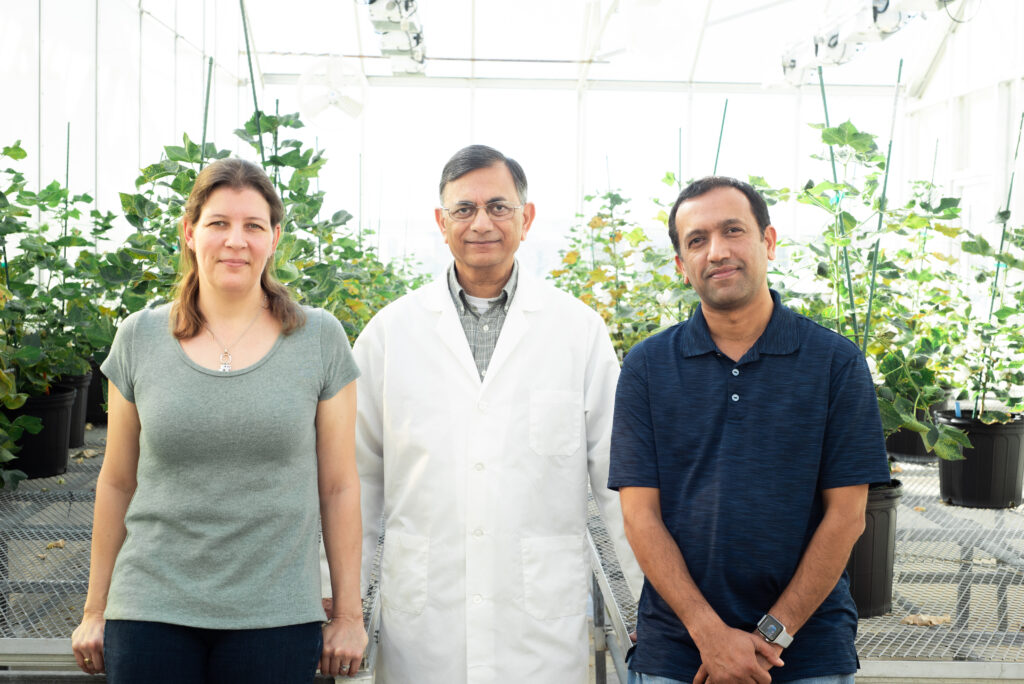
His challenge centered on gossypol. Cottonseed contains valuable protein, but gossypol’s toxicity restricts its use in human food and feed for non-ruminant animals. Removing the compound throughout the plant wasn’t a practical solution because cotton uses it as a defense against pests.
Rathore’s team instead used gene silencing to suppress gossypol production in the seed while leaving it elsewhere in the plant.
“The plants look exactly the same,” Rathore says. “Nobody can tell the difference (but a significant difference exists).”
Inside the seed, the difference is significant. Rathore says conventional cottonseed can contain roughly 10,000 parts per million of gossypol. His team’s work reduced that level by about 97%.
“Our goal was to bring down the level of gossypol to below 450 parts per million,” Rathore says. “And we got to about 375-400 parts per million. Then we were happy with that.”
The researchers then had to demonstrate through regulatory field trials that the change hadn’t compromised the plant or its fiber. USDA granted nonregulated status to the ultra-low-gossypol cottonseed line TAM66274 in 2018, and FDA completed its food and feed consultation in 2019.
After more than two decades of research, the technology had made it through the science and U.S. regulatory process. Getting it into a commercial seed bag proved to be another challenge.
Getting From Discovery to a Seed Bag
Rathore says farmers expressed interest in ultra-low-gossypol cotton as early as 2006, but someone still must incorporate the trait into the elite varieties farmers want to plant.
“The way this agriculture system is there are only about four or five big seed companies that provide all the seeds to the farmers,” Rathore says. “So, this trait has to be incorporated into those varieties that the farmers are using currently.”
Those varieties already combine yield and fiber quality with herbicide tolerance, insect protection and other agronomic characteristics. Ultra-low-gossypol genetics must join that package without compromising it.
“Obviously, we can’t do it,” Rathore says. “I mean, I’m just at a university with very limited funds.”
International trade complicates the path. Rathore says a company taking on the technology would also have to consider regulatory requirements in countries importing U.S. cotton and cotton products, adding cost before the trait could reach a broad market.
The long timeline is familiar to Rathore. His team worked about 10 years before achieving its first successful result. During those early years, Nobel Peace Prize winner Norman Borlaug, who spent part of each year at Texas A&M, encouraged him to continue despite difficulties finding funding.
Once Rathore’s team showed the science worked, Cotton Incorporated provided funding that helped advance the technology and regulatory studies. His lab later developed another line with seed gossypol levels around 70 parts per million, well below the material that has already cleared the U.S. regulatory process.
That line still needs extensive analysis, but funding ran out before the team could finish the work.
More Value From an Existing Acre
For Rathore, reducing gossypol has always been about more than changing the chemistry of a cottonseed. He wants cotton to become more fully a dual-purpose crop.
“Yes, that is our goal, is to make this plant a food and fiber crop,” he says.
Cotton farmers already produce seed along with fiber, so expanding its use wouldn’t require or additional acres.
“The idea is that farmer doesn’t have to do anything extra,” Rathore says. “There’s no extra input required. There’s no extra farmer-effort required and additional land. You can grow this crop. Now you have just as much fiber as normal cotton plants, but you’ll be able to utilize this meal and hull for animals other than cattle.”
Poultry, swine and aquaculture could become important markets. Collaborators have already conducted feeding studies with fish and shrimp, and Rathore says both found the engineered cottonseed material could serve as a protein source.
A broader market could also change the economics of the seed for growers.
“If the seed becomes more valuable, because now you can utilize it in a poultry feed, or swine feed, or even aquaculture feed, I think you’re kind of creating a market for the same cotton seed with our material,” Rathore says. “And that should help the farmer, because they will get more value for their seed now.”
That potential supply is already produced alongside cotton fiber. Capturing more value from it depends on getting the trait into commercially competitive varieties.
The Field Sets the Standard
Faircloth works at the point between promising genetics and commercial tests. He describes his role as a bridge between R&D and growers, with his team testing material across the Cotton Belt and feeding information back to breeders.
“We select from a large pool of varieties and we advance those that have elite yield and the yield-protecting traits we want in our cottonseed,” he says.
That commercial standard applies to any new trait. A finished variety still needs competitive yield, acceptable fiber quality and the right agronomics while defending against diseases, insects and nematodes growers face.
For university research such as Rathore’s, clearing the scientific and regulatory hurdles gets a trait only part of the way there. Commercial breeders still have to build it into genetics capable of meeting everything growers already expect from their seed.
Another Route to the Field
Rathore is now looking outside the United States for one possible path forward. Texas A&M has an agreement with collaborators in Uzbekistan, a major cotton-producing country where scientists have experience developing and regulating commercially grown, gene-silenced cotton.
Rathore visited Uzbekistan in 2024, and Texas A&M sent ultra-low-gossypol seed to collaborators there in December 2025. Researchers must now grow the material, backcross it and move the trait into genetics suited to local production.
Rathore hopes successful use in another cotton-producing country could eventually encourage broader commercial interest.
For cotton breeders and researchers, the opportunities span a wide range. Native resistance is protecting yield against problems already in growers’ fields. Biotech traits continue to evolve. Other researchers are looking for ways to extract more value from the seed farmers already produce.
Whatever the innovation, cotton sets a high bar. New genetics must protect yield, preserve fiber quality, fit production systems and deliver enough value to make the long trip from discovery to commercialization.
Every new idea still has to earn its place in the seed.