Advances in genomics are accelerating breeding while raising new questions about variety registration, research infrastructure and speed to market.
Three new stories graced the home page of Seed World Canada this week, and together they point to a question I think the Canadian seed sector needs to spend more time asking:

What happens when one part of the system starts moving faster than everything around it?
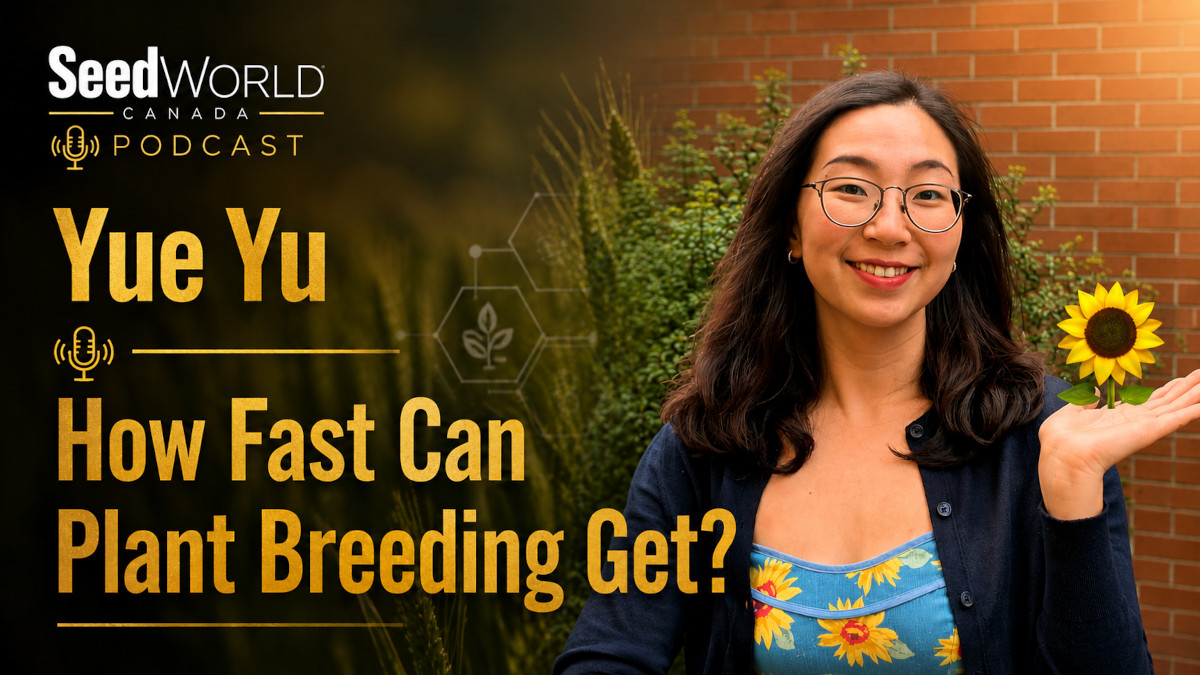
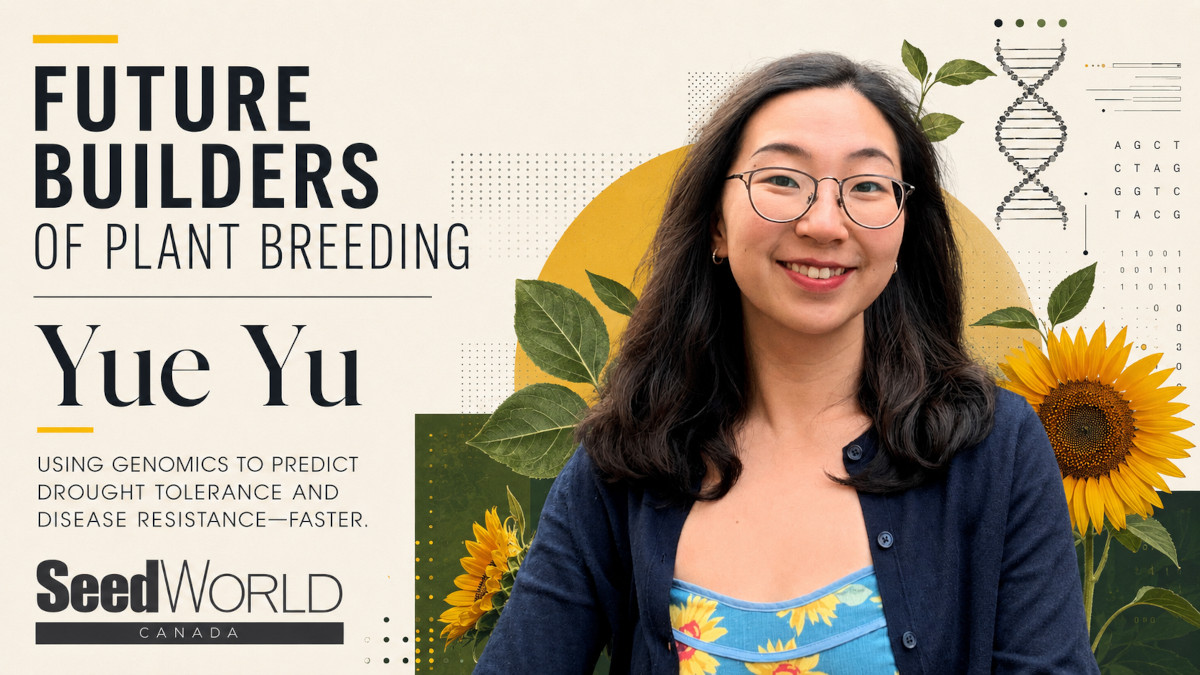
I spoke with University of British Columbia researcher Yue Yu (our first of seven Future Builders of Plant Breeding) about how genomic prediction could accelerate plant breeding. The technology is increasingly allowing breeders to identify promising material earlier, potentially concentrating years of field testing on the candidates most likely to succeed. Yue has worked with genomic predictions achieving roughly 60 to 70 per cent accuracy in lodgepole pine.
But one thing Yue said stuck with me.
“The whole breeding process itself can be lengthy, but a lot of time it’s also the downstream part.”
That’s a challenge.
We can make breeding faster. We can improve prediction. We can use genomics, AI and better environmental data to make decisions earlier.
But if everything downstream continues moving at the same speed, we haven’t eliminated the bottleneck. We’ve moved it. That brings me to Canada’s variety registration system. A coalition of breeders, seed companies and producer groups is asking whether parts of that system still deliver enough value to justify the time and resources they consume. Saskatchewan Pulse Growers, for example, is advocating moving peas and lentils into Part III registration, while industry discussions have shown support for similar changes involving several other crops.
The interesting part isn’t simply whether Part I, II or III is correct.
It’s that we’re finally asking what the system would look like if we designed it for the genetics and technology available today rather than inherited it from another era.
And then there’s Indian Head. This week’s On the Brink episode follows what happened after AAFC announced the closure of its Indian Head Research Farm. Saskatchewan Seed Growers initially objected, like many others did. Then they did something more interesting: they offered to help develop another way forward.
President Nick Petruic summed up the lesson beautifully: he’d rather be part of change than observe it.
The future of Indian Head remains unsettled. The federal government is still proceeding toward disposal, and the July federal-provincial MOU doesn’t guarantee a future research mandate. But SaskSeed put an idea on the table anyway.
That’s what connects these three stories for me.
Technology is changing. Institutions are under pressure. Old assumptions are being questioned. The instinct during periods like this is often to defend individual pieces of the system: save this facility, protect this process, maintain this program.
Sometimes that’s absolutely necessary. But I think the bigger opportunity is to ask something harder. What should the whole pipeline look like now?
If genomics can shave time from breeding, registration should be capable of responding. If government research infrastructure changes, industry needs to think about what functions absolutely must survive and who could deliver them. If farmers need genetics faster, every step between an idea in a breeder’s head and seed going into a farmer’s drill deserves scrutiny.
For years we’ve talked about speeding up plant breeding. Maybe we’re reaching the point where breeding itself isn’t the only thing that needs to get faster. The entire system does.