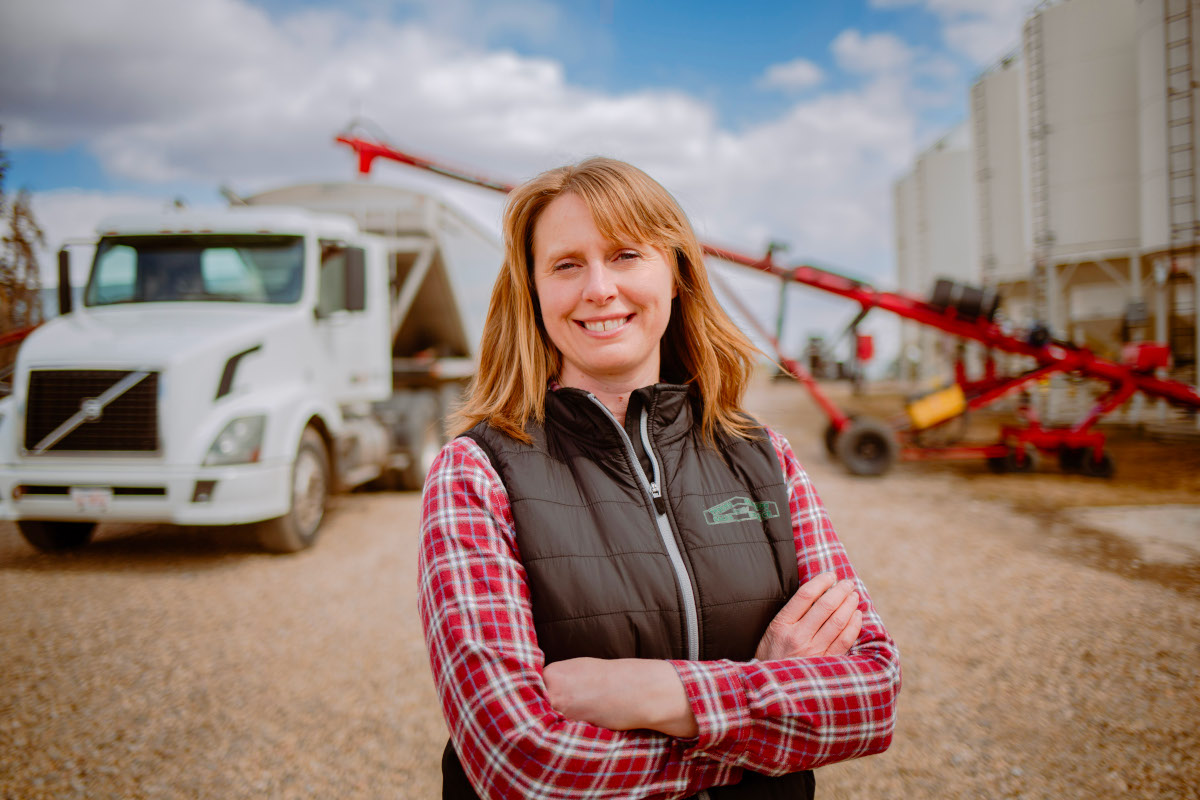
President Sarah Weigum says reliable regional trials and seed purity testing are essential to reducing risk and getting improved genetics into farmers’ fields faster.
The Alberta-British Columbia Seed Growers (ABCSG) may not have the financial muscle of a large crop commission or government department. But President Sarah Weigum believes the organization possesses another form of influence — one that matters as Canada confronts difficult questions about variety testing, plant breeding and the future of its seed system.
“I guess what we have is moral capital. As a leader of the provincial branch, I’m trying to use our that as efficiently as possible and keep bringing our ideas to the forefront.”
Representing approximately 650 seed growers in Alberta and British Columbia, ABCSG has long supported the people who multiply and deliver new crop genetics. The Alberta Seed Guide’s fall and spring issues communicate the value of that hard work to farmers across the two provinces. Increasingly, however, ABCSG’s role extends beyond serving members. It is pushing to ensure seed growers have a voice in decisions that could determine how new varieties are developed, tested and moved into farmers’ fields.
That was the message Weigum and ABCSG General Manager Adrienne Herron brought to a recent meeting with Alberta Agriculture and Irrigation Minister Tara Sawyer.
The priority was regional variety testing. Publicly supported research sites have historically supplied expertise and infrastructure that helped evaluate how new varieties perform under different growing conditions. As provincial and federal research capacity has been reduced, seed growers have become increasingly concerned about what could be lost along with it.
“Ongoing testing for varieties is obviously very important to us as seed growers,” Weigum says. “It’s about bringing new varieties to market and reducing the risk for ourselves and for growers by having better regional testing.”
Regional variety trials may represent only one part of the work performed at government research sites, but the results help farmers compare varieties under conditions that resemble their own.
Without reliable regional information, trying a new variety becomes a bigger gamble.
That matters because the value of improved genetics is only realized when farmers feel confident enough to use them. ABCSG has helped support research by agricultural economist Nick Tyack examining barriers to faster varietal adoption on the Prairies. According to Weigum, the research points to billions of dollars in potential value being left unrealized when improved varieties are not adopted more quickly.
“How do we reduce the risk so that growers are more open to trying new varieties?” she says. For ABCSG, dependable regional testing is an important part of the answer.
Purity Begins Several Generations Earlier
The second concern raised with Sawyer involved federal testing services that support varietal identity and purity.

Although the issue falls outside the direct jurisdiction of Alberta’s agriculture minister, ABCSG wants provincial leaders to understand its potential implications and raise it with their federal counterparts.
Weigum notes certain Canadian Food Inspection Agency (CFIA) testing activities have been paused, creating uncertainty about services used to confirm whether small variations in a crop remain true to type and whether higher generation seed plots conform to the variety they are intended to represent.
The implications may sound highly technical, but they ultimately reach the farm gate and the end user.
“We need to be able to move that seed confidently through the different generations and then finally to our end users,” Weigum says. “We know how important varietal purity is in certain end markets.”
Farming’s Shared Challenges
For Herron, who brings experience from the livestock and ecological goods and services sectors, the changing landscape makes this a particularly important time to help lead ABCSG.
“There are a lot of moving parts in the industry right now and a lot of changes,” she says. “We’re working really hard on being strategic with all of the different issues going on and all of the different players.”
During the meeting with Sawyer, Herron says ABCSG wanted to understand the minister’s objectives instead of simply arriving with a list of demands.
Her experience outside the seed sector has reinforced her view that many of agriculture’s most pressing challenges cannot be neatly divided by commodity.
“Agriculture is a big family, and there are a lot of pressing and challenging issues that don’t just belong to one sector,” Herron says. “The ability to draw from experiences on the livestock side or the ecological goods and services side only strengthens the skills, assets and contacts we bring to the seed group.”
She sees that broader perspective in forums such as Team Alberta Crops, where questions involving government policy, research capacity and the future competitiveness of agriculture cross traditional organizational boundaries.
“It has been a false dichotomy in the past that we’re separate,” Herron says.